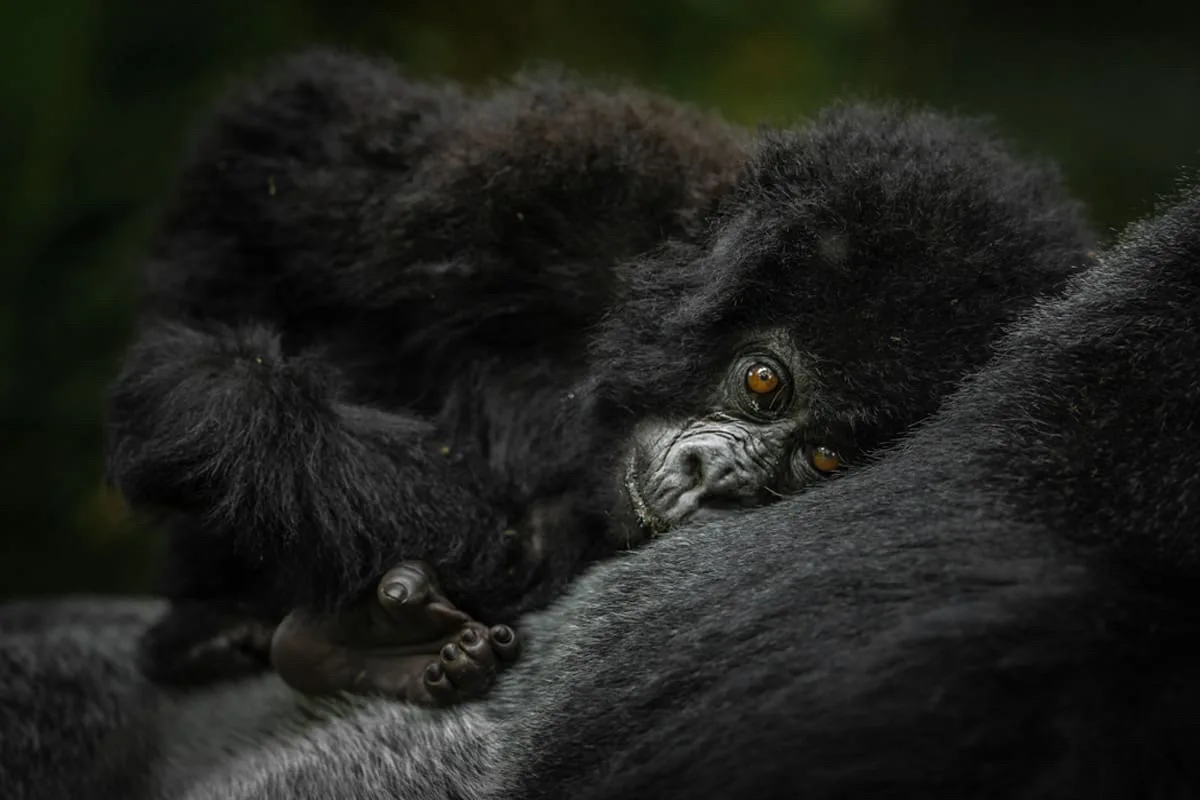
The primary destination for mountain gorilla trekking, in one of Africa's oldest and most biodiverse forests.
Enquire About BwindiBwindi Impenetrable Forest is a UNESCO World Heritage Site and the most important gorilla habitat in the world. This ancient montane rainforest in south-western Uganda covers about 331 square kilometres of steep ridges, dense vegetation and mist, and is home to around half the remaining mountain gorilla population, roughly 500 individuals spread across more than 20 habituated family groups.
Trekking here is unlike any other safari experience. You follow a tracker into the forest, push through the undergrowth for anything from one hour to half a day depending on the gorillas' movements, and then spend a permitted hour with a family group. The silverback may sit five metres away, the infants play nearby. Nothing quite prepares you for the weight of that encounter.
Bwindi has four separate trekking sectors: Buhoma in the north, Rushaga and Nkuringo in the south, and Ruhija in the east. Each has its own habituated groups, lodge collection and character. Buhoma is the most established; Rushaga has the most groups; Ruhija sits at higher altitude with harder trekking and a wilder feel.
The forest is also outstanding for birding, with 23 Albertine Rift endemics. Pair a gorilla trek with a chimp habituation experience or a forest walk and the park reveals a depth that a single-day permit visit barely scratches.
Mountain gorillas are the reason to come. Multiple habituated families means a permit is usually obtainable with advance planning, and each trekking group is limited to eight people, keeping the encounter intimate.
The forest also holds chimpanzee, though they are not habituated here as they are in Kibale. Black-and-white colobus, olive baboon, bushbuck and forest elephant are all present, moving through the shadows of the canopy.
Bwindi is one of the finest birding sites in Africa, with 23 Albertine Rift endemic species, including the African green broadbill, Shelley's crimsonwing and the Grauer's rush warbler, alongside a striking diversity of forest birds found almost nowhere else.
The dry seasons from June to September and December to February are the most comfortable, with drier, firmer trails that make the steep forest easier to navigate. Trekking is possible year-round, but the wet season turns trails muddy and the ascents harder.
The dry-season peak fills up first, so permits for June to September and the Christmas period should be booked at least six months ahead. The wet season is quieter, cheaper and still fully rewarding.
A luxury tented camp right inside the forest at Buhoma, the closest accommodation to the park and the most atmospheric base for trekking.
A refined lodge above Nkuringo with panoramic forest views, private cottages and strong community partnerships.
Polished lodges at Buhoma combining comfortable rooms with forest views and quick access to the trailhead.
Comfortable, well-managed lodges near the Rushaga and Buhoma sectors, delivering gorilla trekking at an accessible price.
A community-run guesthouse at the park gate, the most budget-friendly base for trekking and the one with the most direct community benefit.
Gorilla photography is challenging but deeply rewarding: low light, dense vegetation and fast movement require a fast lens and patience. A 70-200mm f/2.8 works well in the forest. The moment a silverback looks directly at you needs no technical perfection to be the best image you have ever made.
Bwindi works for any traveller who can manage the physical demands. The permits make it expensive, but every bracket from community guesthouse to ultra-luxury tented camp is covered. The trekking requires reasonable fitness: be honest with yourself and your guide about your level.
Bwindi lies in south-western Uganda near the borders with Rwanda and the DRC. Most visitors fly into Entebbe and then take a short charter flight to the park airstrips, or drive the five to six hours from Kampala via Lake Mburo.
We arrange every detail, from the right camp to flights and transfers. Tell us your dates and we will do the rest.
Plan My Safari WhatsApp UsUSD 800 per person per trek, paid to the Uganda Wildlife Authority. The permit covers one hour with one habituated gorilla family.
It varies from one to six or more hours, through steep, dense and often muddy forest. Reasonably good physical fitness is needed. Porters are available to carry your pack and assist on the steeper sections.
Buhoma is the most established and accessible. Rushaga has the most habituated groups, which can help with permit availability. Ruhija is higher, harder and wilder. The best sector depends on availability and your preference.
A maximum of eight visitors per habituated family group per day, keeping the encounter intimate and reducing stress on the gorillas.
For the dry-season peak from June to September and for the Christmas period, book permits at least six months ahead. Wet-season dates are easier to arrange at shorter notice.
Yes. With enough time and permits, you can trek a different family on consecutive days, or combine a standard trek with the gorilla habituation experience, which allows four hours with a family still being habituated.
Tell us roughly when you would like to travel and what you most want to see. Every enquiry is answered personally, usually within 24 hours. No set packages, no booking fees.