
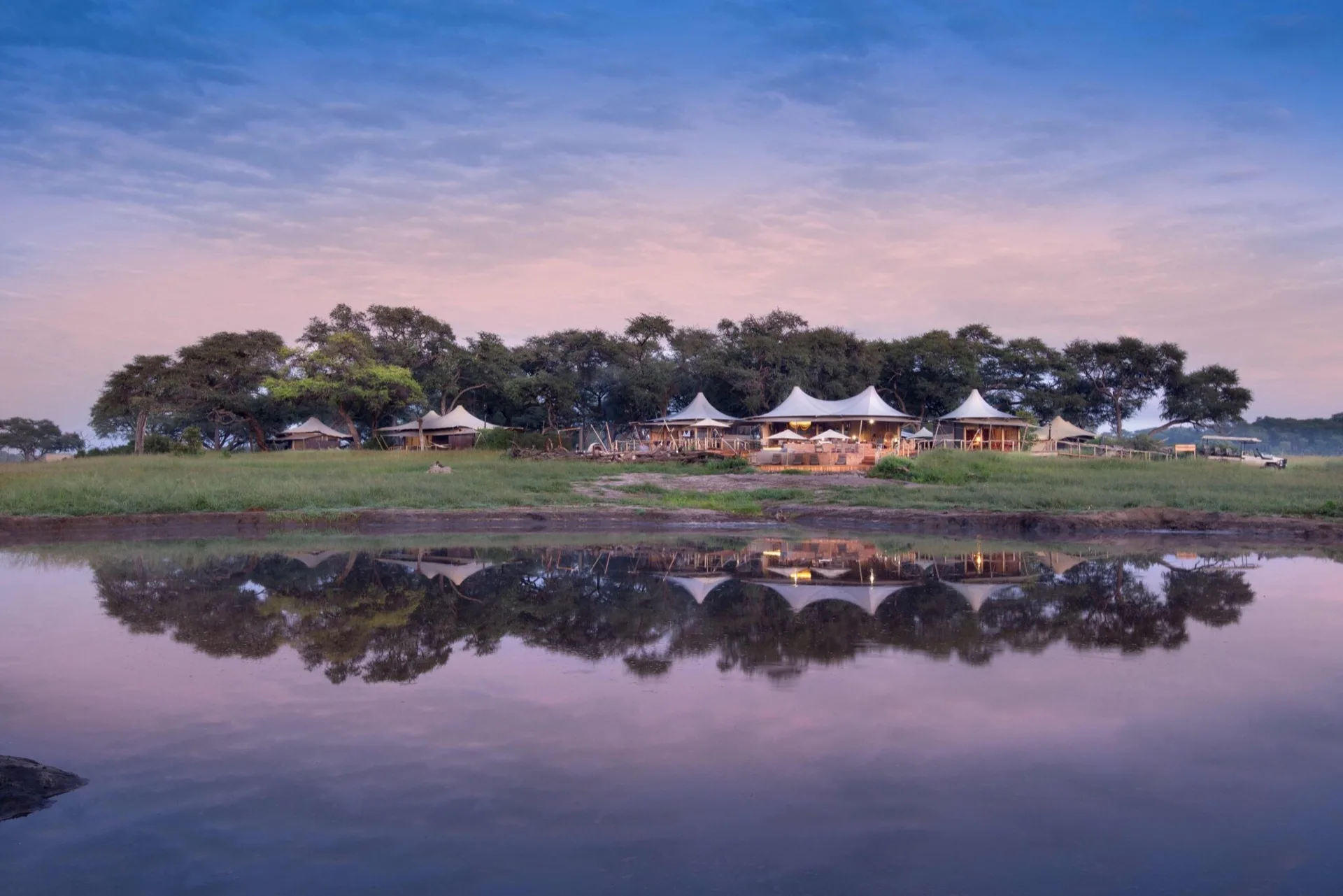
Hwange
North-western ZimbabweForty thousand elephants, purpose-built night hides and wild dog: the most accessible and most photographic safari in Zimbabwe.
Explore Hwange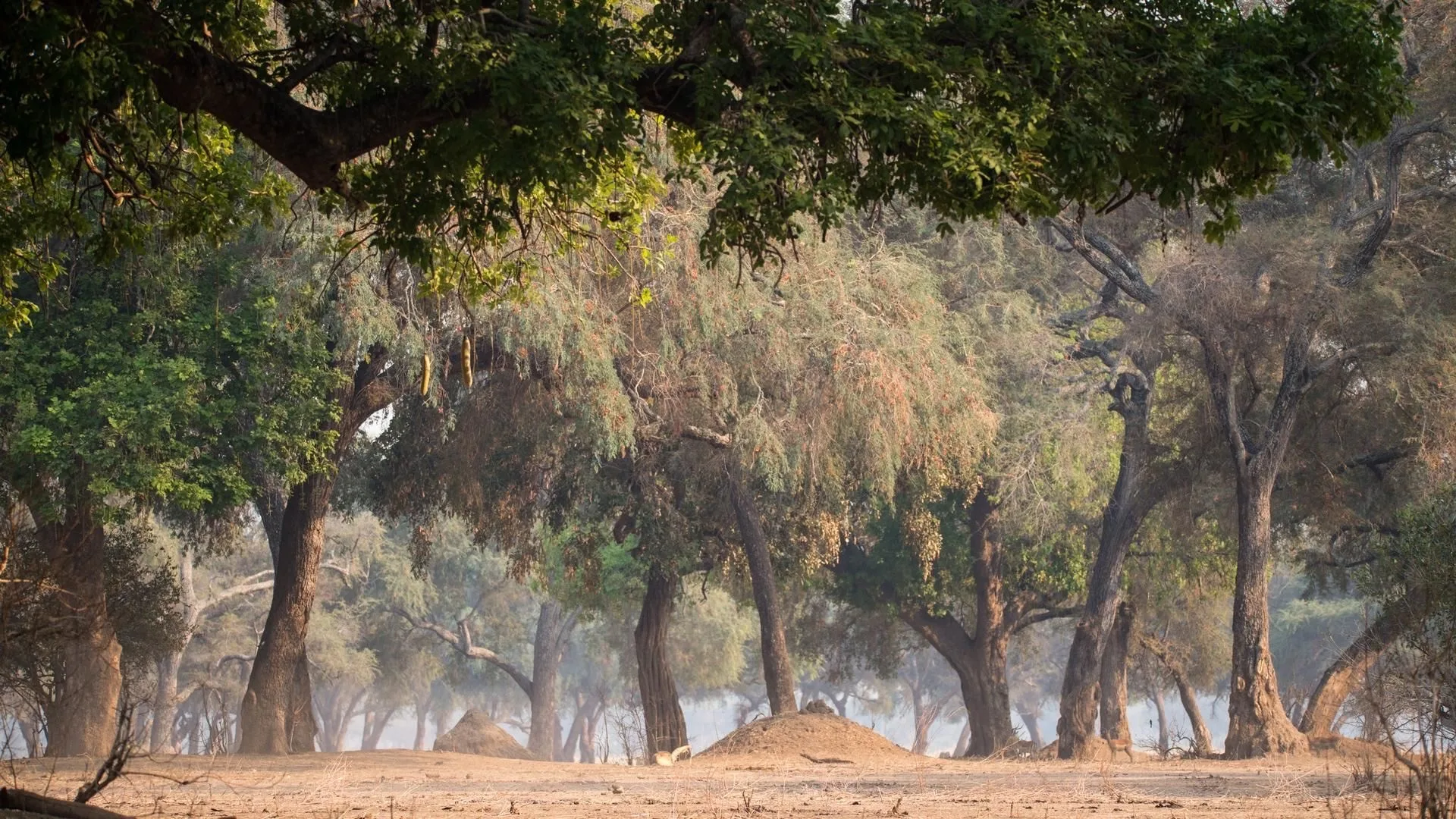
Walking safaris on the Zambezi, elephants at Hwange's hides and one of Africa's finest photographic destinations.
Plan My SafariZimbabwe is one of Africa's most underrated safari countries, and one of its most photogenic. The parks are wild and far less visited than their equivalents in South Africa or Botswana, and the wildlife has recovered strongly. What you get is space: vast elephant herds, outstanding walking safaris and waterhole photography with no vehicle queuing for position.
Hwange and Mana Pools are the pillars of a Zimbabwean safari. Hwange holds one of the largest elephant populations in Africa, and its famous waterhole hides, sunk into the ground at water level, produce close-up nocturnal images that few other places can match. Mana Pools, on the Zambezi floodplain, is a UNESCO World Heritage Site and one of the finest walking safari destinations on the continent, where you can approach game on foot, alone with a guide, alongside the river.
Zimbabwe shares Victoria Falls with Zambia, and the town of Victoria Falls on the Zimbabwean side is the gateway for the falls themselves, white-water rafting on the Zambezi and a natural link to Botswana's Chobe. A trip that combines the falls with Hwange and Mana Pools is one of the best Southern African circuits available.
Purpose-built photographic hides, sunk at eye level with the waterhole, produce close-range, reflection images of elephant, buffalo, lion and leopard that are among the finest wildlife photographs made in Africa.
Mana Pools allows unguided walking within the park, and guided walks bring you within metres of elephant and buffalo in the dry riverbed. It is one of the most raw, thrilling safari experiences in Africa.
Zimbabwe holds one of the largest elephant populations in Africa. Hwange alone holds an estimated 40,000, and during the dry season they gather at the waterholes in herds that require no embellishment.
Hwange's hides, Mana Pools' canoe angles on the Zambezi and Gonarezhou's empty landscapes make Zimbabwe the strongest photographic safari destination in Southern Africa after the Sabi Sands. See our photographic safaris.
Zimbabwe holds the main viewing side of Victoria Falls, the widest curtain of falling water on earth. The spray is visible from 40 kilometres away. It connects naturally to Hwange for a classic Zimbabwean circuit.
Zimbabwe's parks attract a fraction of the vehicles found in the busier Southern African circuits. Hwange at peak season has far fewer vehicles than Kruger, and Gonarezhou may go days without a single other visitor.
Lion, leopard, elephant and buffalo are all present in good numbers. Rhino survive in managed sanctuaries such as the Imire and Malilangwe, but are not reliably seen across the national parks, so Zimbabwe is not consistently a Big Five destination.
Lion prides are strong in both Hwange and Mana Pools, and leopard are common, particularly at the waterhole hides after dark. Spotted hyaena, cheetah and wild dog are all present across the parks.
The photographic hides at Hwange are purpose-built for wildlife photography, sunk at eye level with the waterhole. Elephant, buffalo and lion come to drink at night, often within a few metres. The reflection images from these hides are among the strongest wildlife photographs made anywhere on the continent.
Mana Pools offers some of the finest, most free-ranging walking safaris in Africa. The floodplain and dry riverbeds allow approaches to game on foot that are not possible in denser bush.
Over 600 species, with the Mana Pools floodplain and Hwange's mixed woodland particularly strong. The yellow-billed oxpecker, Bradfield's hornbill and Arnot's chat are among the specials.
African wild dog are well distributed across Zimbabwe's parks, with packs resident in Hwange, Mana Pools and Gonarezhou. Hwange in particular is one of the more reliable places to find them in Southern Africa.
Zimbabwe's four main safari areas span the elephant country of Hwange, the Zambezi walking and canoe safari of Mana Pools, the remote wildness of Gonarezhou and the houseboat waters of Lake Kariba at Matusadona.
Forty thousand elephants, purpose-built night hides and wild dog: the most accessible and most photographic safari in Zimbabwe.
Explore Hwange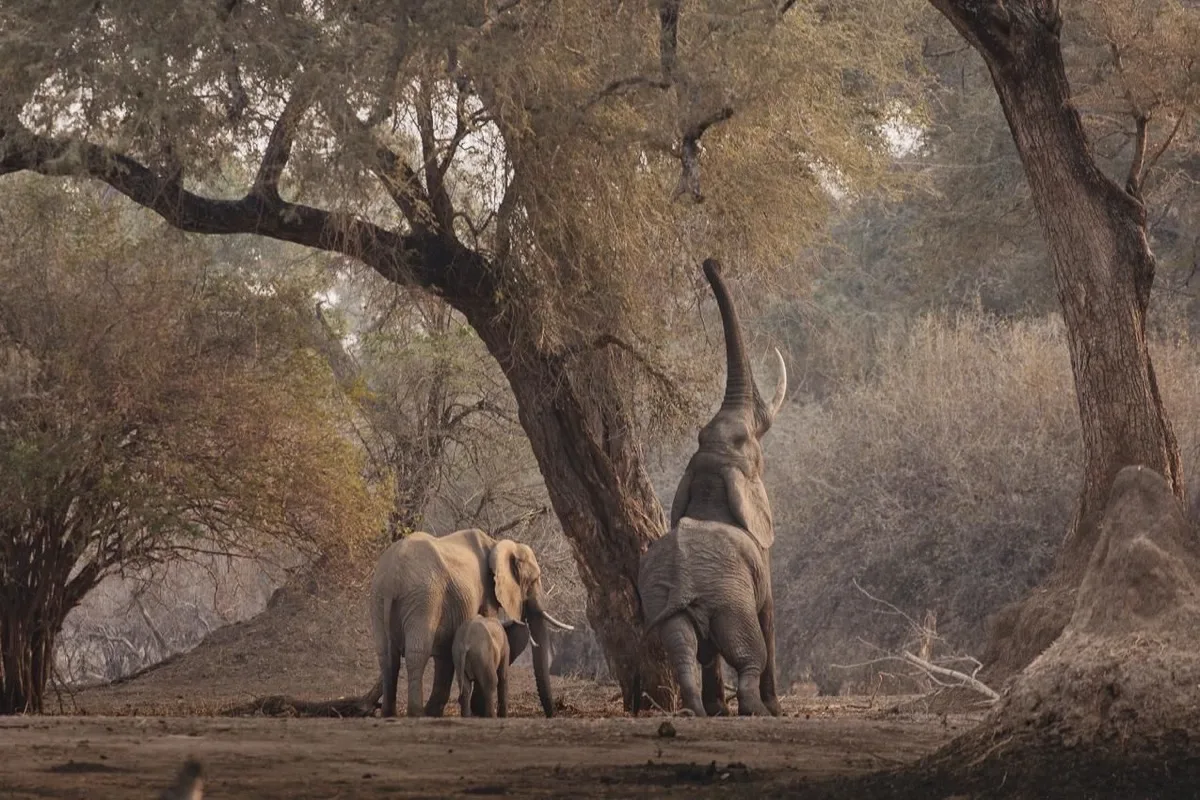
The Zambezi floodplain, walking unguided among elephant and buffalo, canoe safaris and some of the best wild dog viewing in Africa.
Explore Mana Pools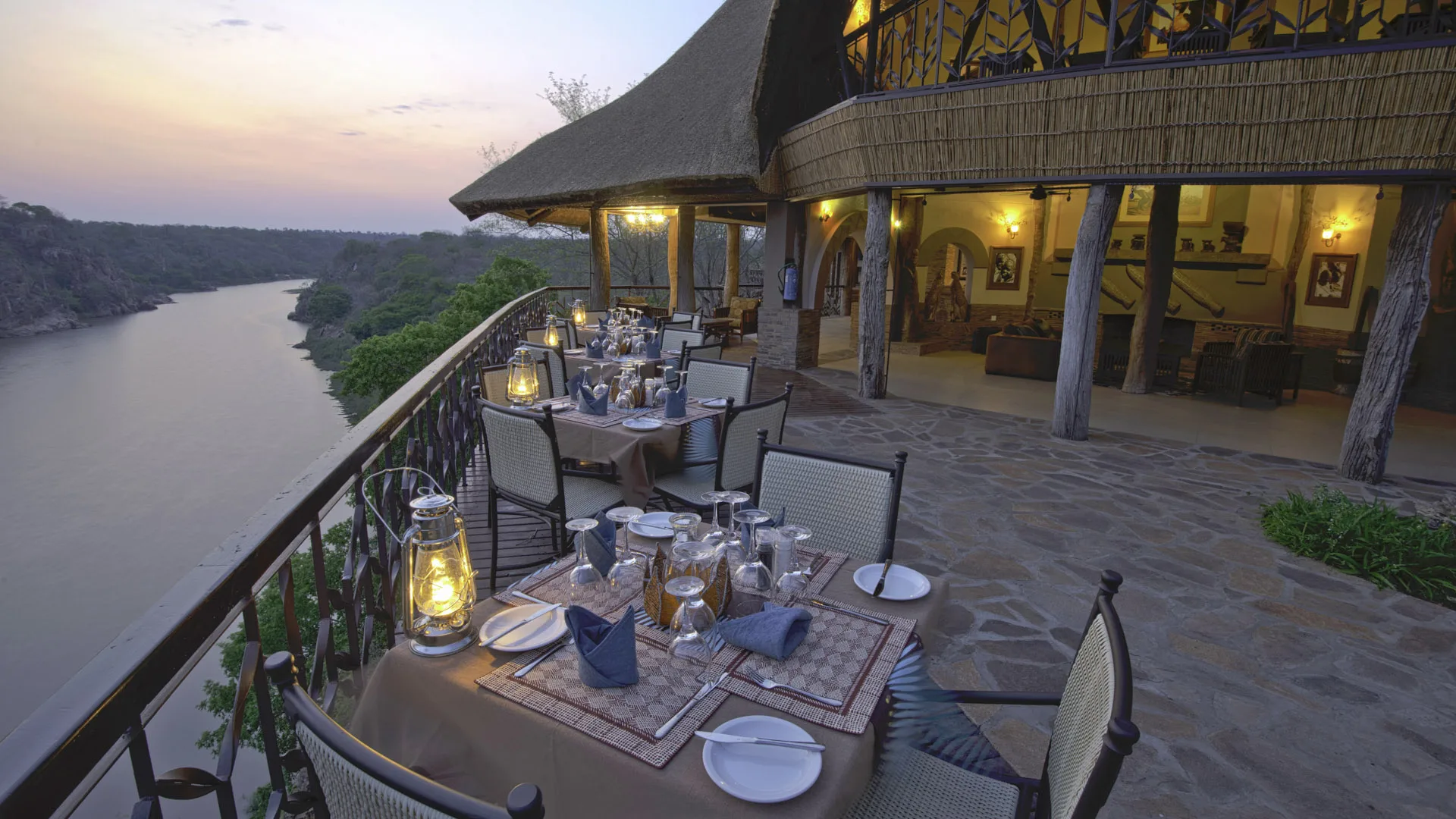
Part of the Great Limpopo Transfrontier Park, famous for its tusked elephants, red cliffs and total absence of crowds.
Explore Gonarezhou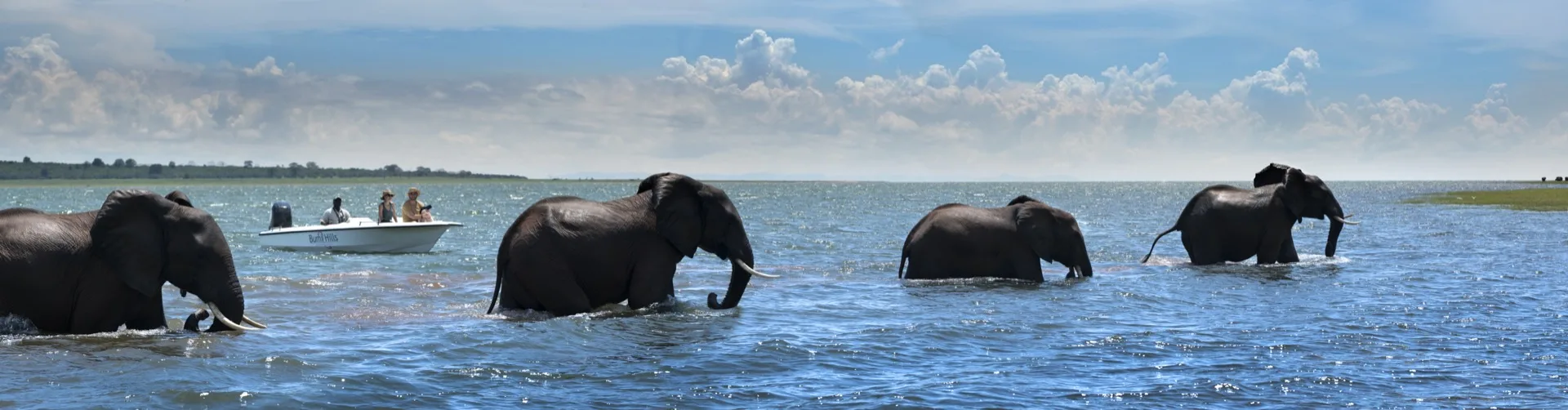
Lake Kariba houseboats, shoreline lion and a park that combines the water with dense woodland and genuine wilderness.
Explore Matusadona| Reserve | Best for | Best time | Suggested stay | Style |
|---|---|---|---|---|
| Hwange | Elephants, photography hides, wild dog | Jul to Oct | 3 to 4 nights | Mid to ultra-luxury |
| Mana Pools | Walking safaris, canoeing, wild dog | Aug to Oct | 3 to 4 nights | Mid to ultra-luxury |
| Gonarezhou | Wilderness, big tuskers, solitude | Jun to Oct | 3 nights | Mid to luxury |
| Matusadona | Houseboat safari, fishing, shoreline lion | Aug to Oct | 3 nights | Mid to luxury |
Zimbabwe's dry season from May to October is the prime time for game viewing, walking and photography. The green summer is lush and excellent for birding but makes game harder to find. Our safari calendar sets out the wider picture.
| Month | Weather | Game viewing | Season |
|---|---|---|---|
| January | Hot, wet | Lush; birding peak, game dispersed | Green |
| February | Hot, wettest | Green season; calving, lower rates | Green |
| March | Hot, rains easing | Bush still thick; vegetation lush | Green |
| April | Warm, drying out | Improving; fewer visitors | Shoulder |
| May | Mild, dry | Bush thinning; game viewing picks up | Shoulder |
| June | Cold nights, dry | Excellent; hides coming into their own | Peak |
| July | Cold nights, dry | Peak; elephants at the waterholes | Peak |
| August | Cool, dry | Outstanding; photographic hides at best | Peak |
| September | Warming, dry | Peak; intense game at water | Peak |
| October | Hot, very dry | Superb; huge Hwange elephant numbers | Peak |
| November | Hot, first rains | Green flush; migrants, lower rates | Shoulder |
| December | Hot, wet | Lush; festive season, book ahead | Green |
Tell us when you want to travel and what you most want to see. We will build the trip around the wildlife calendar.
Plan My Safari WhatsApp UsYes. The safari areas are safe, professionally run and remote from the political difficulties the country has faced. Tourism operators in Hwange, Mana Pools and Victoria Falls have continued to work through difficult years, and the experience on the ground is excellent.
The dry season from May to October is the prime time for game viewing and photography. The Hwange hides are best from July to October when the park's pump-fed waterholes draw the most animals.
A purpose-built hide sunk into the ground at eye level with the waterhole, so animals approach and drink at close range without noticing observers. Hwange's hides are the finest in Southern Africa and produce close-up, reflection images that are highly sought after by photographers.
You can see four of the five readily: lion, leopard, elephant and buffalo. Rhino survive in private sanctuaries but are not reliably present in the national parks, so Zimbabwe is not consistently a Big Five destination.
Outstanding. Mana Pools is one of the finest walking safari destinations in Africa, and the only park in the region where unguided walking is permitted. Guided walks bring you close to elephant and buffalo in the dry riverbeds along the Zambezi.
Yes. Zimbabwe's safari areas are malaria zones, with most risk in summer. Speak to your doctor about prophylaxis. For a malaria-free Big Five alternative, consider Madikwe in South Africa.
Yes. Zimbabwe holds the main viewing side of the Falls, from the town of Victoria Falls. The Zimbabwean side gives a broader, more dramatic view of the full width of the waterfall than the Zambian side.
Zimbabwe is considerably less expensive, wilder in feel and much less crowded than the equivalent Botswana circuits. Hwange offers the same elephant experience as Chobe at a fraction of the cost. Mana Pools has no Botswana equivalent for walking.
Allow at least six to eight nights to combine Hwange, Mana Pools and Victoria Falls properly. A shorter trip of three to four nights can focus on Hwange and the Falls.
Very easily. Victoria Falls connects to both countries, and Chobe in Botswana is a short transfer from the town of Victoria Falls. Zambia's Lower Zambezi sits directly opposite Mana Pools across the river.
Several lodges in Hwange welcome families and have child-appropriate activities. Walking safaris and canoe trips in Mana Pools are better suited to older children and adults. See our family safari guidance.
Victoria Falls Airport serves Hwange and the Falls, with direct flights from Johannesburg. Harare serves the northern circuit and Mana Pools, with onward light-aircraft connections.
It is one of the strongest photographic safari destinations in Southern Africa: waterhole hides at night, canoe-level angles on the Zambezi and Gonarezhou's empty baobab landscapes. See our photographic safaris.
The combination of enormous elephant herds, pump-fed waterholes that guarantee year-round game, and purpose-built photographic hides that allow nocturnal, eye-level photography found almost nowhere else.
Hwange for elephants and photography hides, Mana Pools for walking and canoeing. Both reward a visit, and combining them with Victoria Falls on a single trip is the classic Zimbabwean circuit.
Tell us roughly when you would like to travel and what you most want to see. Every enquiry is answered personally, usually within 24 hours. No set packages, no booking fees.