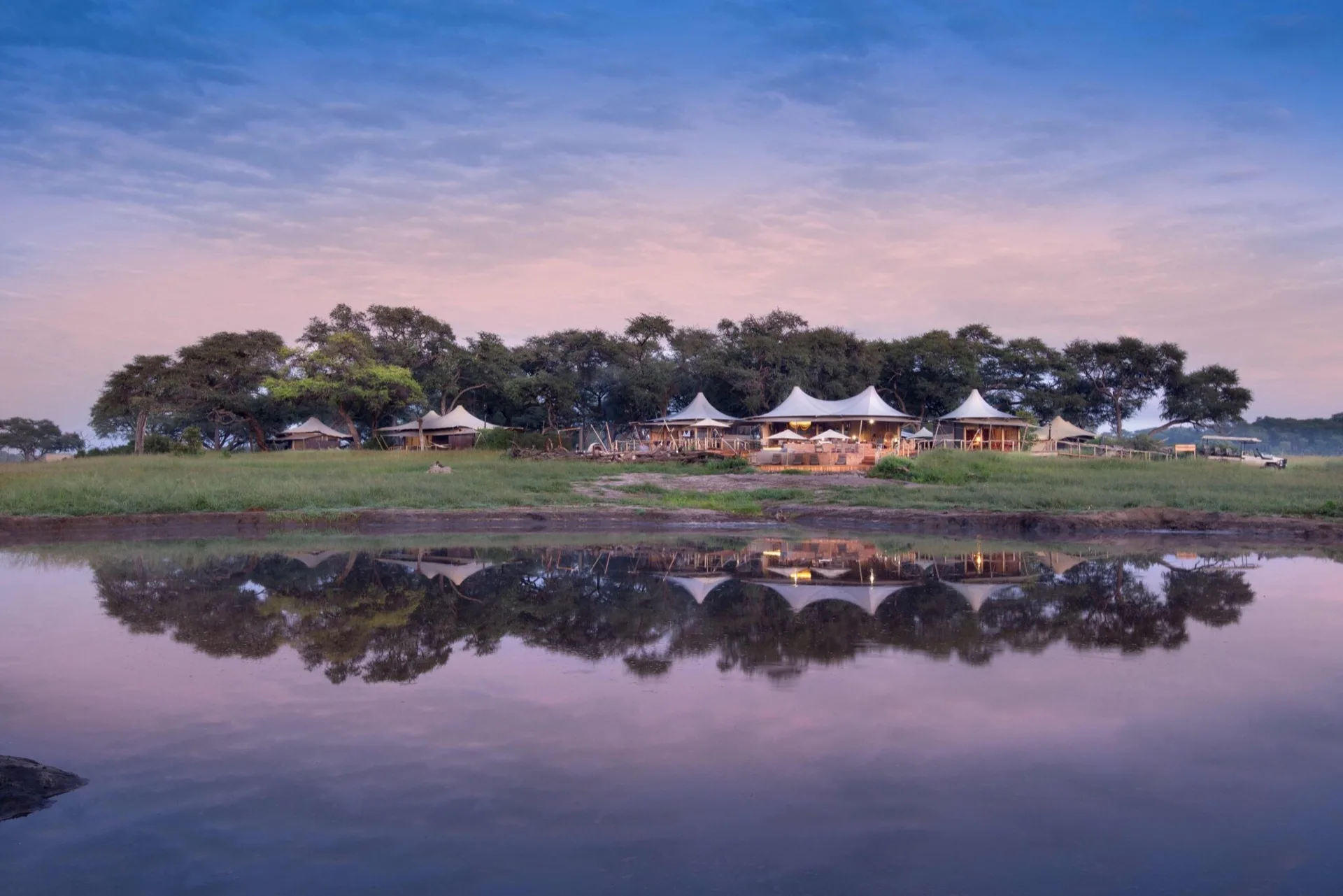
Zimbabwe's largest park, famous for its enormous elephant herds and Africa's finest photographic waterhole hides.
Enquire About HwangeHwange is Zimbabwe's largest national park and one of the finest elephant destinations in Africa. An estimated 40,000 elephants use the park, the highest density anywhere on the continent relative to its size, and in the dry season they gather at the pump-fed waterholes in herds that are genuinely difficult to count. Watching several hundred elephants drink and dust-bath at a single waterhole at dusk is an experience that does not require any accompanying superlatives.
The waterholes are also the setting for Hwange's most distinctive feature: the photographic hides. These purpose-built structures are sunk into the ground at eye level with the waterhole, allowing game to approach at close range without noticing observers. At night, under artificial lighting calibrated for photography, elephant, buffalo, lion and leopard come to drink within a few metres. The reflection images from these hides are among the most sought-after wildlife photographs in Africa.
Beyond the waterholes, Hwange holds strong lion prides, resident wild dog packs and one of the better-distributed leopard populations in Zimbabwe. The mixed mopane and teak woodland holds excellent birding and a full supporting cast of plains game, giraffe and smaller predators.
Hwange is also the most accessible of Zimbabwe's parks, a short drive or fly-in from Victoria Falls, which makes it the natural partner for a Falls visit and the obvious entry point for a first Zimbabwe safari.
Elephant are the signature, in numbers that dwarf most parks in Africa. The pump-fed waterholes ensure they are present year-round, but the dry season from July to October is when the herds gather in their largest concentrations.
Wild dog are well represented, with packs resident in the park and Hwange ranked among the more reliable places in Southern Africa to find them. Lion prides are strong, leopard come to the hides after dark, and cheetah hunt the more open country.
Giraffe, zebra, sable, roan, tsessebe and eland add variety to the plains game, and the birdlife across the woodland and waterhole habitats exceeds 400 species, including the sought-after Bradfield's hornbill and Arnot's chat.
July to October is the peak time, when the dry season draws the elephant herds to the pump-fed waterholes and the hides are at their most productive. October is very hot but delivers the greatest elephant numbers before the first rains break the season.
May and June are good shoulder months, cooler and with improving game. The green season from November to April is lush and excellent for birding and newborn animals, but the waterholes draw fewer animals as the rains refill natural pans across the park.
Considered the finest camps in Hwange, with the best waterhole hides, private guiding and intimate tented accommodation overlooking the pan.
Wilderness Safaris camps on private concessions in the eastern Hwange, combining waterhole views with strong guiding and walking.
Long-established camps built around waterhole hides, with a strong photographic following and reliable elephant viewing.
Comfortable lodges offering the Hwange experience at a more accessible price, with waterhole hides and game drives.
The oldest lodge in the park and the national parks campsites offer budget access to the waterholes and the elephants.
Hwange's photographic hides are the main reason serious wildlife photographers choose Zimbabwe. Buffalo, elephant and leopard reflected in a still waterhole under calibrated artificial light, at close range and eye level, produce images that are very hard to replicate elsewhere in Africa. Bring a fast telephoto and a beanbag.
Hwange spans budget campsites to ultra-luxury concession camps and suits every level of traveller. It is the strongest single-park case for Zimbabwe, and photographers in particular should put it near the top of their Africa list.
Hwange lies in north-western Zimbabwe, a short drive or transfer from Victoria Falls Airport, which has direct flights from Johannesburg. It can also be reached by charter aircraft to the Hwange Airport or the camp airstrips.
We arrange every detail, from the right camp to flights and transfers. Tell us your dates and we will do the rest.
Plan My Safari WhatsApp UsPurpose-built structures sunk at eye level with the waterhole, allowing animals to approach and drink at close range after dark under photographic lighting. Elephant, buffalo, lion and leopard all visit regularly.
An estimated 40,000, the highest density in any African national park, with the largest concentrations gathering at the waterholes in the dry season from July to October.
Yes. Hwange holds resident wild dog packs and is ranked among the more reliable places in Southern Africa to find them.
July to October, with the biggest elephant concentrations in September and October as the dry season peaks. For photography, August and September offer the best balance of animal numbers and manageable heat.
By road from Victoria Falls (around an hour) or by charter aircraft to the camp airstrips. Victoria Falls Airport has direct flights from Johannesburg.
Yes, and it is the classic Zimbabwean pairing. Two to three nights at Hwange followed by two days at the Falls covers the best of Zimbabwe in a single efficient trip.
Tell us roughly when you would like to travel and what you most want to see. Every enquiry is answered personally, usually within 24 hours. No set packages, no booking fees.