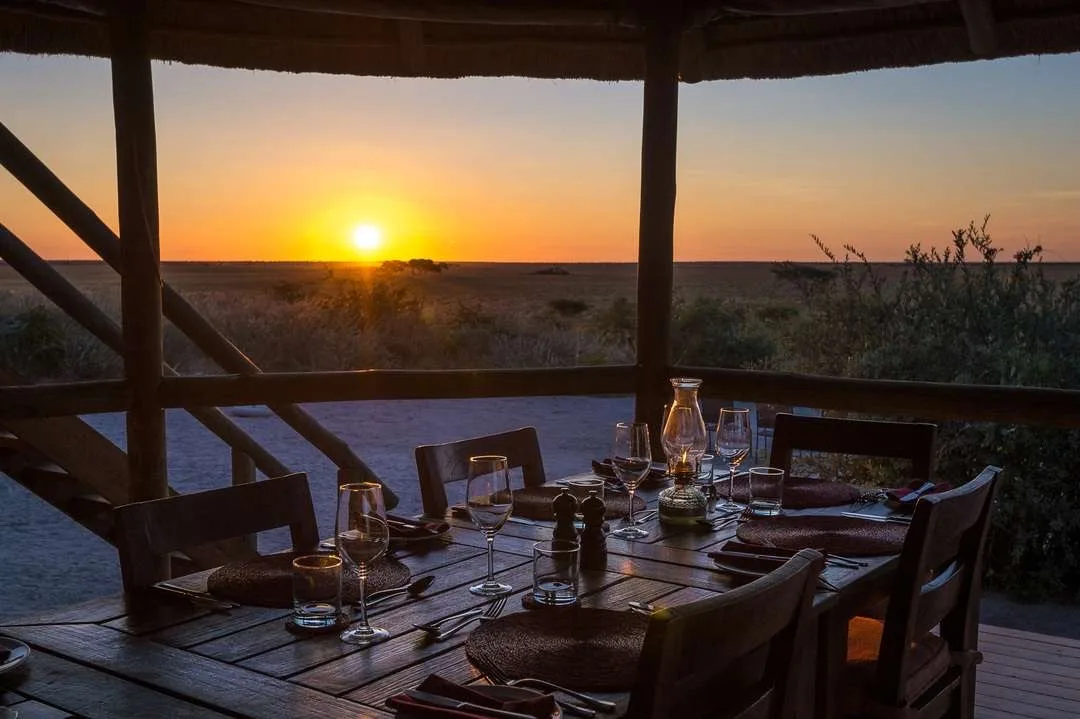
Vast, remote desert wilderness, and a green-season spectacle that is the opposite of the Delta.
Enquire About Central KalahariThe Central Kalahari Game Reserve is one of the largest protected areas on earth, a roughly 52,000 square kilometre expanse of desert, fossil river valleys and open pans in the heart of Botswana. It is a place defined by space and silence, a complete contrast to the watery Okavango.
Its rhythm is the reverse of the Delta's. The Kalahari is at its best in the green summer, from December to April, when the rains bring a flush of grass to Deception Valley and the other ancient riverbeds, drawing in herds of springbok, gemsbok and wildebeest and the predators that follow them.
This is classic Kalahari country: black-maned lions, cheetah hunting the open plains, brown hyaena and bat-eared fox, with meerkat colonies that, at some camps, are habituated enough to use guests as lookouts. The reserve also holds deep significance as the ancestral land of the San, or Bushmen.
It is remote and uncrowded. A handful of fly-in camps and the reserve's public campsites are all that serve an area the size of a small country, so even in season you can drive for hours without seeing another vehicle.
The Kalahari's signature predator is the black-maned lion, larger and darker than its bushveld cousins. Cheetah do well on the open plains, and brown hyaena, bat-eared fox, African wildcat and honey badger add to a distinctive desert cast.
In the green season, Deception Valley and the fossil river valleys fill with springbok, gemsbok and wildebeest, the largest concentrations the reserve sees, with newborns drawing predators into the open.
Habituated meerkats are a highlight at some camps, and the birding lifts in summer with raptors and migrants. The dry winter is quieter, with wildlife dispersed and harder to find across the vast reserve.
December to April, the green season, is the prime time, the opposite of most of Botswana. The rains transform Deception Valley, drawing herds and predators into the open and bringing the desert briefly to life.
The dry winter from May to October is harsh and quiet, with wildlife widely dispersed and water scarce. It suits travellers after solitude and stark desert landscapes rather than concentrated game.
The reserve's benchmark fly-in camps, well placed for Deception Valley, the black-maned lions and habituated meerkats.
A contemporary, low-impact tented camp offering private, flexible safaris in the heart of the Kalahari.
Smaller seasonal and mobile-style camps focus on the green-season game flush at a more accessible price.
Specialist mobile operators run camping safaris to Deception Valley, the classic way to experience the reserve's scale.
The reserve's remote public campsites let fully self-sufficient 4x4 travellers experience the Kalahari for very little.
The Central Kalahari is a landscape photographer's reserve as much as a wildlife one: huge skies, golden grass and dramatic storm light in the green season. Black-maned lions, cheetah on open plains and meerkats at eye level are the wildlife highlights.
The Kalahari ranges from self-drive camping to ultra-luxury fly-in camps. Its remoteness and green-season timing suit second-time safari-goers and those after solitude, and it pairs well with the Delta for a water-and-desert contrast.
The Central Kalahari Game Reserve sits in the middle of Botswana, reached by light aircraft to the camps' airstrips or, for the experienced and fully equipped, by a long 4x4 expedition.
We arrange every detail, from the right camp to flights and transfers. Tell us your dates and we will do the rest.
Plan My Safari WhatsApp UsDecember to April, the green season, when the rains bring herds and predators into Deception Valley. This is the opposite of the best time for the Okavango Delta.
Black-maned Kalahari lions, cheetah, brown hyaena, gemsbok and springbok, and habituated meerkats at some camps. It is a desert ecosystem, very different from the Delta.
It is remote. Most guests fly in to the camps' airstrips, while fully equipped, experienced travellers reach it on long self-drive 4x4 expeditions.
Yes, and it makes a superb contrast of desert and water. Because their best seasons differ, we will advise on timing to get the most from both.
At some camps, yes. Long-running habituation means the meerkats tolerate people closely and will sometimes use a still guest as a lookout perch, a remarkable experience.
It is rewarding but specialised, with dispersed desert wildlife. It works best as a contrast on a wider Botswana trip rather than a first, standalone safari.
Tell us roughly when you would like to travel and what you most want to see. Every enquiry is answered personally, usually within 24 hours. No set packages, no booking fees.