The largest inland delta on earth, and the most sought-after water safari in Africa.
Enquire About Okavango DeltaThe Okavango Delta is Botswana's headline and a UNESCO World Heritage Site. The Okavango River flows in from Angola and, instead of reaching the sea, spreads across the flat Kalahari sands into a vast inland delta of channels, lagoons and palm-fringed islands that supports one of the richest concentrations of wildlife on the continent.
Its defining quirk is the timing of the flood. The water arrives in the dry winter, fed by summer rains far upstream, so the Delta is at its fullest between June and August, exactly when the surrounding bush is at its driest. As the floodwaters rise, game pushes onto the islands and floodplains and the viewing sharpens.
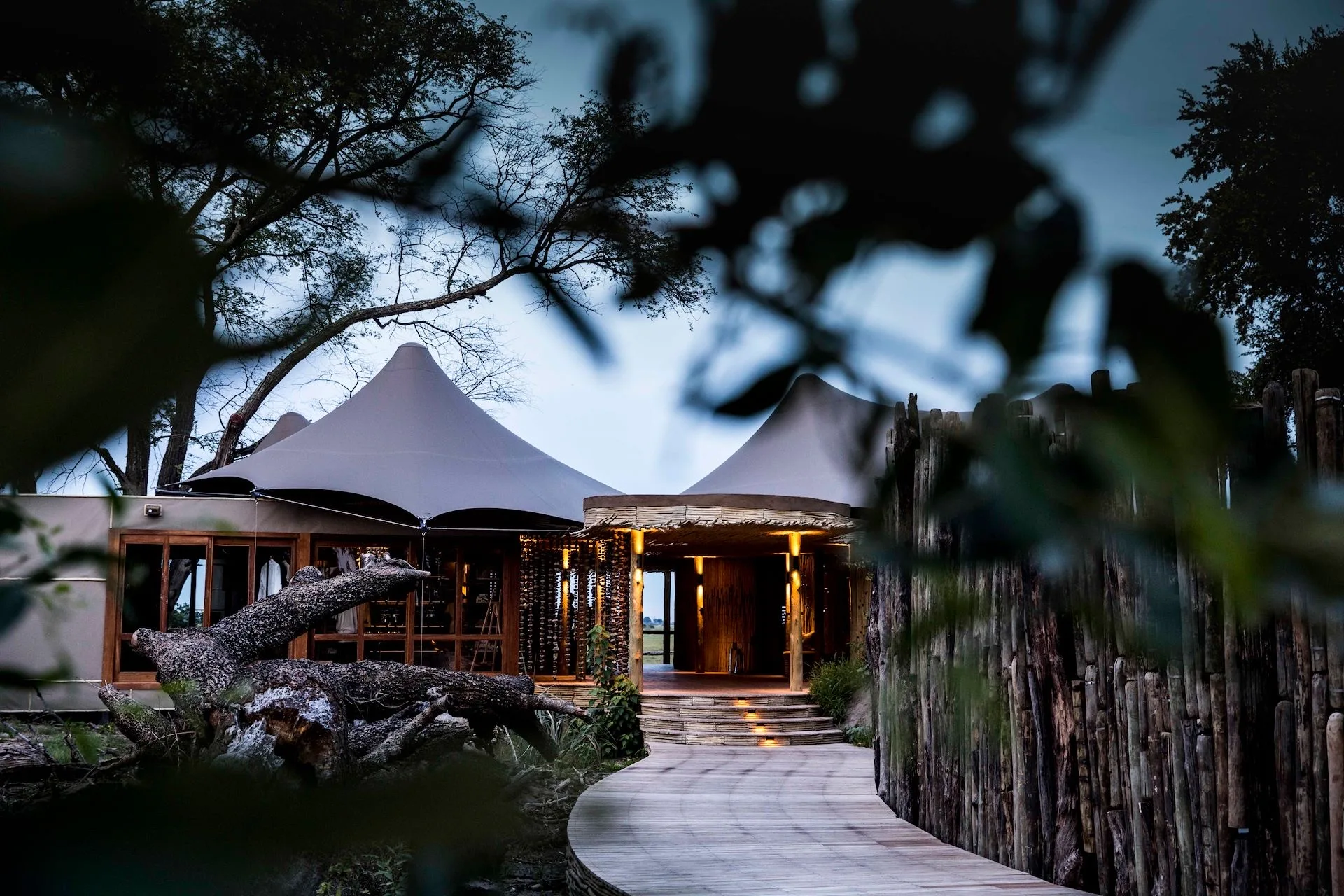
How you explore is what sets the Delta apart. A single stay might combine a sunrise game drive, a mokoro glide through papyrus channels and a walking safari on an island. Private concessions, the lettered NG areas, allow off-road driving, night drives and walking that the public Moremi reserve does not.
It runs on the low-volume, high-cost model: small fly-in camps, exclusive traversing and prices that put the Delta firmly at the top end. It is a splurge, but few places on earth feel this wild. Our guide to the Okavango Delta covers the experience in more depth.
The Delta carries big herds of elephant and buffalo, with hippo and crocodile in the permanent water and good numbers of lion and leopard along the riverine fringes. Rhino have been reintroduced on the Mombo concession, the most reliable place in the country to see them.
This is one of the finest regions in Africa for African wild dog, with healthy packs across the northern concessions and dramatic denning in winter. Cheetah occur on the drier margins, and spotted hyaena are common.
Water-loving species are the Delta's signature, from red lechwe splashing across the floodplains to the secretive sitatunga antelope. Birding is first-rate, with Pel's fishing owl, wattled crane and African skimmer among the prizes.
June to October is the prime window. The flood is high, water-based activities are at their best, and the drying surrounds concentrate game on the islands. July to September is the peak, and the best camps book out a year ahead.
The green season from November to April is hotter and quieter, with lower water, fewer mokoro options at some camps and lower rates. It is a good time for birding, newborns and dramatic skies, and a sensible way to see the Delta on a smaller budget.
The Delta's most celebrated camps, combining superb game, rhino at Mombo and design and service at the very top of the market.
Polished concession camps with the full mix of water and land activities and excellent guiding, a touch below the headline rates.
Characterful camps that put you in the heart of the Delta at a more accessible price, strong on the classic mokoro experience.
Participatory and serviced mobile safaris camp on Delta islands, the most affordable way to experience the Okavango.
Camps in the permanent waterways focus on mokoro and boat safaris when the flood is high, for the full water-safari experience.
The Delta rewards photographers with soft light, reflective water and low mokoro angles you cannot get elsewhere. Wild dog on the hunt, elephants crossing channels and birds in flight are all on the cards, and a helicopter flip offers a rare aerial perspective on the waterways.
The Okavango sits firmly at the luxury end, and most camps are a genuine splurge. Mobile camping safaris and a stay in the neighbouring Moremi reserve are the realistic ways to experience the Delta on a smaller budget.
The Okavango Delta lies in north-western Botswana, reached by light aircraft from the safari town of Maun. The short flight over the channels and islands is part of the experience.
We arrange every detail, from the right camp to flights and transfers. Tell us your dates and we will do the rest.
Plan My Safari WhatsApp UsJune to October, when the flood is high and game concentrates on the islands. July to September is the peak for water-based safaris.
A traditional dugout canoe, poled by a guide through shallow channels. It is the quintessential Delta activity, silent and at eye level with the water.
You will readily see lion, leopard, elephant and buffalo. Rhino are limited to the Mombo concession, so the full Big Five depends on where you stay.
No. It is a malaria area, with most risk in the wet summer. Take prophylaxis and speak to your doctor before travelling.
Most Delta camps are a significant splurge, fully inclusive and fly-in. Mobile camping safaris and Moremi are the more affordable routes in.
Water camps focus on mokoro and boat safaris when the flood is high; land camps offer more game driving. The ideal Delta trip combines both.
Tell us roughly when you would like to travel and what you most want to see. Every enquiry is answered personally, usually within 24 hours. No set packages, no booking fees.