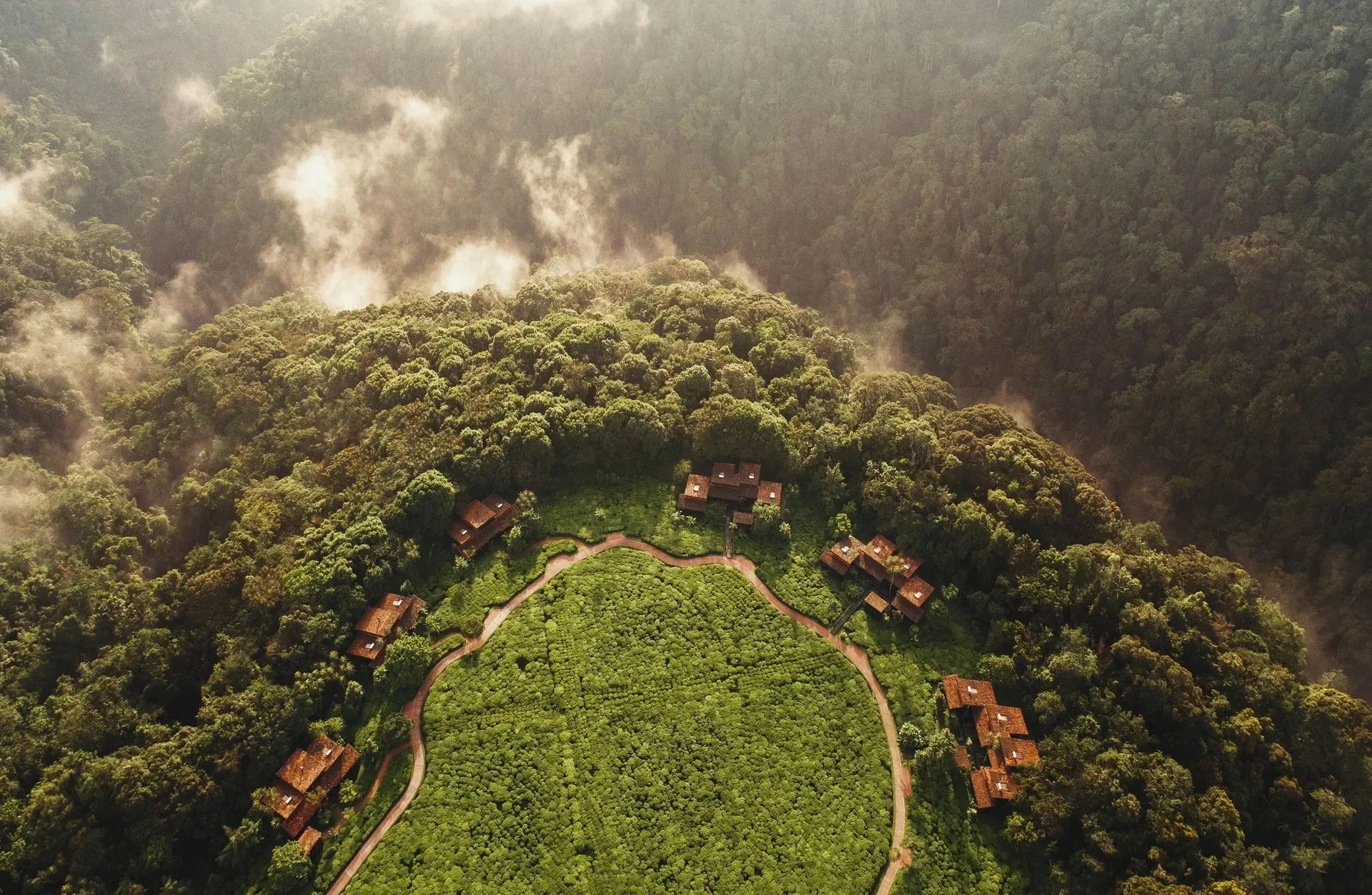
One of Africa's oldest rainforests, alive with chimpanzees, colobus troops and a canopy walkway above the trees.
Enquire About Nyungwe ForestNyungwe Forest National Park, in Rwanda's mountainous south-west, protects one of the oldest and largest montane rainforests in Africa, a forest that survived the last ice age and now harbours a density of life found in few places on the continent. It is Rwanda's great forest park, and a complete contrast to the volcanoes and the savannah.
The headline is the primates: 13 species in one forest, including a habituated chimpanzee community tracked from dawn, and troops of Angola colobus that can number several hundred, the largest arboreal primate troops in Africa. Watching a column of colobus pour through the canopy is a defining Nyungwe experience.
Nyungwe also holds East Africa's only canopy walkway, a suspension bridge strung 60 metres above the forest floor, giving a rare bird's-eye view across the treetops. The park is a birding destination of the first rank, with 29 Albertine Rift endemics among more than 300 species, and a network of trails through waterfalls and ancient forest.
Now managed in partnership with African Parks, Nyungwe is increasingly accessible, with improving lodges and roads, and it rounds out a Rwanda itinerary with a forest experience quite different from the gorilla trek to the north.
Chimpanzees are the primate highlight, with a habituated community tracked through the forest at dawn. Alongside them, Nyungwe holds 12 other primates, including the huge Angola colobus troops, L'Hoest's monkey and the rare owl-faced monkey.
The forest is rich in smaller, secretive wildlife, and although large mammals are few, the density and diversity of primates and birds more than compensate. Butterflies and orchids add to the forest's appeal.
Birding is a major draw, with 29 Albertine Rift endemics among more than 300 species, including the great blue turaco, Rwenzori turaco and a wealth of forest specials that make Nyungwe one of the top birding sites in Africa.
The dry seasons, June to September and December to February, give the most comfortable trekking and the firmest trails. The chimps and colobus are present year-round, and the birding is rewarding in any season.
The wet seasons bring lower rates and fewer visitors, with lush forest and active birdlife, though the trails become muddier and chimp tracking can take longer in the rain.
A refined lodge on the edge of the forest amid a working tea plantation, the finest base for Nyungwe with full-service trekking and forest walks.
A comfortable lodge with sweeping views over the forest and valleys, well placed for the canopy walk and the chimp trailheads.
A simple, well-located guesthouse near the western entrance, the most affordable base for chimp trekking and the canopy walkway.
Nyungwe is a forest and canopy subject: the suspended walkway, the columns of colobus monkeys, the tea plantations that fringe the park and the misty, layered hills. Chimps are challenging in the low forest light, but the colobus and the landscapes reward patience.
Nyungwe suits travellers who want a forest and primate experience beyond the gorillas, and birders in particular. It is more accessible than it once was, and the canopy walk makes it rewarding even for those who do not trek the chimps.
Nyungwe lies in south-western Rwanda, around four to five hours by road from Kigali through the hills, or reached on a longer circuit via Lake Kivu. A small airstrip also serves the area.
We arrange every detail, from the right camp to flights and transfers. Tell us your dates and we will do the rest.
Plan My Safari WhatsApp UsYes. Nyungwe has a habituated chimpanzee community tracked from dawn, the best chimp trekking in Rwanda, alongside 12 other primate species.
A suspension bridge strung 60 metres above the forest floor, the only canopy walkway in East Africa, giving a rare view across the treetops and a good chance of forest birds and monkeys.
13 species, including chimpanzees, the huge Angola colobus troops, L'Hoest's monkey and the rare owl-faced monkey, one of the richest primate communities in Africa.
Outstanding. With 29 Albertine Rift endemics among more than 300 species, it is one of the best montane forest birding destinations on the continent.
By road from Kigali in around four to five hours through the hills, often combined with Lake Kivu. A small airstrip nearby also allows a quicker charter connection.
Yes, on a longer Rwanda circuit. The two forests are at opposite ends of the country, so allow time, often with Lake Kivu or Akagera in between.
Tell us roughly when you would like to travel and what you most want to see. Every enquiry is answered personally, usually within 24 hours. No set packages, no booking fees.