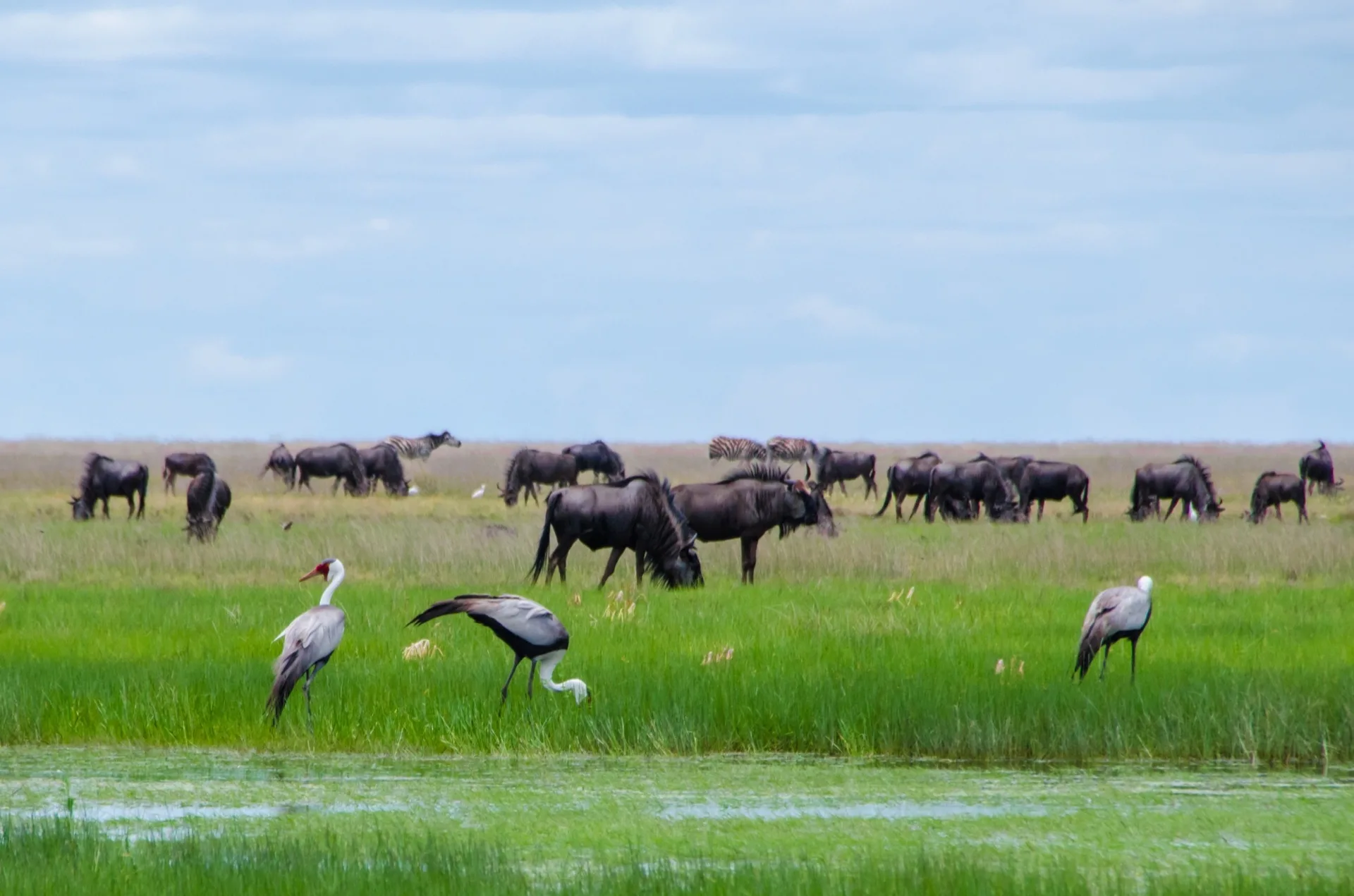
A remote sea of grass and the stage for Africa's second-largest wildebeest migration.
Enquire About Liuwa PlainLiuwa Plain is one of the wildest and most remote parks in Africa, a vast open grassland in Zambia's far west, near the Angolan border. Managed by the conservation organisation African Parks, it sees only a handful of visitors a year, which is exactly the point.
Its great spectacle is the wildebeest migration, the second largest in Africa after the Serengeti. Each November, as the rains green the plains, tens of thousands of blue wildebeest gather, drawing big clans of spotted hyaena, which are the dominant predator here, along with cheetah and recovering lion.
Liuwa became famous through the story of Lady Liuwa, a lone lioness who survived for years as the last of her kind on the plain before lions were reintroduced. That recovery, led by African Parks and the local Lozi community, is one of Africa's quieter conservation successes.
This is a safari for the adventurous: remote, seasonal and simple, with one permanent lodge and a few mobile and community camps. For travellers who have done the classic circuits and want something genuinely off the map, few places compare.
The wildebeest migration is the headline, with tens of thousands gathering on the plains from November. Spotted hyaena are the dominant predator, in unusually large clans, and cheetah hunt the open grassland.
Lion have been reintroduced and are recovering, and the plains hold zebra, tsessebe, red lechwe, oribi and other antelope. The sheer openness makes for dramatic, wide-horizon game viewing.
Liuwa is also a birding park of note, with huge flocks of wattled cranes, storks and pelicans gathering on the wet plains, and raptors hunting the open grassland, especially in the green season.
November to December is the prime time, when the early rains green the plains, the wildebeest gather and the birding peaks. This is the green-season highlight that sets Liuwa apart from most Zambian parks.
May to June, as the plains dry after the rains, offers a second, quieter window with easier access. The deep dry season and the wettest months are harder, and camps operate seasonally, so timing matters here more than most places.
The only permanent lodge in the park, a stylish, low-impact camp run with African Parks, offering the most comfortable way to experience Liuwa.
Light mobile camps follow the migration and the seasons, a more flexible and adventurous way to reach the plains.
Simple community-run campsites such as Matamanene let fully equipped, self-sufficient travellers camp out on the plain for very little.
Liuwa is a landscape and big-sky park: huge horizons, gathering storm light in the green season, and wildebeest, hyaena and cheetah on an open stage. Its emptiness and scale make for striking, uncluttered images.
Liuwa is remote, seasonal and best suited to second or third safaris and travellers after genuine wilderness and a conservation story. It is not a first safari, but for the adventurous it is one of Africa's most rewarding secrets.
Liuwa Plain lies in far-western Zambia near the Angolan border, reached by light aircraft via Lusaka, and is one of the more involved Zambian parks to get to, which is part of its appeal.
We arrange every detail, from the right camp to flights and transfers. Tell us your dates and we will do the rest.
Plan My Safari WhatsApp UsThe second-largest wildebeest migration in Africa, which gathers on the plains each November, along with big spotted hyaena clans, cheetah and the conservation story of Lady Liuwa.
November to December, when the early rains green the plains and the wildebeest gather. May to June offers a second, drier and quieter window.
Yes. It is remote in far-western Zambia and reached by light aircraft, with simple, seasonal camps. That remoteness is a large part of its appeal.
The conservation organisation African Parks, in partnership with the Zambian authorities and the local Lozi community, has led its wildlife recovery.
Not really. Its remoteness, seasonality and simple camps suit second or third safaris and travellers specifically after wilderness and a conservation experience.
Spotted hyaena are the dominant predator, in unusually large clans, alongside cheetah and reintroduced lion that are steadily recovering.
Tell us roughly when you would like to travel and what you most want to see. Every enquiry is answered personally, usually within 24 hours. No set packages, no booking fees.