Two of Africa's best safari countries, with very different price tags. Here is how they compare on value, access and what you see.
Plan a Southern Africa SafariFor a first safari and for value, South Africa wins. It is cheaper, easier to reach, has malaria-free Big Five reserves and combines with Cape Town and the coast. Botswana is the premium, remote, water-based wilderness, better suited to a second safari. Choose South Africa for value and variety, Botswana for exclusivity.
The two run on different models. South Africa offers everything from a self-drive in Kruger to an all-inclusive private lodge, on a full holiday with cities and beaches. Botswana deliberately keeps tourism low-volume and high-cost, so its camps are small, remote and expensive, and the focus is pure wilderness.
| South Africa | Botswana | |
|---|---|---|
| Best for | First safari, value | Second safari, remoteness |
| Cost | Budget self-drive to luxury | Mostly USD 1,000 to 3,000+ per night |
| Safari style | Self-drive or fly-in lodges | Fly-in camps |
| Malaria-free options | Yes, Madikwe & Eastern Cape | No, the north is a malaria area |
| Big Five | Yes, including reliable rhino | Yes, but rhino are scarce |
| Signature | Greater Kruger, leopard | Okavango Delta, wild dog |
| Water safari | Limited | Yes, mokoro and boat |
| Combine with | Cape Town, Winelands, coast | Victoria Falls, Zambia |
| Getting there | Direct international flights | Light-aircraft transfers |
| Crowds | Busier, well developed | Remote, low volume |
South Africa offers the full range. You can self-drive Kruger on a tight budget, fly into a luxury lodge in the Sabi Sands, or do both, and wrap a safari into a wider trip with Cape Town and the Garden Route. Botswana runs a low-volume, high-cost policy: small fly-in camps, few vehicles and vast private concessions, which keeps it wild and uncrowded but expensive.
South Africa is the better value by a wide margin. A self-drive Kruger trip can cost a fraction of a Botswana safari, and even its private lodges undercut the Delta. Botswana camps typically run from USD 1,000 to over USD 3,000 per person per night, all-inclusive. You pay for exclusivity and remoteness, not for better wildlife.
For most first-time visitors, South Africa is the easier and more rewarding choice. It is straightforward to reach on direct flights, the infrastructure is excellent, English is widely spoken and you get a guaranteed Big Five experience without a long string of light-aircraft transfers. Botswana rewards the traveller who has been on safari before and wants deeper wilderness and a water-based experience.
This matters for families and nervous travellers. South Africa has genuine malaria-free Big Five reserves, including Madikwe and the Eastern Cape, where young children can safari safely. Northern Botswana is a malaria area with no malaria-free alternative. South Africa is also the more reliable place to see rhino, which are scarce in Botswana after heavy poaching pressure.
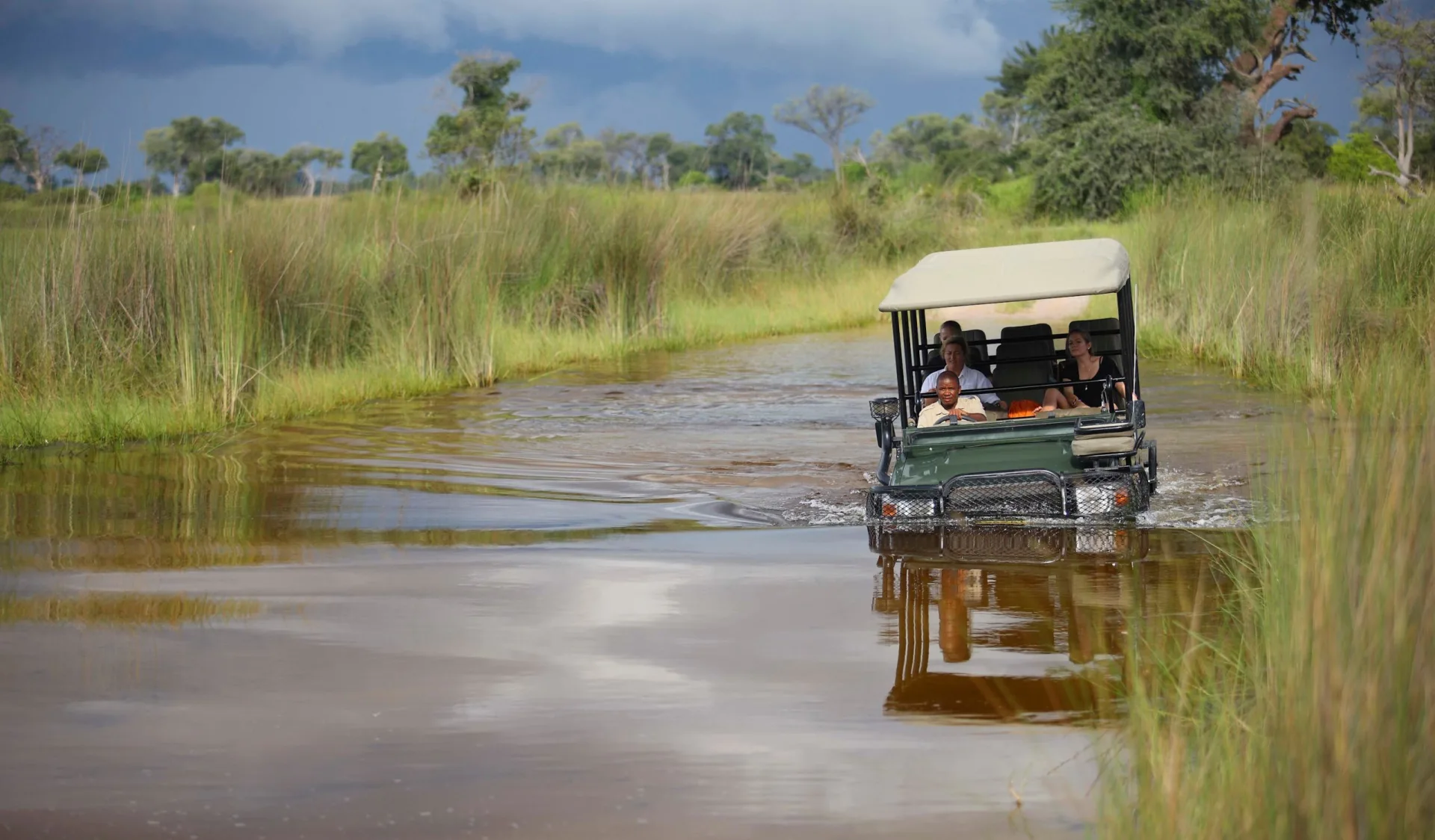
Botswana's signature is the Okavango Delta, where you track game by open vehicle and glide through the channels by mokoro, with the best wild dog viewing in Africa and the elephant herds of Chobe nearby. It pairs naturally with Victoria Falls. South Africa pairs safari with city, wine and coast, making it the better all-round holiday. See our Okavango Delta guide for more.
Choose South Africa if it is your first safari, you want value, a malaria-free option or a trip that mixes safari with cities and beaches. Choose Botswana if you have safari experience, want genuine remoteness and the water-based Delta, and the higher cost is not a barrier. A popular route does both: South Africa first, Botswana on a return trip.
South Africa, for most first-timers. It is cheaper, easier to reach on direct flights, has malaria-free Big Five reserves and reliable rhino, and combines with Cape Town. Botswana suits travellers who have been on safari before.
Yes, by a wide margin. South Africa ranges from budget self-drive to luxury, while Botswana camps typically cost USD 1,000 to over USD 3,000 per person per night. You pay in Botswana for remoteness, not better wildlife.
Only South Africa. It has genuine malaria-free Big Five reserves such as Madikwe and the Eastern Cape, ideal for families with young children. Northern Botswana is a malaria area with no malaria-free alternative.
Yes, but with a caveat. Both have lion, leopard, elephant and buffalo in good numbers. South Africa is far more reliable for rhino, which are scarce in Botswana after years of heavy poaching pressure.
The Okavango Delta, a vast inland water system explored by open vehicle and mokoro canoe, with the best wild dog viewing in Africa. Chobe nearby holds huge elephant herds. Botswana is wild, remote and exclusive.
South Africa, thanks to its malaria-free reserves, shorter travel, family-friendly lodges and the option to add beaches and cities. Botswana is more remote and costly, and the malaria risk makes it harder with young children.
In South Africa, yes. A Greater Kruger safari pairs easily with Cape Town, the Winelands and the coast. Botswana is pure wilderness, best combined with Victoria Falls rather than a city or beach.
South Africa, clearly. It delivers a full Big Five safari at every budget and works as part of a wider holiday. Botswana is a premium wilderness experience, better suited to an occasional splurge than an every-year trip.
Tell us roughly when you would like to travel and what you most want to see. Every enquiry is answered personally, usually within 24 hours. No set packages, no booking fees.