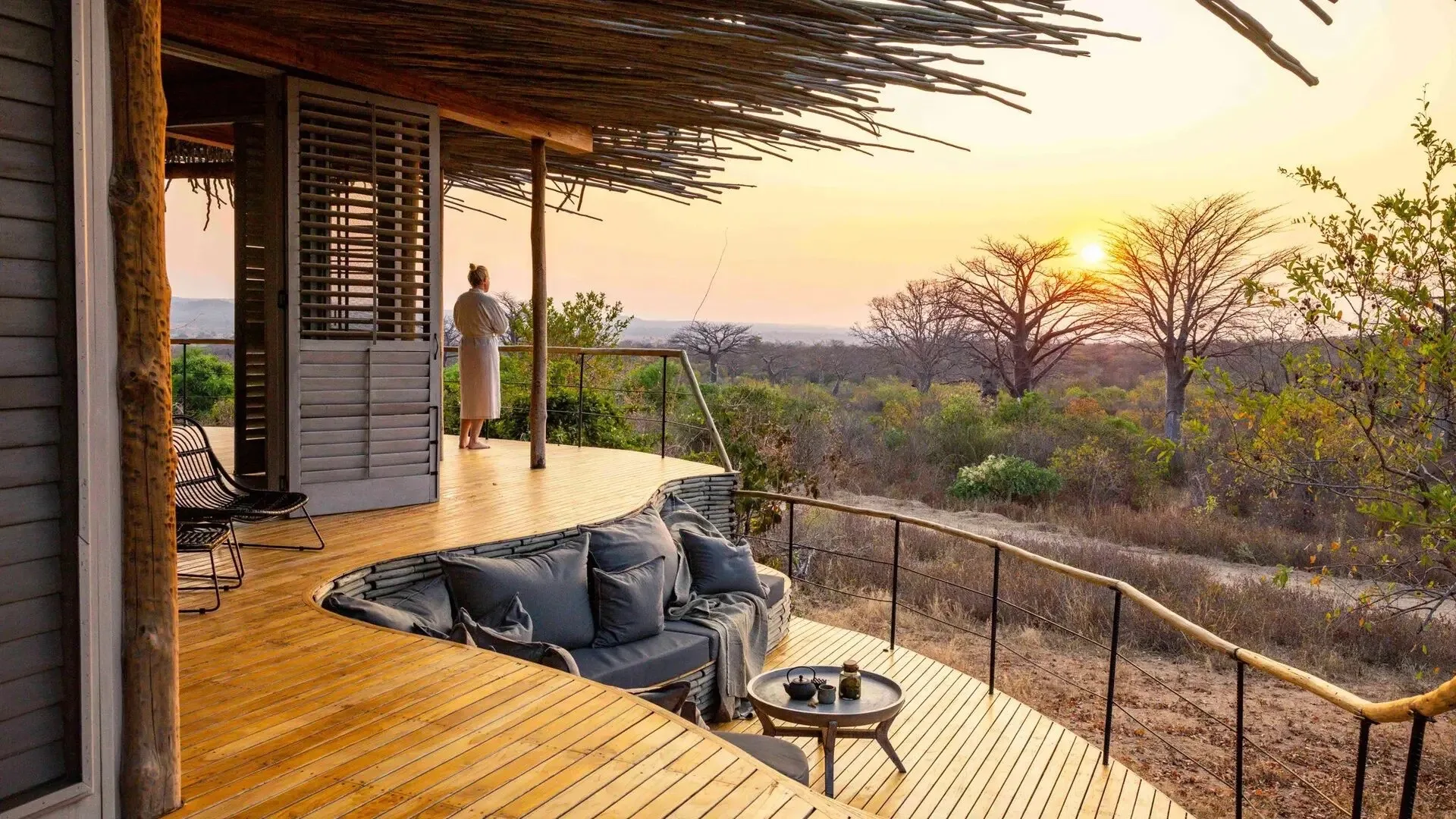
Tanzania's largest national park, wild and remote, with huge lion prides and big elephant herds.
Enquire About RuahaRuaha is Tanzania's largest national park and one of the wildest, least-visited corners of the East African safari. Remote in the country's south and reached almost entirely by light aircraft, it offers a sense of space and solitude the northern circuit lost long ago, with only a handful of camps across an enormous area.
The Great Ruaha River is the park's lifeline, and in the dry season its sandy bed and remaining pools draw wildlife in concentrations that rival anywhere. Ruaha is known above all for its lions, which form some of the largest prides in Africa, and for elephant herds that move through the baobab-studded hills.
Ruaha sits at a biological crossroads where East and Southern African species overlap, so you can see both greater and lesser kudu, sable and roan antelope, alongside the more familiar plains game. For a returning safari-goer, that mix is part of the appeal.
This is a park for the second or third safari, for travellers who value wildness and big predator action over creature comforts and easy access. Walking safaris and fly-camping add to the sense of genuine wilderness.
Ruaha is famous for its lions, which form some of the largest prides on the continent, and for the drama of big-cat life along the river in the dry season. Leopard and cheetah are present, and the park is also a stronghold for endangered African wild dog.
Elephant herds are a constant, moving among the baobabs and down to the river, and buffalo gather in large numbers. The crossroads location adds greater and lesser kudu, sable and roan, a richer antelope list than the north.
Birding is excellent, with more than 570 species across the river, woodland and hills, and the dry-season concentrations along the Great Ruaha make for some of the most rewarding game viewing in Tanzania.
June to October, the dry season, is the time to come, when the shrinking river concentrates wildlife and the big prides and elephant herds gather along the water. October is hot but outstanding.
The green season from November to April brings the rains, lush scenery and superb birding, but the bush thickens and access can be harder, with some camps closing. The dry months are the clear choice for predators.
Stylish, well-guided camps that make the most of Ruaha's wildlife and wilderness, among the best bases in the park.
Classic, characterful bush camps with a strong reputation for guiding and a genuine, low-key wilderness feel.
A long-established lodge in a fine riverside position, offering Ruaha at a more accessible price.
Several camps offer guided walking and fly-camping, the most immersive way to experience Ruaha's scale and solitude.
Simple park bandas and campsites suit the adventurous and budget-minded willing to organise their own logistics.
Ruaha rewards photographers with big prides, baobab landscapes and dramatic dry-season light along the river, all with very few other vehicles in the frame. The wildness and space make for atmospheric, uncrowded images.
Ruaha is a fly-in, largely luxury destination that suits second-time safari-goers after wilderness and big predators. It pairs naturally with Nyerere for a wild southern-circuit trip, away from the northern crowds.
Ruaha lies in remote southern Tanzania, reached by light aircraft from Dar es Salaam, Arusha or the southern circuit. There are no easy road routes, which is part of what keeps it so wild.
We arrange every detail, from the right camp to flights and transfers. Tell us your dates and we will do the rest.
Plan My Safari WhatsApp UsRuaha holds some of the largest lion prides in Africa, and its remote, undisturbed setting and concentrated dry-season wildlife make for outstanding predator viewing.
It is remote. Almost all visitors fly in by light aircraft from Dar es Salaam, Arusha or elsewhere on the southern circuit, which is part of what keeps it so wild and quiet.
June to October, the dry season, when the shrinking Great Ruaha River concentrates wildlife and the big prides and elephant herds gather.
It is superb but wild and fly-in only, so it suits second or third safaris, or those specifically after wilderness and big predators, rather than a first trip.
Yes. Several camps offer guided walking safaris and fly-camping, among the most immersive ways to experience the park's scale and solitude.
Yes. The two are the heart of the southern circuit and pair naturally for a wild, uncrowded Tanzania safari away from the north.
Tell us roughly when you would like to travel and what you most want to see. Every enquiry is answered personally, usually within 24 hours. No set packages, no booking fees.