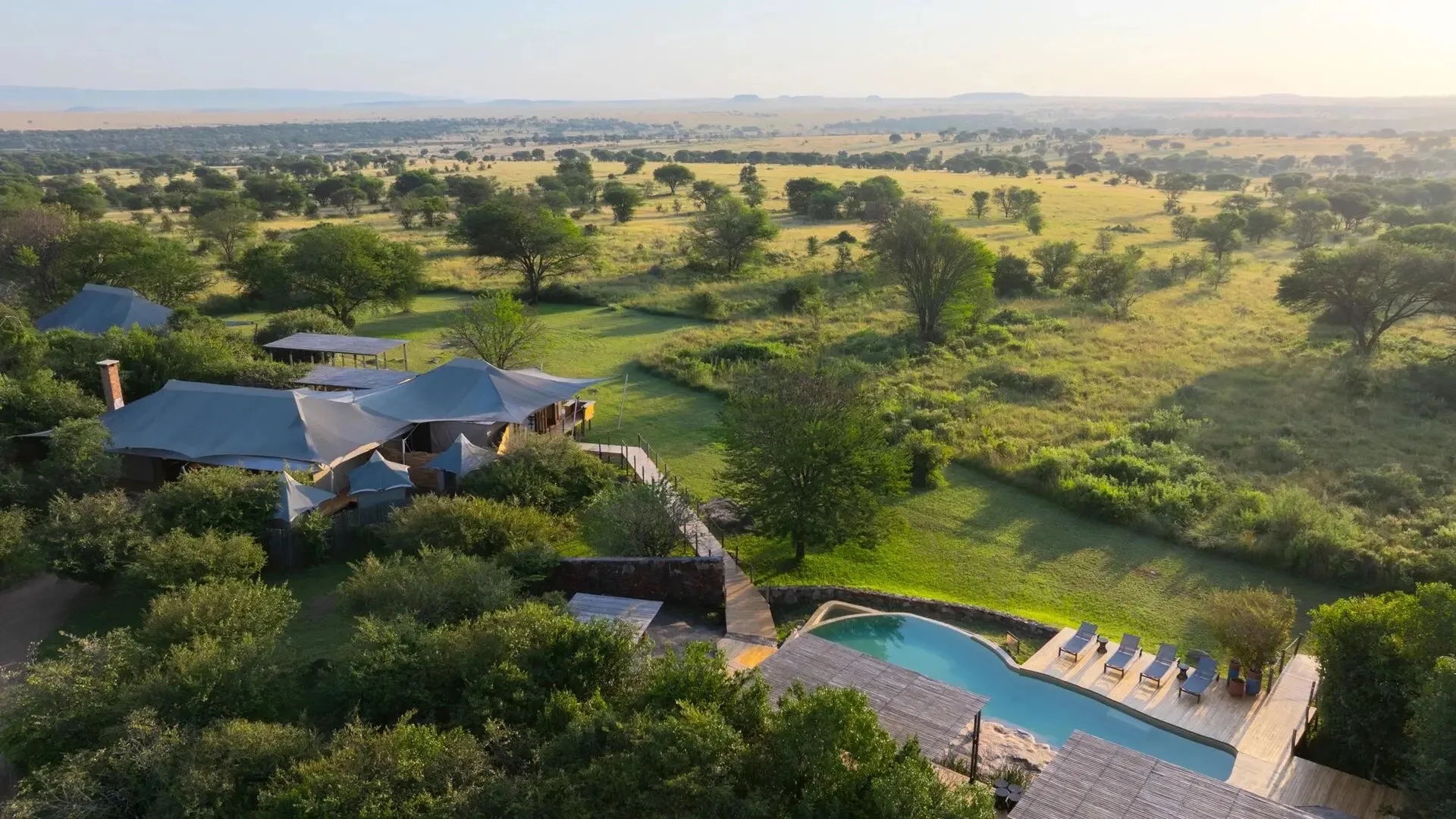
The endless plains that gave the word safari its meaning, and the main stage of the Great Migration.
Enquire About SerengetiThe Serengeti is the heart of the Tanzanian safari and one of the most storied wildlife areas on earth. Its name comes from the Maa word for endless plains, and that is exactly what it delivers: nearly 15,000 square kilometres of golden grassland, broken by ancient granite kopjes and threaded by rivers, supporting wildlife in numbers that are hard to take in.
It is the main stage of the Great Migration. Where you go depends on the time of year: the short-grass plains of the south around Ndutu for the calving in February, the western corridor and the Grumeti River from May, and the far north around Kogatende for the Mara River crossings from July to October. Getting the timing and the camp right is everything.
Beyond the Migration, the central Seronera region holds resident wildlife year-round, with some of the highest lion densities anywhere and reliable leopard and cheetah. The Serengeti rewards those who slow down and spend several days rather than racing through.
Accommodation runs from comfortable lodges to exclusive mobile camps that move with the herds, following the calving and the crossings. For the Migration in particular, a well-placed mobile camp is often the best choice. Our Great Migration guide explains the timing in full.
The Serengeti is famous above all for its predators. Lion prides are large and numerous, cheetah hunt the open southern plains, and leopard are reliably found in the riverine forest and among the kopjes. Spotted hyaena and the occasional wild dog complete the picture.
The Migration is the headline event, with roughly two million wildebeest, zebra and gazelle moving through the ecosystem, drawing predators and culminating in the dramatic Mara River crossings in the north.
Resident herds of elephant, buffalo, giraffe and a wide range of plains game keep the central Serengeti rewarding year-round, and the birdlife, from ostrich and bustards to raptors and the kopje-dwelling specials, is rich throughout.
June to October is the prime dry season, easiest for general game and the time of the northern Mara River crossings. Late January and February bring the calving on the southern plains, the other great Migration spectacle.
The long rains of April and May are the low season, green and quiet with lower rates, though some camps close. The herds are in the western and central Serengeti then, so the right camp still delivers, for a fraction of the peak price.
Landmark camps on private concessions, combining the Serengeti's wildlife with design and service at the very top of the market.
Refined lodges in the western corridor and the far north, well placed for the Grumeti and Mara River crossings respectively.
Light mobile camps that move through the year to track the calving and the crossings, the ideal way to follow the Migration.
Comfortable lodges and tented camps in good central locations, offering the Serengeti at a more accessible price.
Public campsites and the central wildlife lodges give budget travellers and overland trips a foothold in the park.
The Serengeti is one of the most cinematic places to photograph in Africa: big cats on golden plains, kopjes at first light and the chaos of a river crossing. Mobile camps put you in the right place at the right time, and the open terrain gives clean backgrounds.
The Serengeti works at every level, from public campsites to ultra-luxury concessions. For the Migration, prioritise location and timing over luxury; a well-placed mobile camp beats a grand lodge in the wrong region.
The Serengeti lies in northern Tanzania, reached by light aircraft from Arusha and Kilimanjaro to airstrips across the park, or by road as part of a northern-circuit drive via Ngorongoro.
We arrange every detail, from the right camp to flights and transfers. Tell us your dates and we will do the rest.
Plan My Safari WhatsApp UsThe Mara River crossings in the northern Serengeti generally run from July to October. The herds reach the north from around July and turn south again as the short rains approach.
Late January and February, on the southern short-grass plains around Ndutu, when hundreds of thousands of calves are born and predator action peaks.
It depends on the month. Southern plains for the calving, the western corridor for the Grumeti crossings, and the far north for the Mara River crossings. A mobile camp that moves with the herds is often ideal.
Four to five nights lets you settle into a region and give the Migration and big cats time. Racing through in a night or two does the park a disservice.
Popular areas can be busy at peak Migration times, but the park is vast and the private concessions and quieter regions offer space and exclusivity.
By light aircraft from Arusha or Kilimanjaro to one of the park airstrips, or by road on a northern-circuit safari via Ngorongoro.
Tell us roughly when you would like to travel and what you most want to see. Every enquiry is answered personally, usually within 24 hours. No set packages, no booking fees.