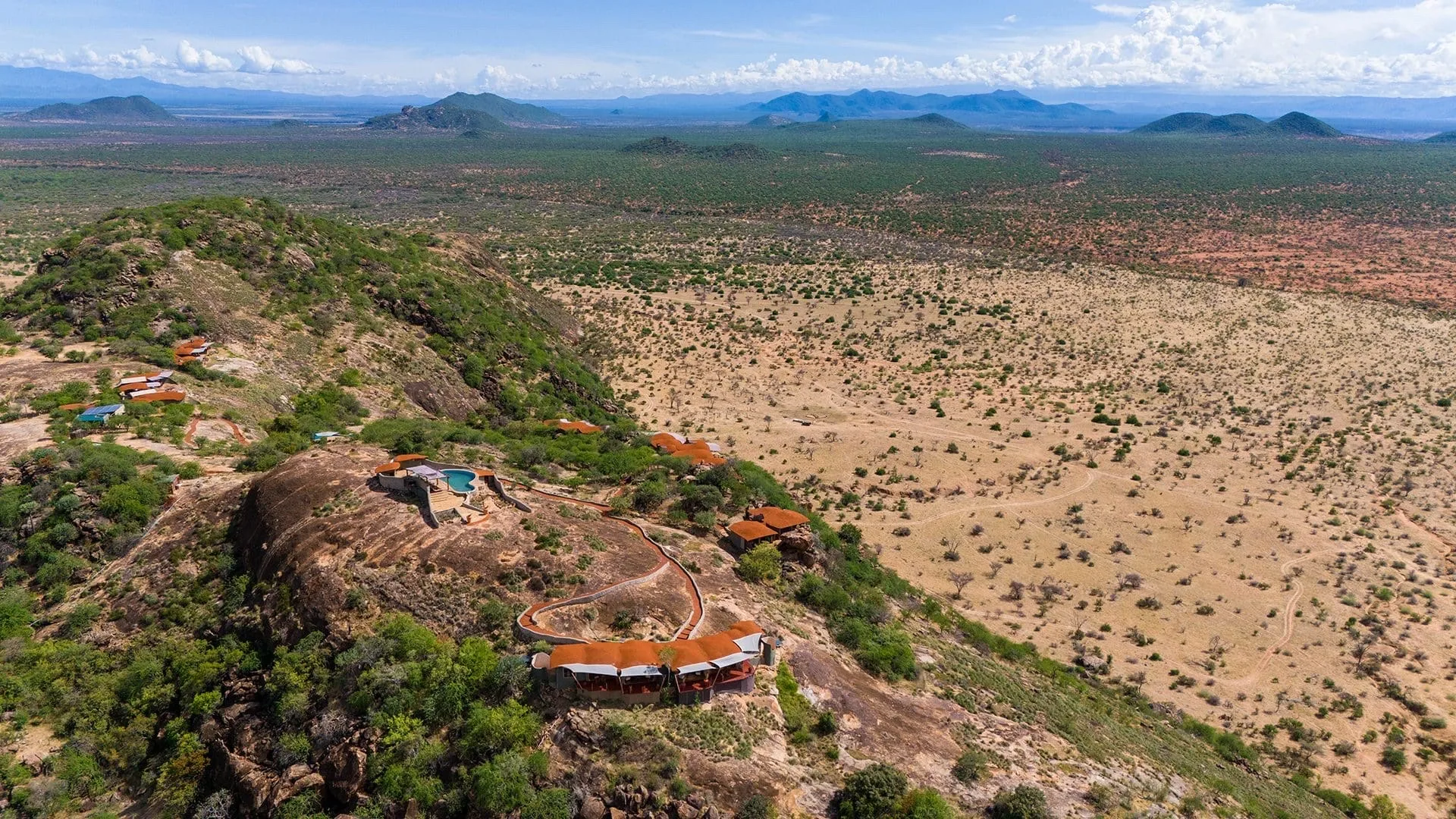
The arid north, home to species found nowhere in the south and a rich Samburu culture.
Enquire About SamburuSamburu lies in Kenya's arid north, a land of red earth, doum palms and rocky hills, and it feels a world away from the green Mara. The lifeblood of the reserve is the Ewaso Ng'iro River, a band of permanent water that draws wildlife through an otherwise harsh, semi-desert landscape.
The draw here is species you will not find in the south. The so-called Samburu Special Five, the Grevy's zebra, reticulated giraffe, gerenuk, beisa oryx and Somali ostrich, are all dry-country specialists at home in the northern rangelands. For a returning safari-goer, that novelty is the appeal.
Samburu is also rich in big game. Elephants come down to the river in family herds, leopard are seen along the riverine forest, and lion and cheetah hunt the surrounding plains. The reserve sits alongside Buffalo Springs and Shaba, which together protect a larger stretch of this ecosystem.
It is Samburu and Maasai country, and the cultural dimension is strong. Many camps work closely with Samburu communities, and a visit here adds a human depth to the wildlife that lingers as long as the animals do.
The headline is the Special Five: Grevy's zebra, with its narrow stripes and large ears, the elegant reticulated giraffe, the long-necked gerenuk that browses on its hind legs, the beisa oryx and the Somali ostrich. None of them are easily seen in southern Kenya.
Big cats are well represented, with Samburu among the more reliable Kenyan reserves for leopard along the river, alongside lion and cheetah on the plains. Elephant herds are a constant presence at the water.
The Ewaso Ng'iro and its fringing forest support crocodile, a wealth of dry-country birds and raptors, and good general game. The contrast between the green river corridor and the surrounding desert concentrates wildlife and makes for rewarding viewing.
The dry seasons, June to October and December to March, are best, when wildlife concentrates along the river and the tracks are easy. Samburu is hot year-round, so light clothing and sun protection matter.
The long rains of April and May, and the short rains of November, green the landscape and disperse the game, with lower rates and fewer visitors. Occasional heavy rain can affect access, so the dry months are the safer choice.
Design-led lodges set on community conservancies above the reserve, with sweeping views, pools and strong Samburu partnerships.
Intimate riverside camps shaded by doum palms, beautifully placed for elephants and the river's wildlife.
Comfortable tented camps on the river offering reliable game viewing at a more accessible price.
Camps on the Westgate and Kalama conservancies add walking, night drives and a deeper cultural connection.
Simpler camps and lodges give budget-minded travellers a foothold in this distinctive northern reserve.
Samburu offers something different to photograph: red earth and doum palms, the Special Five, and elephants and leopard along a palm-fringed river. The warm desert light and unusual subjects make it a favourite for returning photographers.
Samburu ranges from mid-range river camps to ultra-luxury conservancy lodges. Its rare species and strong culture suit second-time safari-goers and anyone after something beyond the classic Mara circuit.
Samburu lies in northern Kenya, reached by a short scheduled flight from Nairobi's Wilson Airport, or a road transfer of around five to six hours via Mount Kenya.
We arrange every detail, from the right camp to flights and transfers. Tell us your dates and we will do the rest.
Plan My Safari WhatsApp UsFive dry-country species seen here but not in southern Kenya: Grevy's zebra, reticulated giraffe, gerenuk, beisa oryx and Somali ostrich. They are the reserve's signature draw.
Yes, it is one of the more reliable Kenyan reserves for leopard, which favour the riverine forest along the Ewaso Ng'iro.
The dry seasons, June to October and December to March, when wildlife concentrates along the river. It is hot year-round.
By a short light-aircraft flight from Nairobi's Wilson Airport, or a scenic road transfer past Mount Kenya of around five to six hours.
Yes. Pairing Samburu's desert specials with the Mara's big cats and Migration gives a varied, classic Kenya itinerary.
Very much so for the rare species, leopard, riverine scenery and strong Samburu culture, particularly for returning safari-goers wanting something new.
Tell us roughly when you would like to travel and what you most want to see. Every enquiry is answered personally, usually within 24 hours. No set packages, no booking fees.