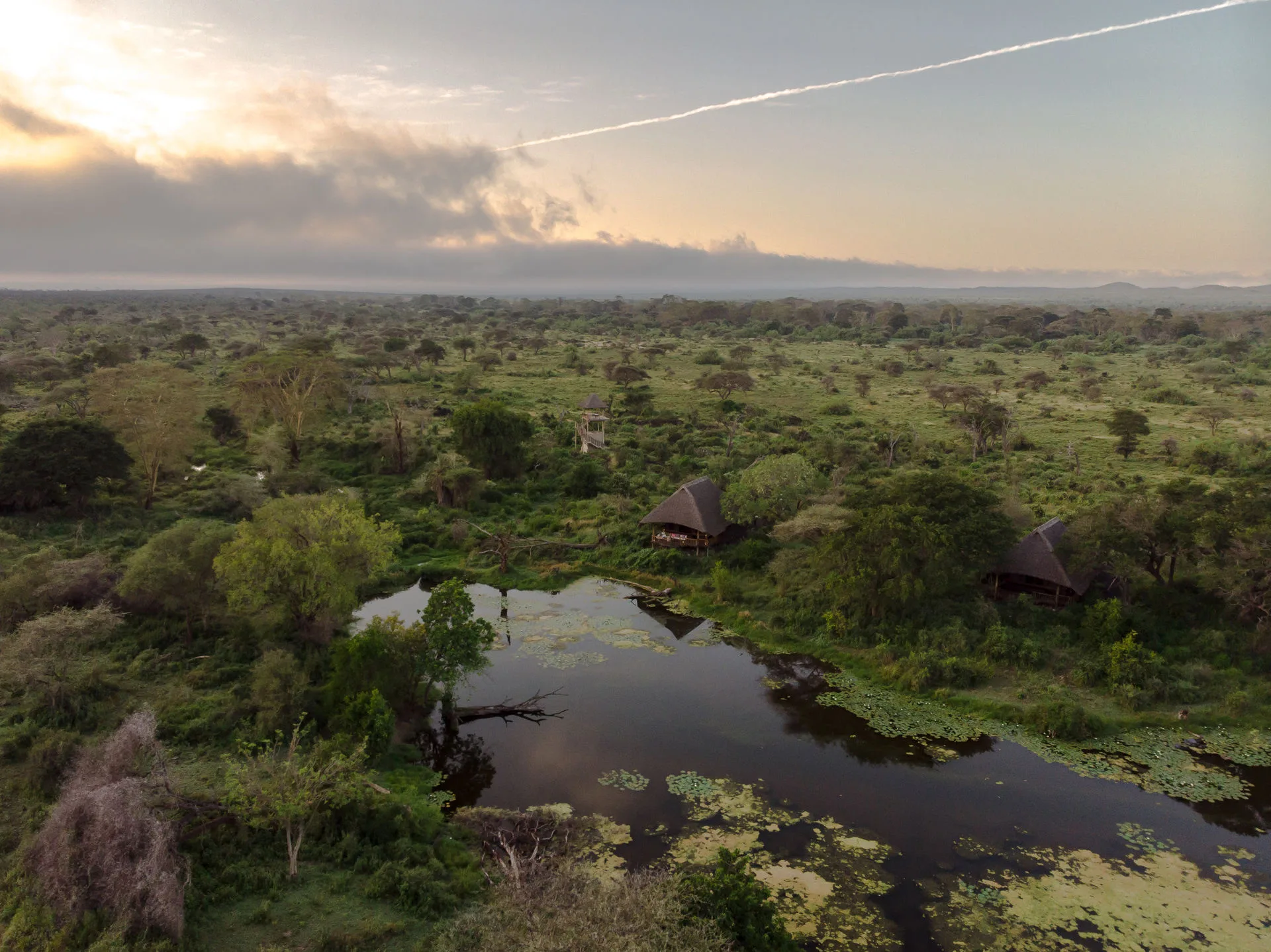
Kenya's vast, wild frontier: red-dusted elephants, raw wilderness and far fewer crowds.
Enquire About TsavoTsavo is Kenya's great wilderness, split into Tsavo East and Tsavo West and together covering some 22,000 square kilometres, around four per cent of the country and one of the largest protected areas in the world. It is vast, raw and far less visited than the Mara, which is exactly its appeal.
Tsavo East is the bigger and drier of the two, a land of red earth, open plains and the long Yatta Plateau, where the famous red elephants gather, their grey hides stained ochre by dust-bathing in the iron-rich soil. Tsavo West is greener and more rugged, with volcanic hills, lava flows and the clear pools of Mzima Springs, where hippo and crocodile can be watched from an underwater hide.
This is country with history. The Tsavo man-eaters, the lions that halted the building of the Uganda Railway in 1898, are part of its legend, and the region's maneless male lions remain a talking point. The Ngulia rhino sanctuary in Tsavo West protects a population of black rhino within the wider park.
Lying between Nairobi and the coast, Tsavo is the natural safari half of a Kenyan bush-and-beach trip, easily combined with the Indian Ocean beaches around Mombasa and Diani.
Elephants define Tsavo, in large herds famously reddened by the soil. Lion, including the region's maneless males, leopard, cheetah and spotted hyaena are all present, hunting across the open country.
Buffalo, giraffe, zebra and a wide range of plains game are common, and Tsavo West's Ngulia sanctuary protects black rhino. The dry-country setting also brings species such as the lesser kudu and the fringe-eared oryx.
Mzima Springs is a highlight for hippo, crocodile and birdlife, and Tsavo's scale and varied habitats make for rewarding birding, with raptors and dry-country specials across the plains and hills.
The dry seasons, June to October and January to February, are best, when sparse vegetation and limited water concentrate wildlife and the famous elephants gather at the rivers and waterholes.
The rains of March to May and November green the parks and disperse the game, with lower rates and dramatic skies. Tsavo's sheer size means patience always helps, but the dry months make the wildlife easier to find.
A refined, spring-fed luxury camp in Tsavo West with Kilimanjaro views, the most polished base in the parks.
Exclusive lodges on the conservancies bordering Tsavo combine the parks' wildlife with off-road and walking access.
Comfortable tented camps and lodges with reliable access to Tsavo West's springs, hills and wildlife.
A range of lodges and camps in Tsavo East offering affordable access to the red elephants and the plains.
Simple self-catering bandas and campsites suit budget travellers and self-drivers exploring the parks independently.
Tsavo's red elephants against ochre earth and big skies are a distinctive subject, and the wilder, emptier setting gives clean, uncrowded images. Mzima Springs and the volcanic landscapes of the West add variety beyond the classic plains.
Tsavo spans budget bandas to luxury camps and rewards travellers who value space and wilderness over a tick-list of sightings. Its position makes it the obvious safari leg of a Kenyan bush-and-beach trip.
Tsavo lies in south-eastern Kenya between Nairobi and Mombasa, reached by road, by the modern railway, or by light aircraft to the parks' airstrips. It sits conveniently on the route to the coast.
We arrange every detail, from the right camp to flights and transfers. Tell us your dates and we will do the rest.
Plan My Safari WhatsApp UsThey are naturally grey, but dust-bathing in Tsavo's iron-rich red soil stains their hides ochre, giving the famous red elephants their colour.
Tsavo East is larger, drier and more open, known for the red elephants and the Yatta Plateau. Tsavo West is greener and more rugged, with volcanic hills, Mzima Springs and the Ngulia rhino sanctuary.
The dry seasons, June to October and January to February, when wildlife concentrates at water and the vegetation is sparse.
Ideal. It sits between Nairobi and the coast, so it pairs naturally with the beaches around Mombasa and Diani.
No. Its vast size means it is far quieter than the Mara, with a wild, uncrowded feel, though wildlife is more spread out as a result.
Black rhino are protected in the Ngulia sanctuary within Tsavo West, though sightings in the wider park are not guaranteed.
Tell us roughly when you would like to travel and what you most want to see. Every enquiry is answered personally, usually within 24 hours. No set packages, no booking fees.