Same wildlife, same boundary, two very different safaris. We plan trips into both, so here is how they really compare.
Plan a Greater Kruger SafariKruger is a vast state-run national park where you self-drive on public roads from around USD 30 a day. The Sabi Sands is a small private reserve sharing an unfenced boundary with it, where guided open vehicles drive off-road for close leopard sightings. Choose Kruger for budget and freedom, Sabi Sands for guided luxury.
The two are part of one ecosystem. There is no fence between the Sabi Sands and Kruger, so the animals are the same and move freely between them. What you pay for in the Sabi Sands is not different wildlife, but the way you see it: off-road, up close, with a ranger and tracker.
| Kruger National Park | Sabi Sands | |
|---|---|---|
| Type | State-run national park | Private game reserve |
| Size | About 19,485 km² | About 650 km² |
| Cost | From around USD 30 a day | USD 700 to 2,000+ per night |
| Game drives | Self-drive on public roads | Guided open 4x4, off-road |
| Night drives | Guided, from rest camps only | Yes, every evening |
| Leopard viewing | Present, less predictable | Among the best in Africa |
| Vehicles at a sighting | Can be many | Usually two or three |
| Where you stay | Rest camps, self-catering | All-inclusive luxury lodges |
| Boundary | Unfenced, shared with Sabi Sands | Unfenced, shared with Kruger |
| Best for | Budget, self-drive, independence | Guided luxury, off-road, leopards |
The Sabi Sands sits on Kruger's western boundary, and the fence between them came down decades ago. The two share the same rivers, the same herds and the same predators. A leopard you watch in the Sabi Sands this morning may be in Kruger by tonight. So the question is never which has better wildlife. It is how you want to experience it.
Kruger is built for independence. You drive your own car along tarred and gravel roads, set your own pace, and stop wherever you find something. It is one of the most rewarding self-drive parks in the world, and you can spend a week there on a modest budget. The trade-off is that you stay on the roads and you find the animals yourself.
The Sabi Sands works the opposite way. You travel in an open 4x4 with a ranger and a tracker, who read the bush and talk to other vehicles, and you drive off-road to reach a sighting. Drives go out at dawn and again at dusk, with a night drive on the way home. The difference a good tracker makes is enormous.
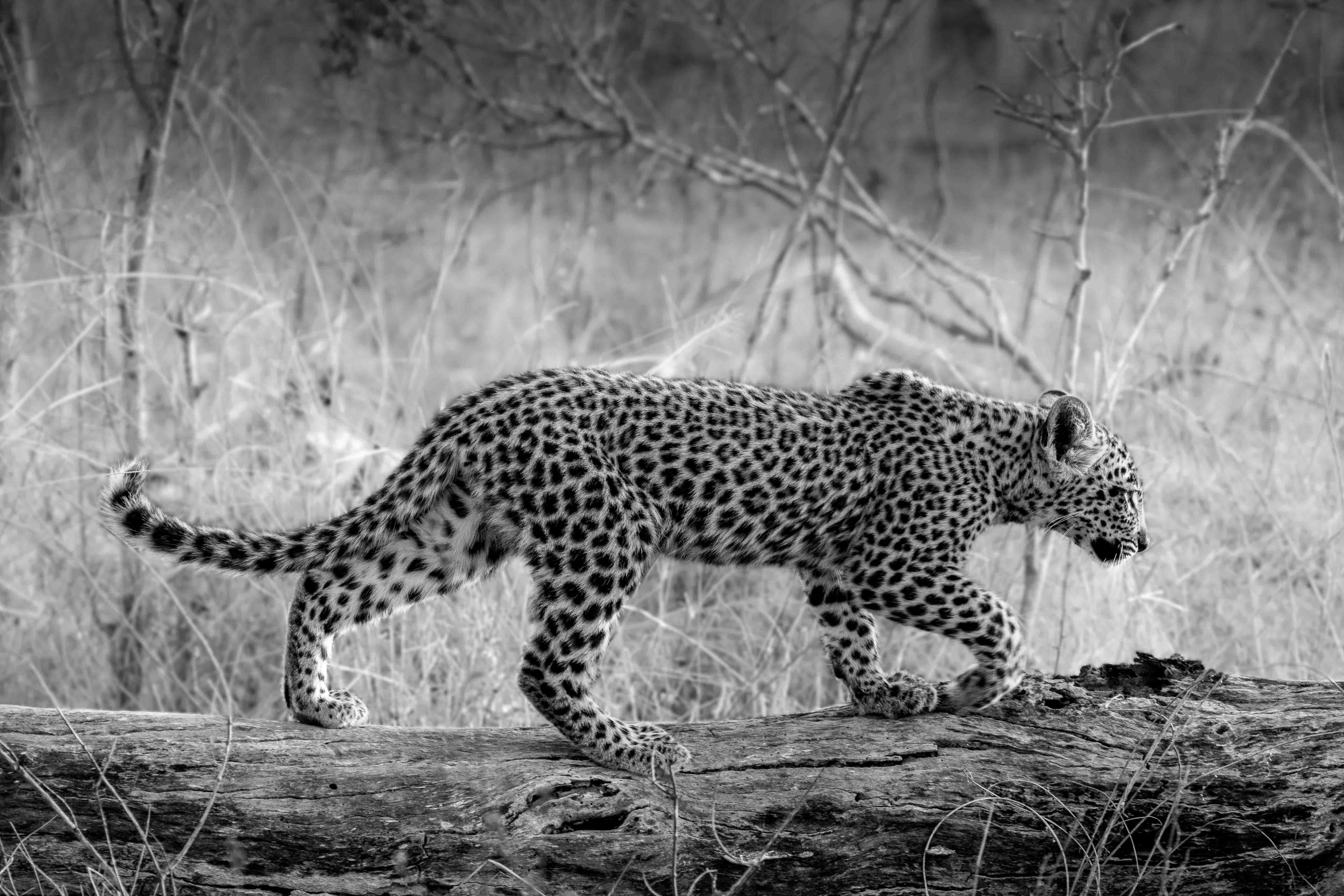
This is the heart of it. The Sabi Sands is the best place in Africa to see leopard, because generations of these cats have grown used to vehicles and the lodges can drive off-road to follow them. In Kruger the same leopards exist, but you are confined to the road, so a sighting is more a matter of luck. For photographers, the off-road access and low vehicle numbers of the Sabi Sands are hard to match.
Kruger is among the best-value safaris anywhere. A daily conservation fee of around USD 30, plus an affordable rest-camp chalet or campsite, is all you need. The Sabi Sands lodges are all-inclusive and priced from roughly USD 700 to over USD 2,000 per person per night, covering meals, drinks, guided drives and the off-road, low-vehicle experience.
Kruger's rest camps are practical and comfortable, with self-catering chalets, shops and restaurants, fenced for safety. The Sabi Sands is home to some of the finest lodges in Africa, among them Londolozi, Singita, Mala Mala and Sabi Sabi, where the safari, the food and the service are all part of one package. See our South Africa safari guide for more.
Choose Kruger if you want freedom, a longer trip and a smaller budget, and you are happy to do the finding yourself. Choose the Sabi Sands if you want the guided, off-road, leopard-rich safari and the comfort of a luxury lodge, and the price is not a barrier. Many of our trips combine the two: a few self-drive days in Kruger, then a few guided nights in the Sabi Sands.
Kruger is a state-run national park where you self-drive on public roads. The Sabi Sands is a private reserve on its unfenced boundary, where guided open vehicles drive off-road. They share the same wildlife and ecosystem.
It is part of the Greater Kruger. The Sabi Sands borders Kruger National Park with no fence between them, so animals move freely across both. It is privately owned and run separately from the national park.
The Sabi Sands, by a clear margin. Its leopards are used to vehicles and lodges can drive off-road to follow them, making it the best leopard destination in Africa. Kruger has leopards too, but sightings are less predictable.
Far cheaper. Kruger costs around USD 30 a day plus affordable rest-camp accommodation. Sabi Sands lodges are all-inclusive from roughly USD 700 to over USD 2,000 per person per night.
No. The Sabi Sands is guided only, in open 4x4 vehicles with a ranger and tracker. Self-driving is what Kruger is for, on its network of public tarred and gravel roads.
No. In Kruger you must stay on the designated roads, which is why a leopard up a tree fifty metres away can stay out of reach. Off-road driving to reach animals is allowed in the private Sabi Sands.
It is a great combination. A few self-drive days in Kruger followed by a few guided nights in the Sabi Sands gives you both the freedom and the off-road luxury, and the same wildlife throughout.
Yes, both are low-risk malaria areas, especially in the wet summer months. Take prophylaxis and consult your doctor. For a malaria-free Big Five alternative, consider Madikwe or Phinda.
Tell us roughly when you would like to travel and what you most want to see. Every enquiry is answered personally, usually within 24 hours. No set packages, no booking fees.