Africa's most famous national park, and the benchmark every other reserve is measured against.
Enquire About Kruger National ParkThe Kruger National Park is the size of a small country, nearly 20,000 square kilometres of Lowveld stretching from the Crocodile River in the south to the Limpopo on the Zimbabwean border. Proclaimed in 1898, it is one of the oldest protected areas in Africa and remains the heart of South African safari.
What makes Kruger unusual is access. A good tarred and gravel road network lets you drive yourself, stay in affordable rest camps and set your own pace, for a fraction of the cost of a private reserve. The trade-off is that you keep to the roads and share the popular sightings, but game density in the south and centre is high enough that patient self-drivers do very well.
The park has distinct characters. The south around Skukuza and Lower Sabie holds the richest game and the heaviest traffic. The central grasslands between Satara and Olifants are lion and cheetah country. The remote north, with its fever-tree forests and baobabs, trades big-cat numbers for solitude, elephant and some of the best birding in the country.
For the private-reserve experience inside the park, Kruger has a handful of exclusive concessions where operators such as Singita Lebombo and Lion Sands hold private traversing rights, with off-road access and no day visitors. It is national-park scale with private exclusivity, and a strong alternative to the neighbouring Sabi Sands.
All of the Big Five are present in good numbers. Elephant and buffalo herds are everywhere, white rhino persist in the south despite poaching pressure, and lion are widespread. Leopard are common but harder to see than in the off-road private reserves, since self-drivers must stay on the roads.
Beyond the headline species, Kruger is one of the better places in South Africa for cheetah on the central plains and for African wild dog, which range widely across the park. Spotted hyaena, smaller cats and a full supporting cast of plains game are ever-present.
Birdlife is superb, with well over 500 species recorded. The summer months bring migrants and breeding plumage, and the northern rivers and the Pafuri region in particular reward keen birders with specials found nowhere else in the country.
The dry winter from May to September is the easiest time to see game. Vegetation dies back, animals gather at the rivers and remaining waterholes, and the cooler air keeps predators active for longer into the morning. July to September is the peak.
The green summer from November to March is hot, with afternoon thunderstorms and thick bush that makes spotting harder. It is the best time for birding, newborn animals and dramatic skies, and rates are lower outside the festive season.
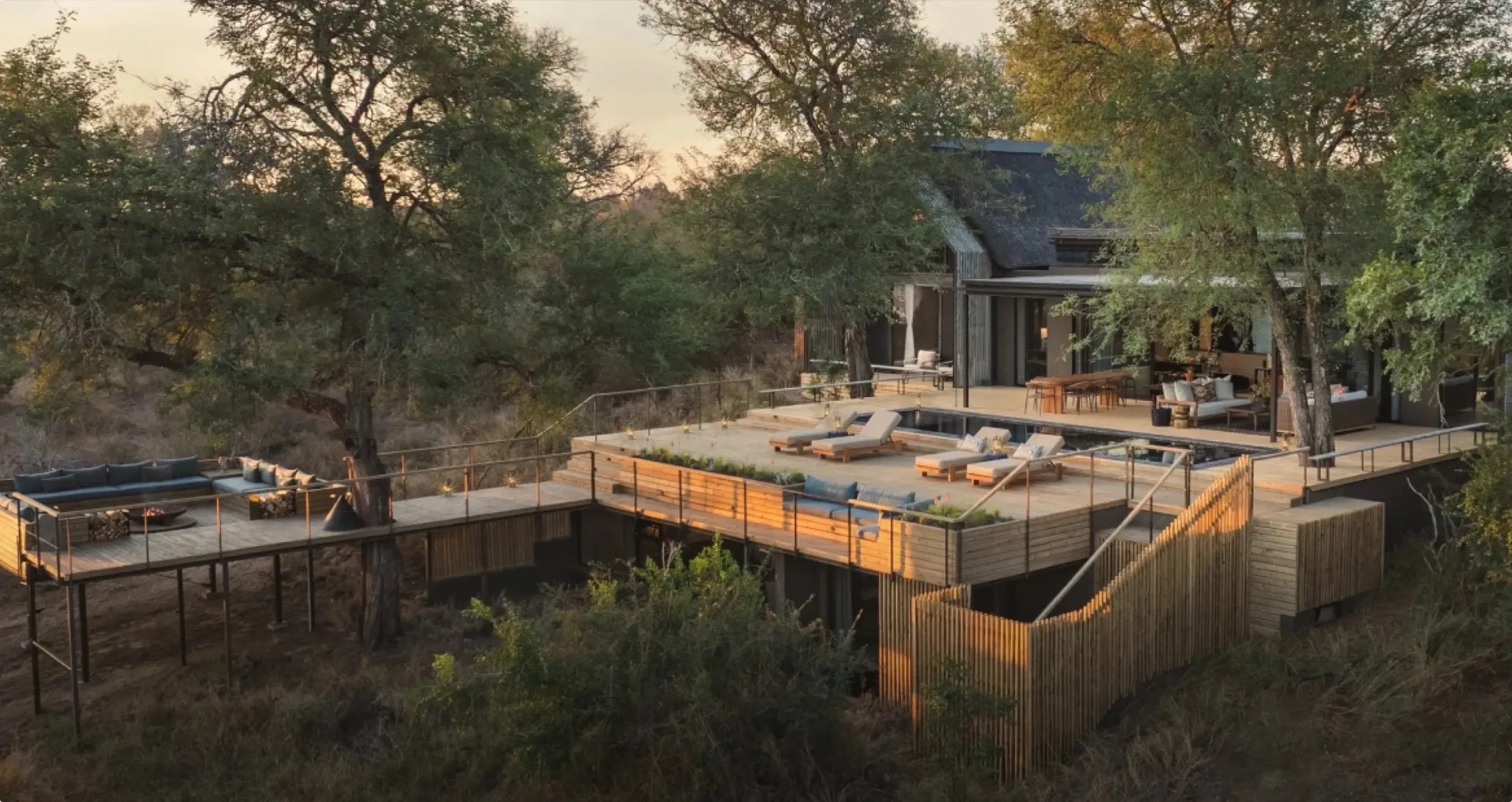
Architecturally striking lodges on a private concession in the eastern Kruger, with some of the finest service, food and design in the country.
Private-concession lodges with off-road traversing, guided drives and the famous Lion Sands treehouses for a night under the stars.
Small guided camps inside private concessions, offering the Big Five and walking at a gentler price than the top end.
Skukuza, Lower Sabie and Satara offer comfortable self-catering and restaurant chalets from a modest nightly rate, ideal for self-drivers and families.
Guided multi-day walking trails sleeping in rustic trail camps, for travellers who want to experience the bush on foot.
Kruger gives you classic bushveld, big skies and elephant against acacia. On a standard self-drive you shoot from a closed vehicle and stay on the road, so a long lens and patience matter. Book a private concession or a guided open-vehicle drive for off-road angles and lower, cleaner perspectives.
Kruger is the rare reserve that genuinely suits every budget. Self-drivers and families use the rest camps; couples and photographers who want exclusivity book a private concession. If you want off-road, guided, predator-focused viewing and can stretch the budget, the neighbouring Sabi Sands does it better.
Kruger lies in the far northeast of South Africa, a four to five hour drive or short flight from Johannesburg. The southern gates are close to Nelspruit (Mbombela), which has its own airport, KMIA, with daily flights.
We arrange every detail, from the right camp to flights and transfers. Tell us your dates and we will do the rest.
Plan My Safari WhatsApp UsYes, if you enjoy setting your own pace and want to keep costs down. Game density in the south is high. For off-road access and expert guiding, add or switch to a private reserve or concession.
Lower Sabie and Skukuza in the south for the richest game, Satara in the centre for predators, and Olifants for the views. Book well ahead, as the popular camps fill months in advance.
No. Kruger is a low-risk malaria area, with most risk in the wet summer. Many travellers take precautions; for a malaria-free Big Five trip, choose Madikwe or the Eastern Cape instead.
Three to five nights lets you explore more than one region. Self-drivers often base in two camps to cover the south and centre.
Kruger for affordable self-drive and scale; the Sabi Sands for off-road, guided, high-density Big Five viewing in luxury. Many trips combine the two.
Yes. SANParks and private operators run open-vehicle morning, sunset and night drives that you can book without staying at a private lodge.
Tell us roughly when you would like to travel and what you most want to see. Every enquiry is answered personally, usually within 24 hours. No set packages, no booking fees.