In 1991 the land that is now andBeyond Phinda was a worn-out patchwork of pineapple fields, cattle camps and sisal, overgrazed to the point of bare soil. Most of the large mammals that had lived there were gone. Thirty-five years later the same ground holds the Big Five, one of South Africa’s most genetically diverse lion populations, and a pangolin population in a district where the species had been absent for four decades. More surprisingly, Phinda has become a place other reserves take wildlife from.
The short answer
Phinda is the most credible conservation story in South African private safari, and the numbers back it rather than the brochure. Over 200 white rhino, 18 black rhino and 63 cheetah have left Phinda to found or reinforce populations elsewhere in Africa. Nine thousand hectares were returned to their ancestral owners in 2007, and both communities chose to keep the land under wildlife. If you want a safari where the money demonstrably does something, this is the reserve.
What the land was before
Maputaland, the corner of northern KwaZulu-Natal where Phinda sits, is one of Africa’s handful of recognised biodiversity hotspots. That was true before 1991 as well, which is what made the degradation so stark. A century of hunting, farming and blanket DDT spraying for tsetse control had stripped out the large mammals and flattened the habitat. The 13,076 hectares that andBeyond assembled were chosen precisely because they were key conservation land that had been abused.
The founding bet was straightforward and, at the time, unproven: that low-volume, high-cost tourism could pay for large-scale ecological repair and still leave meaningful money with the rural communities on the boundary. “Phinda” is Zulu for “the return”.
I worked on this reserve as Head Ranger, and the thing that stays with me is how recent the damage still looks if you know where to check. There are places on the traversing where the old pineapple contours are visible in the grass line. The bush has come back over them in a single human lifetime.
Bringing the species back
The reintroductions ran through the 1990s and were, in several cases, genuinely novel at the time. The sequencing mattered as much as the animals: cheetah went in first and were given time to settle before lion arrived, which had not been done successfully before.
| Species | When | What went in | Why it mattered |
|---|---|---|---|
| Elephant | 1991–1994 | 37 orphaned youngsters, then 4 adults from Zimbabwe in 1993 and 14 from Kruger in 1994 | First private reserve in South Africa to reintroduce elephant |
| White rhino | 1991 | 21 animals, roughly 35 tonnes, moved from a neighbouring farm in a single day | The largest rhino translocation of its time |
| Cheetah | Early 1990s | 12 Namibian cheetah in two groups | First successful reintroduction of cheetah and lion into the same area |
| Lion | 1992–1993 | 13 lion deliberately sourced from different prides and mixed | Produced one of South Africa’s most genetically diverse lion populations |
| Black rhino | 2004 | 15 animals under the WWF / Ezemvelo KZN Wildlife Black Rhino Range Expansion Project | First calf conceived and born on Phinda within a year |
| Pangolin | 2019 | Temminck’s ground pangolin, reintroduced with the African Pangolin Working Group | Species had been locally extinct for around four decades |
The genetic diversity point is the one worth dwelling on. Mixing 13 lion from unrelated prides was risky and unglamorous, and it is the reason Phinda lion are now in demand elsewhere. A reserve that starts with a narrow founder population spends the next fifty years managing inbreeding.
The part most people miss: Phinda exports wildlife
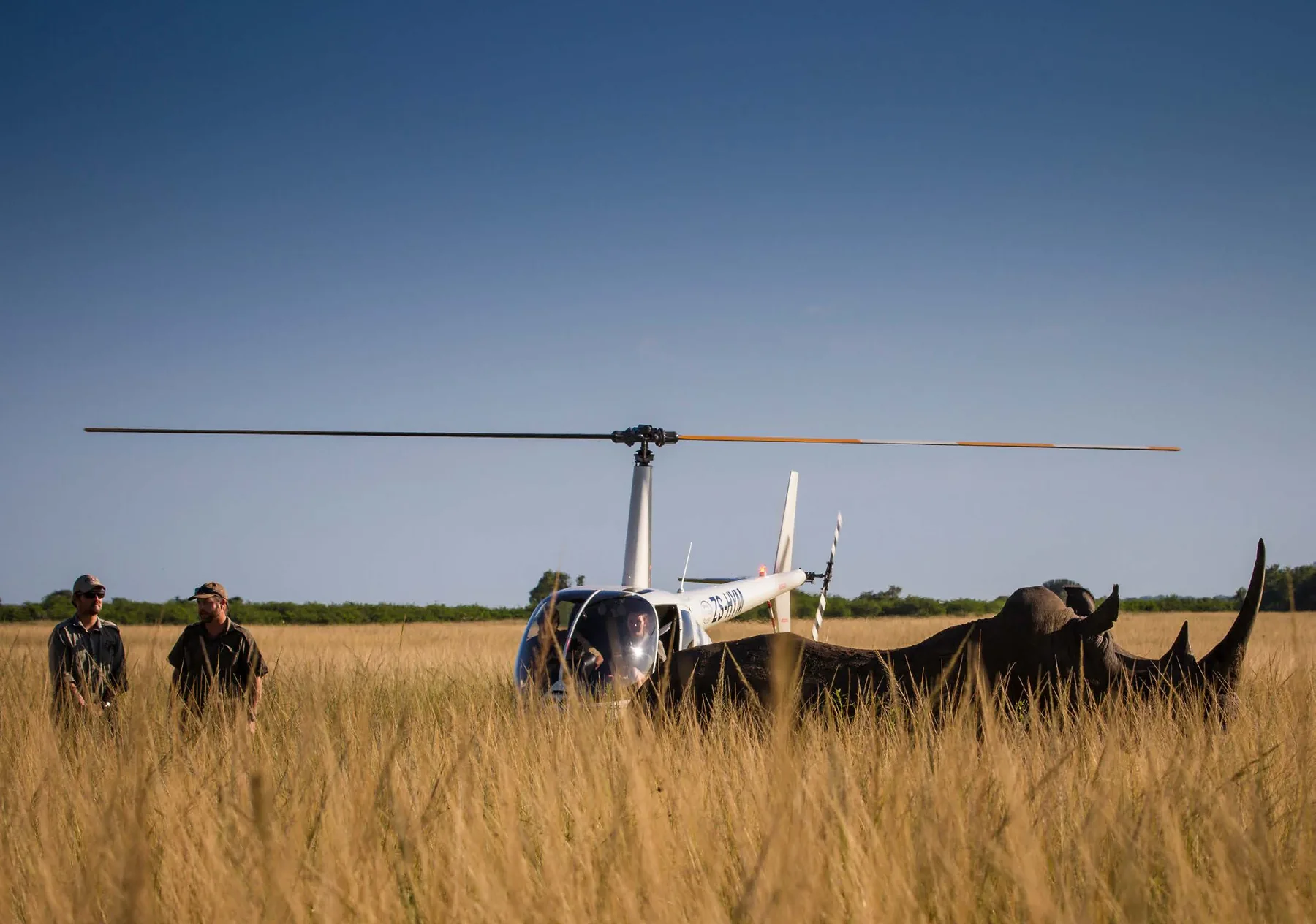
This is the section that separates Phinda from reserves that simply hold animals well. Once the populations were established and growing, Phinda became a source. Simon Naylor, who runs conservation on the reserve, put the running totals at 202 white rhino, 18 black rhino and 63 cheetah translocated out to establish or reinforce populations elsewhere. The white rhino alone amount to something over 330 tonnes of animal moved.
| Where they went | What was sent |
|---|---|
| Okavango Delta, Botswana | 93 white rhino across two operations |
| Akagera National Park, Rwanda | 30 white rhino, and 5 lion that reversed a 15-year local extinction |
| Ngorongoro Crater, Tanzania | 17 white rhino |
| Garamba National Park, DRC | 16 white rhino |
| Across Southern Africa | 63 cheetah, to keep the regional metapopulation genetically viable |
One operation moved ten rhino in a single Ilyushin IL-76 cargo aircraft, which is a record. The lion sent to Akagera are the detail I find hardest to get over: animals descended from a founder group assembled on a former pineapple farm in KwaZulu-Natal now anchor a population in Rwanda where lion had been shot out entirely.
Traffic runs the other way too. In May 2024 the conservancy received 40 southern white rhino from African Parks, the first translocation under its Rhino Rewild programme to move 2,000 rhino into secure areas over a decade. Phinda was chosen as the first destination, which is a reasonable proxy for how the wider conservation sector rates its security and management.
Pangolin, and two species nobody knew existed
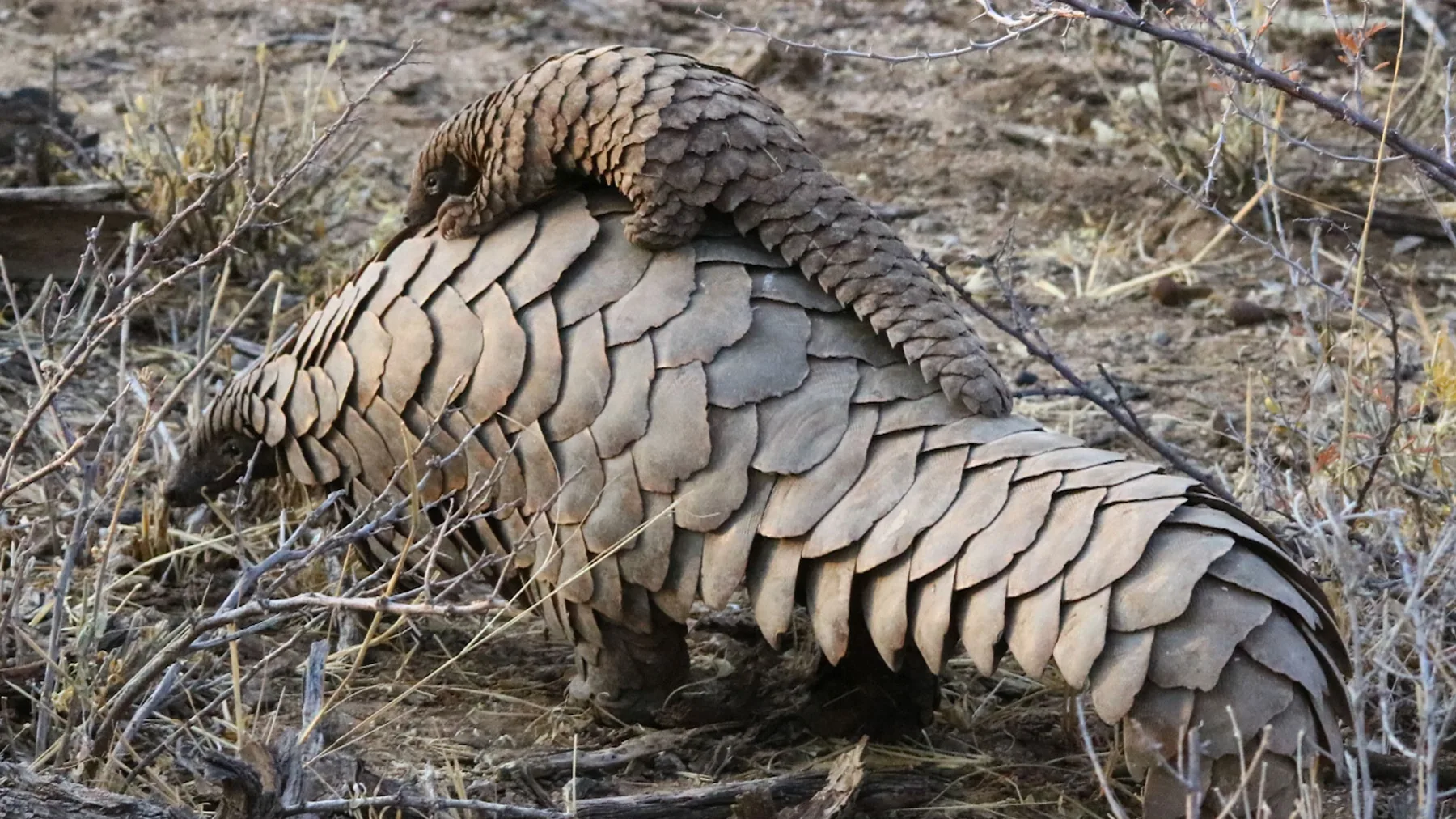
The pangolin work began in June 2019 with the African Pangolin Working Group. Animals confiscated from the illegal trade were rehabilitated and released into a region where Temminck’s ground pangolin had been gone for roughly forty years. The first cohort was seven animals; two died of natural causes and the rest established. It was the first reintroduction of the species into an area where it had been locally extinct, and the monitoring data coming off the UHF tags is now informing similar projects elsewhere.
Two species new to science have also been described from the reserve: the Phinda rain frog in 2017 and the Phinda button spider in 2019. Neither will sell a safari. Both are a decent indicator that the habitat recovered far enough to be worth surveying properly.
The land went back to its owners
The ecological story gets told often. The land story gets told less, and it is the more unusual half.
Engagement with the neighbouring communities in the early 1990s was slow and awkward. Their experience of conservation authorities under apartheid had been largely negative, and the proposition on offer, that a cattle and pineapple operation should become a game reserve full of dangerous animals, was not obviously attractive. A staff member of royal lineage, Walter Zulu, guided the company through the traditional meeting protocols. The Rural Investment Fund was set up in 1992 and is now Wild Impact, formerly Africa Foundation.
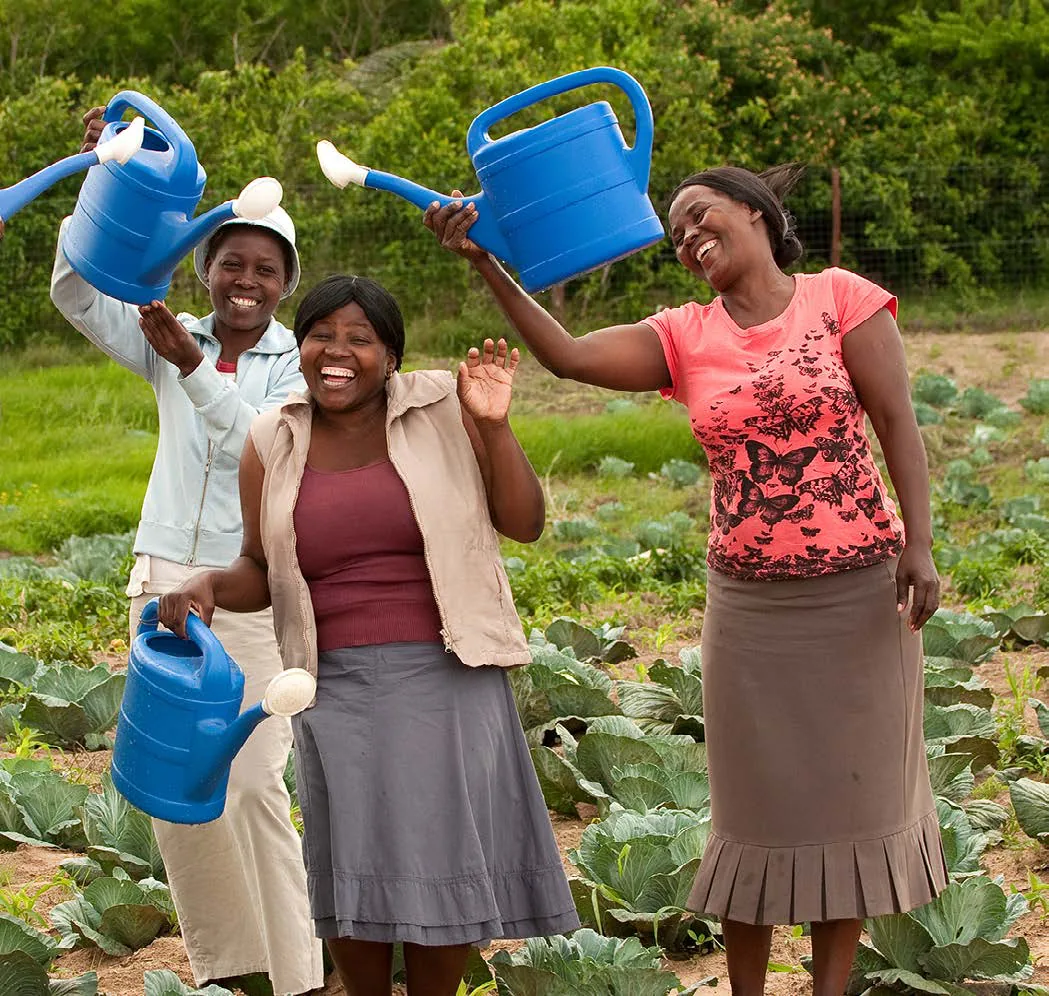
In 2007 a land claim was settled: just over 9,000 hectares of wilderness was returned to the Makhasa and Mnqobokazi communities as their ancestral land. Both communities then decided, independently, to keep it under wildlife rather than convert it back to farming. That land, plus andBeyond’s own and other members’, is what forms the 29,866-hectare Munywana Conservancy today, held jointly by the Makhasa Community Trust, the Mnqobokazi Community Trust, andBeyond Phinda and Zuka. Five partner communities and just under 70,000 residents sit inside that arrangement.
What it has meant in jobs and money
Conservation claims are cheap. These are the figures Phinda’s own conservation management publishes, and they are specific enough to be checked.
| Measure | Then | Now |
|---|---|---|
| Employment | 22 unskilled community members in 1991 | Over 600 skilled full-time staff |
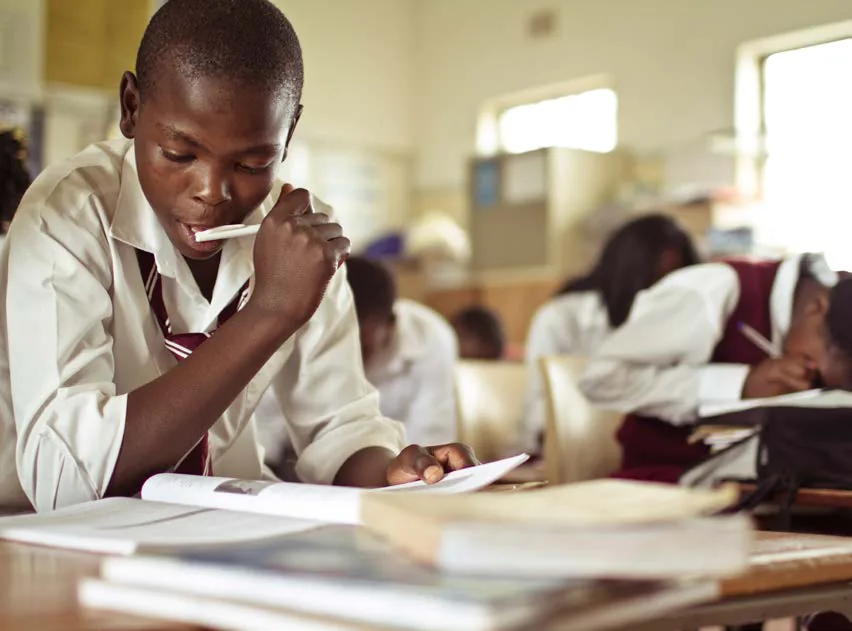
| School infrastructure | Two classrooms at Mnqobokazi Primary in 1993 | 134 classrooms built or renovated; 19,000 scholars supported across 50 schools |
| Healthcare | Mduku Clinic funded from 1995 | Four clinics supported; primary healthcare access for over 51,000 residents |
| Tertiary study | — | A tertiary education fund supporting 268 students, now extending to vocational training |
Over the period from 1995, the reserve reports roughly US$5.5 million in local procurement, US$5.9 million of capital investment in community projects, and US$7.5 million in wages. Lease fees payable to the two landowning communities through to 2042 are estimated at US$22.7 million. Mduku Clinic, which began as a small structure in 1995, now runs 24 hours and serves more than 5,000 people a year.
There is a comparison from 2000 that makes the point more sharply than any of those totals. Surveyed against the neighbouring state-run Mkhuze Game Reserve, annual poaching losses at Mkhuze ran above US$60,000 while Phinda’s sat between US$1,500 and US$3,200. Asked whether their community received no benefit from the reserve, 78 to 85 per cent of respondents at Mkhuze’s neighbouring communities said yes; at Phinda’s the figures were under 7 per cent at Makhasa and around 28 per cent at Mnqobokazi. People who benefit from wildlife tend not to kill it.
What is still hard
Any conservation page that reads as unbroken success is selling something. Phinda’s own management is more candid than most, and lists its hardest problems openly: rhino poaching, economic vulnerability to tourism shocks, complex community relations and land restitution, climate change, and socioeconomic tension with adjacent communities.
Three of those are worth understanding before you book. Rhino poaching has never gone away, which is why dehorning and notching happen at all and why the security operation is expensive and permanent. Community goodwill has not removed the need for trained, well-resourced enforcement; the two work together rather than one replacing the other. And a model funded by high-end tourism is exposed whenever travel stops, as 2020 demonstrated, which is why diversifying income away from lodge beds is the current preoccupation.
Ecological restoration is possible at scale, given time, patience, and strong protection. The real outcomes took twenty to thirty years, not funding cycles of three to five.
Simon Naylor, Conservation Manager, Munywana Conservancy
What a guest can actually do
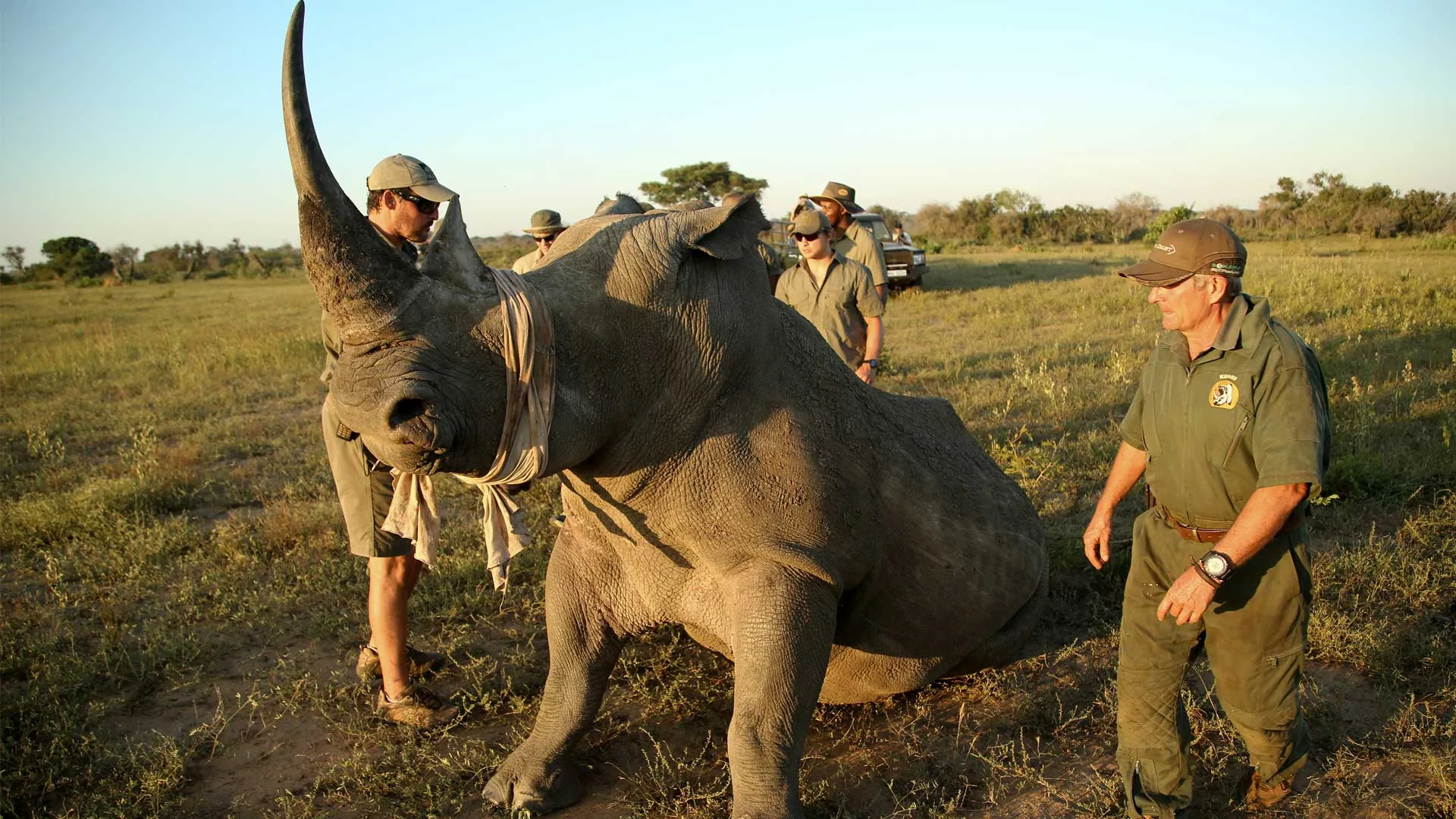
Phinda is one of the few reserves where a paying guest can join real fieldwork rather than watch a presentation about it. Rhino notching puts you alongside the vet while an animal is darted, measured, DNA-sampled and ear-notched. Elephant collaring and contraception work runs on the same basis. Pangolin monitoring is the rarest and hardest to secure, and involves joining a researcher to locate an animal, run a health check and download data from its tag.
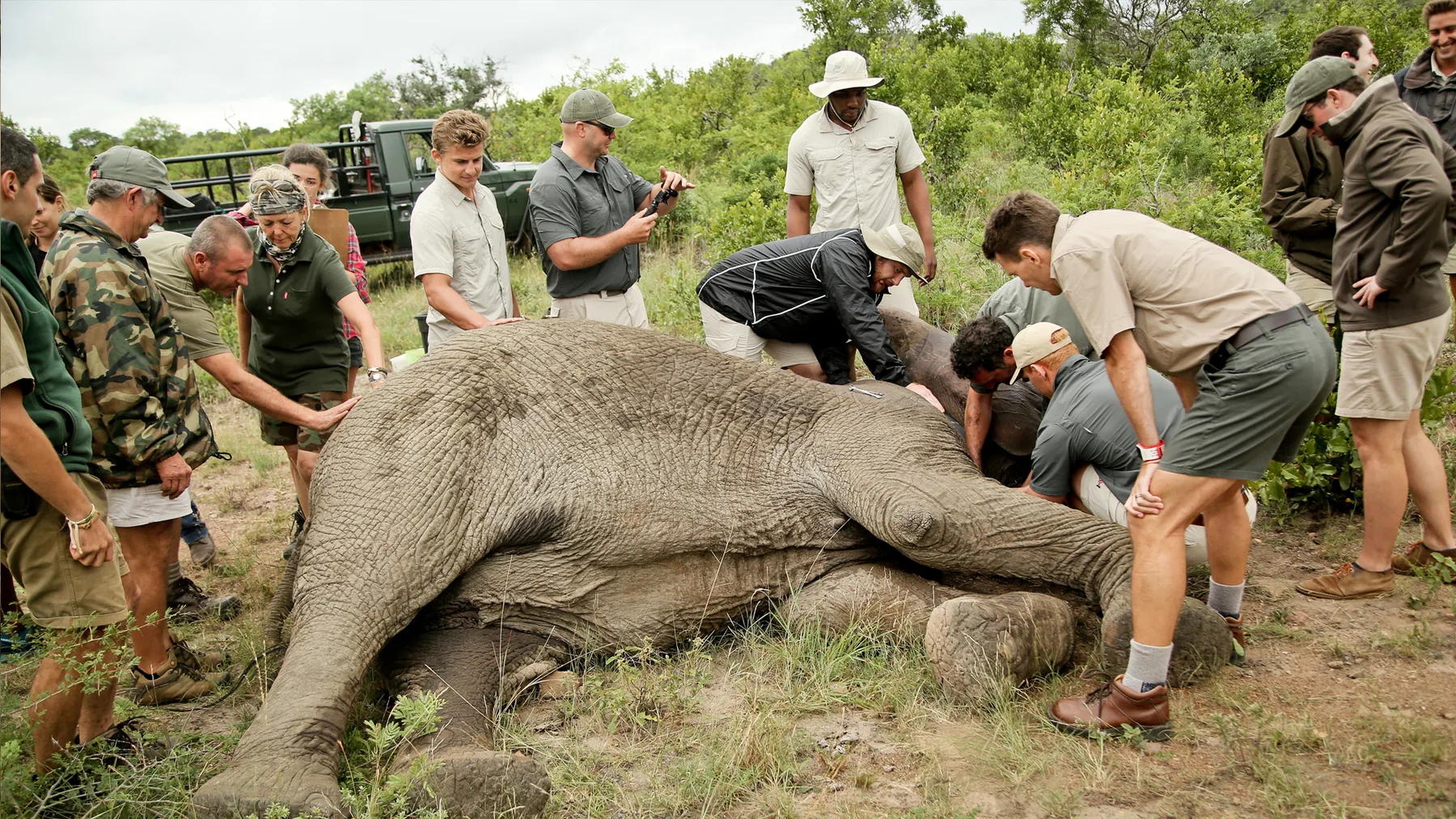
These carry an additional cost on top of the lodge rate, they run on the animals’ schedule rather than yours, and they cannot be guaranteed at short notice. Budget for them at the enquiry stage rather than hoping on arrival. We cover the practical side across South Africa in our guide to hands-on conservation experiences you can join on safari, and the wider picture on our conservation safari page.
Is it worth choosing Phinda for this?
If conservation is genuinely part of why you are travelling, yes. Plenty of lodges across Southern Africa will tell you they support conservation. Very few can point to a founder population they created, a species they brought back from local extinction, a land claim they settled in the community’s favour, and a list of national parks on three sides of the continent stocked with animals they bred.
The game viewing stands on its own merits too. Seven habitats inside one boundary, strong cheetah and black rhino, and the rare sand forest specials make it a different trip from the Lowveld. Read our full guide to the reserve on the andBeyond Phinda page, or see where it fits in a wider itinerary in Southern Africa.
If you want us to build a trip around the conservation activities specifically, including getting the notching or pangolin slots held before you commit to dates, tell us what you are after. Every enquiry is answered personally.
Frequently asked questions
What conservation work does andBeyond Phinda do?
Phinda restored roughly 13,000 hectares of degraded farmland from 1991 and reintroduced lion, elephant, cheetah, white rhino, black rhino and pangolin. It now acts as a source population, having translocated 202 white rhino, 18 black rhino and 63 cheetah to establish or reinforce populations elsewhere in Africa. It also runs community health, education and enterprise programmes with Wild Impact across five partner communities.
What does Phinda mean?
Phinda is Zulu for “the return”. The name refers to the return of wildlife to land that had been farmed for close to a century, and to the return of land to its ancestral owners in the 2007 restitution settlement.
Is Phinda community owned?
Partly. In 2007 just over 9,000 hectares were returned to the Makhasa and Mnqobokazi communities, who chose to keep the land under conservation. The wider 29,866-hectare Munywana Conservancy is held jointly by the Makhasa Community Trust, the Mnqobokazi Community Trust, andBeyond Phinda and Zuka Private Game Reserve.
Can guests take part in conservation work at Phinda?
Yes. Rhino notching and dehorning, elephant collaring and contraception, black rhino tracking on foot, and pangolin research and monitoring are all open to guests as additional-cost activities. They depend on operational schedules and cannot be guaranteed at short notice, so request them when you enquire rather than on arrival.
Are there pangolin at Phinda?
Yes. Temminck’s ground pangolin was reintroduced from June 2019 in partnership with the African Pangolin Working Group, into a region where it had been locally extinct for around four decades. Animals are tagged and monitored, and guests can join a researcher on a monitoring outing. Casual sightings on a game drive are very unlikely; pangolin are nocturnal and secretive.
Why are Phinda’s rhino dehorned?
Dehorning is a poaching deterrent. The horn is removed painlessly under sedation and regrows, and the procedure is combined with ear notching, DNA sampling and health checks that support long-term monitoring and prosecutions. Rhino poaching remains one of the reserve’s stated ongoing challenges.
How big is andBeyond Phinda?
The reserve began with 13,076 hectares in 1991 and now forms part of the 29,866-hectare Munywana Conservancy, which guests traverse. It contains seven distinct habitats, including the rare dry sand forest, and has more than 436 recorded bird species.