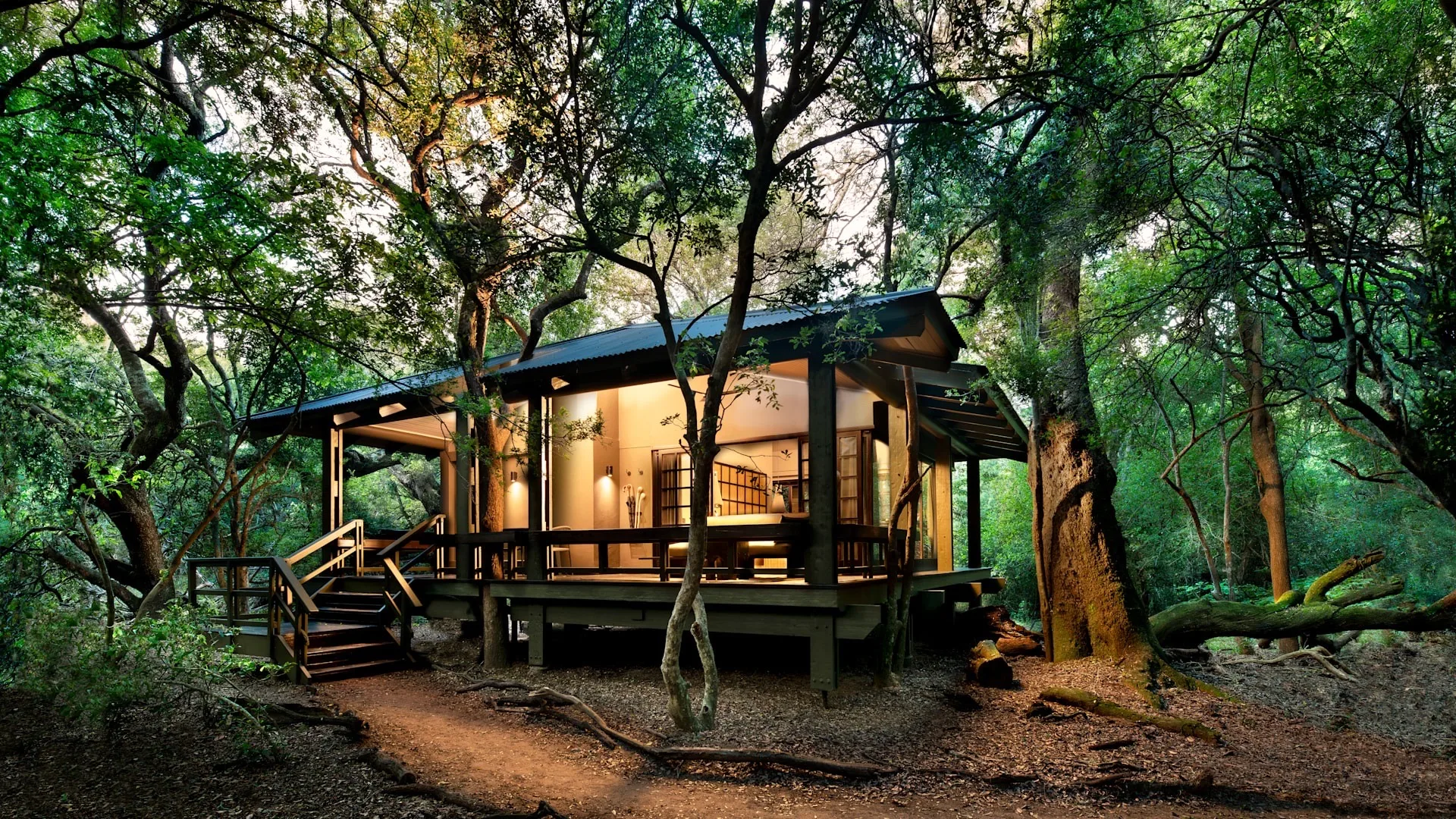
Seven ecosystems, rare species and real conservation, on the doorstep of the Indian Ocean. This is the reserve I called home.
Enquire About PhindaPhinda lies in Maputaland in northern KwaZulu-Natal, a 28,000-hectare patchwork that andBeyond rebuilt from old farmland into one of the most diverse private reserves in the country. Seven habitats sit inside one boundary, from rare sand forest to wetland and mountain, and that variety is why the species list runs so long.
What sets Phinda apart is its seven distinct habitats packed into one reserve, from open savannah and woodland to wetlands, mountain and the rare dry sand forest. That variety means a density and range of species, plants and birds that few reserves can match, and a different feel to each drive.
Conservation is not a slogan here. Phinda runs one of the most respected rhino programmes in Africa, was central to cheetah restoration in the region, and offers guests the chance to take part in real fieldwork, from rhino notching to wildlife monitoring, on a conservation safari.
Because it sits close to the coast, Phinda is the natural anchor for a bush-and-beach trip, pairing the Big Five with the diving, snorkelling and turtle nesting of the Maputaland shore and the iSimangaliso wetlands.
Phinda is one of the best reserves in South Africa for cheetah, which thrive on its open grasslands, and for black rhino, which favour the dense thickets. White rhino, lion, elephant, leopard and buffalo are all present, giving you the Big Five alongside the harder-to-find species.
The sand forest holds specials found in very few places, including the diminutive suni antelope and red duiker, and the reserve is superb for nyala. Birders do well across the seven habitats, with more than 400 species recorded.
On the coast nearby, between November and February, loggerhead and leatherback turtles haul ashore to nest. Joining a guided night turtle drive is one of the most moving wildlife experiences in the country, and a genuine point of difference for Phinda.
May to September, the dry winter, brings the easiest big-game viewing, with thinner bush and pleasant, mild days. KwaZulu-Natal is more humid than the interior, so winter is comfortable and clear.
The green summer is warm and lush, the best time for birding and newborns, and it coincides with the turtle nesting season on the nearby coast from November to February, which makes a summer Phinda trip uniquely rewarding.
Exclusive-use and intimate suites for the top of the market, with private guiding and complete seclusion.
Glass-walled suites set within the rare sand forest, one of the most distinctive luxury lodges in the country.
Family-friendly Mountain Lodge with sweeping views, and the dramatic cliff-set Rock Lodge for couples.
A smaller, more affordable Phinda camp, often taken on an exclusive-use basis by families and small groups.
Pair Phinda with a Maputaland or iSimangaliso beach lodge for diving, snorkelling and turtle nesting on the same trip.
The seven habitats give Phinda real variety, from cheetah on open grassland to nyala in dappled sand forest. The light in Maputaland is soft and the cheetah viewing, in particular, produces action and portraits that are hard to match elsewhere in South Africa.
Phinda sits firmly in the luxury bracket, but its range of lodges, from family-friendly Mountain Lodge to exclusive-use Homestead, means it works for families, couples and serious enthusiasts alike. It is the obvious choice if rare species or a bush-and-beach combination appeal.
Phinda lies in Maputaland, northern KwaZulu-Natal, reached by a short scheduled flight from Johannesburg to the reserve airstrip, or via Durban and Richards Bay. Its coastal position makes a bush-and-beach trip straightforward.
We arrange every detail, from the right camp to flights and transfers. Tell us your dates and we will do the rest.
Plan My Safari WhatsApp UsIts seven distinct habitats in one reserve, its excellent cheetah and black rhino viewing, and its hands-on conservation work. The rare sand forest and the nearby coast set it apart from the Lowveld.
Ideal. It sits close to the Maputaland coast and the iSimangaliso wetlands, so you can pair the Big Five with diving, snorkelling and, in summer, turtle nesting.
Yes. Phinda is one of the best reserves in South Africa for cheetah, which thrive on its open grasslands, and it played a key role in regional cheetah restoration.
It is a low-risk malaria area, lower than the Lowveld. Many travellers visit without issue, particularly in the dry winter; we will advise based on your trip and the season.
Yes. Phinda offers guests the chance to join real fieldwork, including rhino notching and wildlife monitoring. See our conservation safari guide.
Loggerhead and leatherback turtles nest on the nearby Maputaland coast between November and February, when guided night turtle drives run.
Tell us roughly when you would like to travel and what you most want to see. Every enquiry is answered personally, usually within 24 hours. No set packages, no booking fees.