
Most people book Phinda for cheetah and black rhino and only discover the ocean half of it once they arrive. That is a mistake worth correcting at the planning stage, because the Indian Ocean sits about an hour and a half from the reserve gate, the reefs at Sodwana Bay are among the best in Africa, and between November and February leatherback and loggerhead turtles haul out onto the beach a short drive away to lay their eggs. None of it is included in your rate, and one of them is only possible for four months of the year.
The short answer
Four ocean experiences run from andBeyond Phinda: turtle nesting and hatchling drives, scuba diving at Sodwana Bay, an ocean safari by boat, and a half-day beach outing. All carry an additional cost and all are weather dependent. The catch worth planning around is that the ocean is at its best in the southern summer, which is exactly when the bush is at its thickest and game viewing is hardest. If turtles are the reason you are going, accept the trade-off and go in December or January.
Why a Big Five reserve has a coastline at all
Phinda sits in Maputaland, the far north-eastern corner of KwaZulu-Natal, which is one of a handful of recognised biodiversity hotspots on the continent. Immediately east of the reserve is the iSimangaliso Wetland Park, South Africa’s first UNESCO World Heritage Site, declared in 1999. Its name is Zulu for “miracle and wonder”, and the park runs 220 kilometres up the coast to the Mozambique border.
Sodwana Bay lies inside it. The reefs there are the southernmost coral reefs in Africa, warmed by the Agulhas Current running down from the tropics, and they hold more than 1,200 species of fish. The dive sites are named by their distance from the launch point at Jesser Point: Two Mile, Five Mile, Seven Mile, Nine Mile.
The point is that this is not a beach tacked onto a safari as a filler afternoon. It is a separate protected area of genuine international standing that happens to be within driving distance of your lodge.
The four ocean experiences
| Experience | When it runs | What it involves | Requirements |
|---|---|---|---|
| Turtle nesting and hatchlings | November to February | Night drive along the beach with a guide and a researcher | Late night; long drive; suits older children upwards |
| Indian Ocean scuba dive | Year-round, sea permitting | Boat dives on the Sodwana reefs with a certified operator | Open Water certification; a refresher pool session is available at extra cost if you have not dived recently |
| Ocean safari | Year-round, sea permitting | Semi-rigid inflatable with a certified dive master; snorkelling, dolphin, seasonal whales | Reasonable mobility for a surf launch; no dive qualification needed |
| Maputaland beach adventure | Year-round | Half day on the beach with shade, loungers, swimming, beach games and snorkelling at Jesser Point at low tide | None |
The turtles, which are the real reason to come
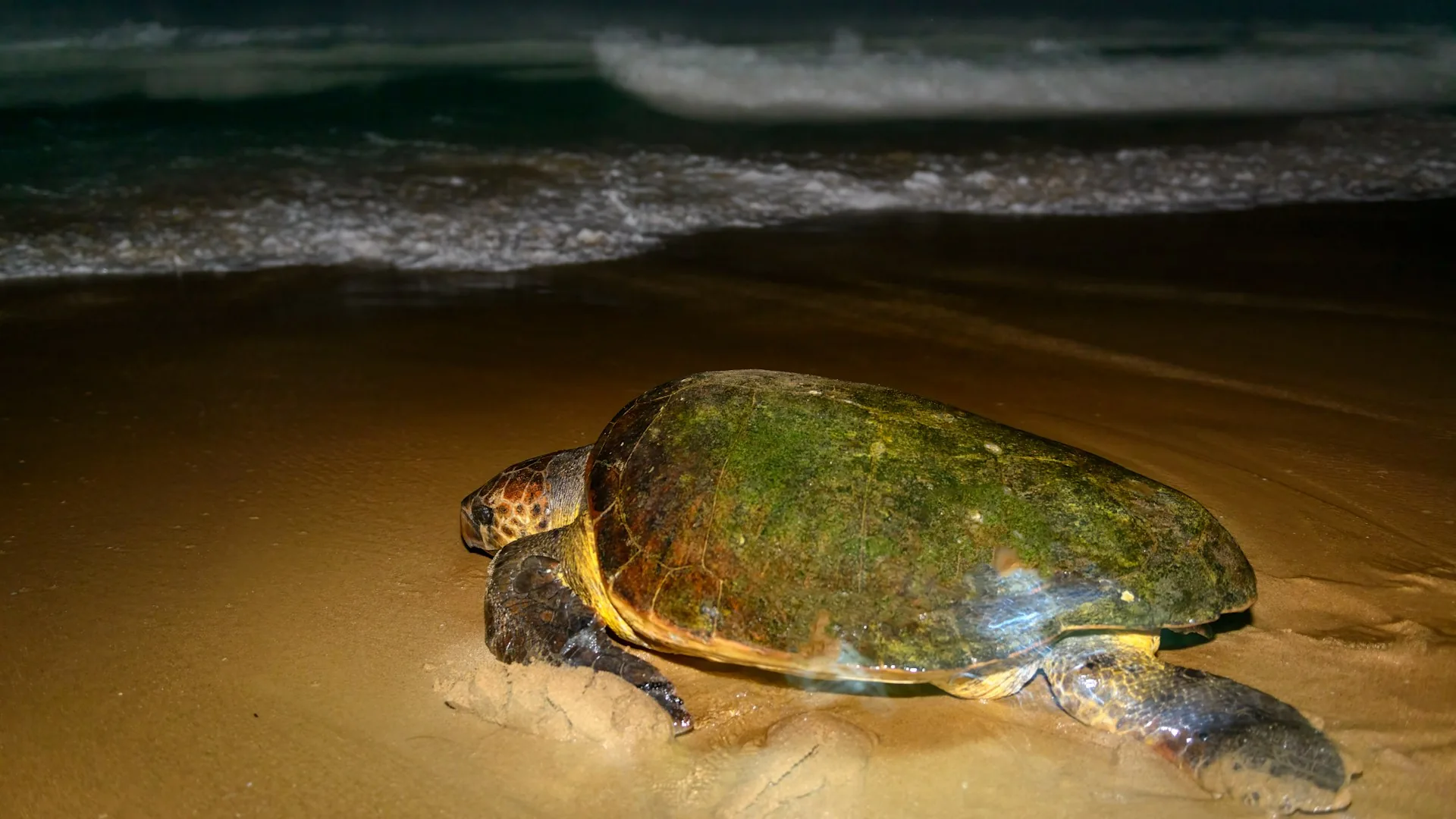
Two species nest on this coast. The loggerhead is the smaller at around 160 kilograms. The leatherback is the largest turtle on earth and can reach 700 kilograms, which is the weight of a small horse, hauled up a beach on flippers.
The nesting window and the hatching window are different, and this trips people up when they book. Females typically come ashore to lay through November and December. The hatchlings typically emerge in January and February. The formal iSimangaliso monitoring season runs from October to April, but the two spectacles are separated by roughly two months, so you need to decide which one you want.
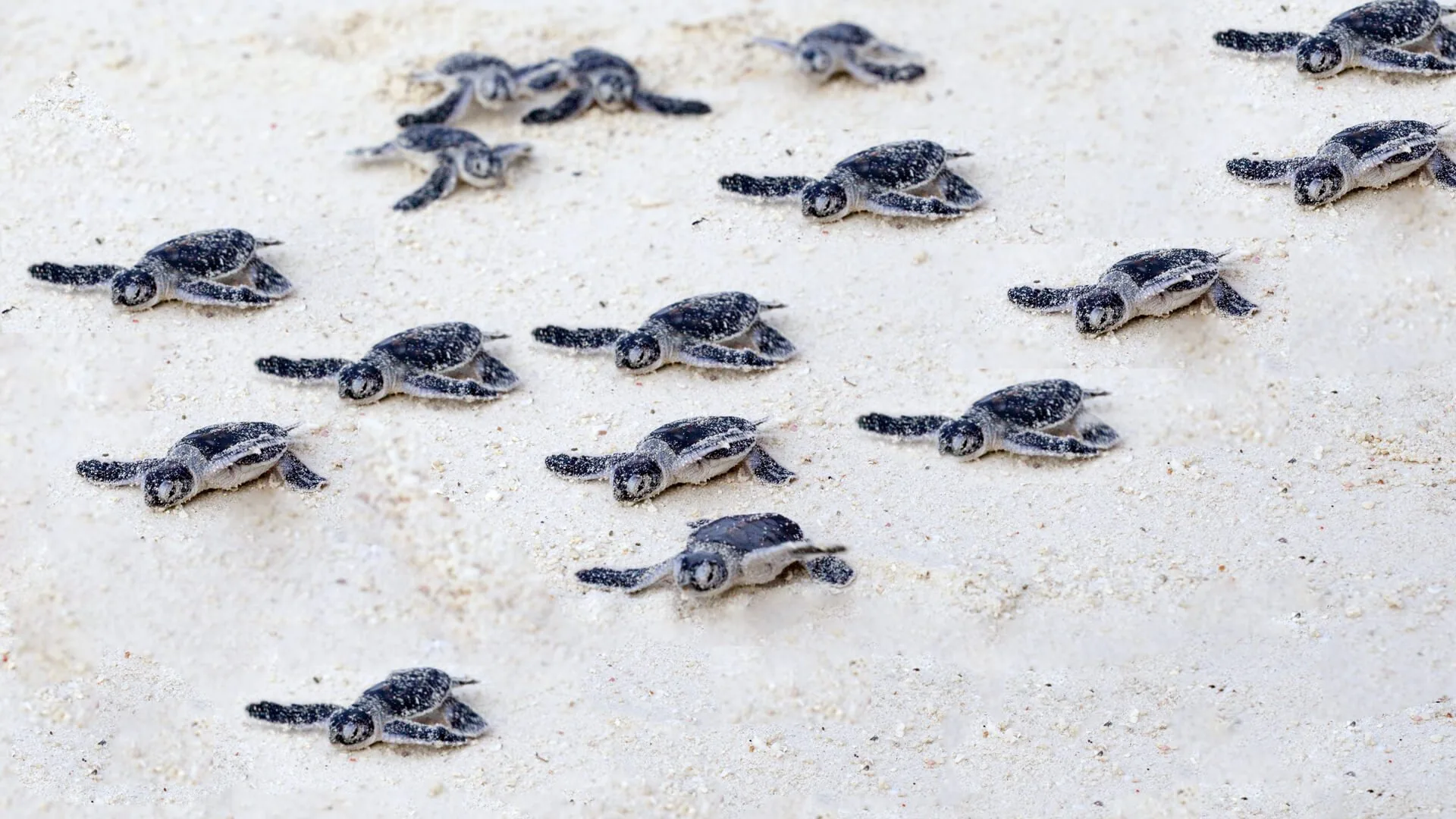
What makes this more than a wildlife sighting is the research behind it. The iSimangaliso turtle monitoring programme was founded in 1963 and is one of the longest continuously running sea turtle programmes anywhere in the world. Six decades of tag data sit behind the animal you are looking at. Guides cover the tagging, the weather, and why hatchlings face the odds they do: roughly one in a thousand reaches adulthood, and those that do take about twenty years to reach breeding age. A female on the beach in front of you was hatched on that same stretch of sand two decades ago.
Satellite tracking has added a detail I find genuinely striking. Between nestings, loggerheads stay close inshore, averaging about nine kilometres out, which keeps them inside the park’s protection roughly 95 per cent of the time. Leatherbacks range far further, averaging around sixty kilometres offshore, so they sit inside protected water only about a quarter of the time. Same beach, same night, wildly different exposure once they swim away.
Diving Sodwana Bay
Sodwana is regularly listed among the better dive destinations in the world and it is the main reason divers come to this coast. Expect warm, clear water, hard and soft coral, and the fish diversity that comes with 1,200-plus species: butterflyfish, triggerfish, wrasse, plus green turtles, rays, dolphin and, seasonally, ragged-tooth sharks.
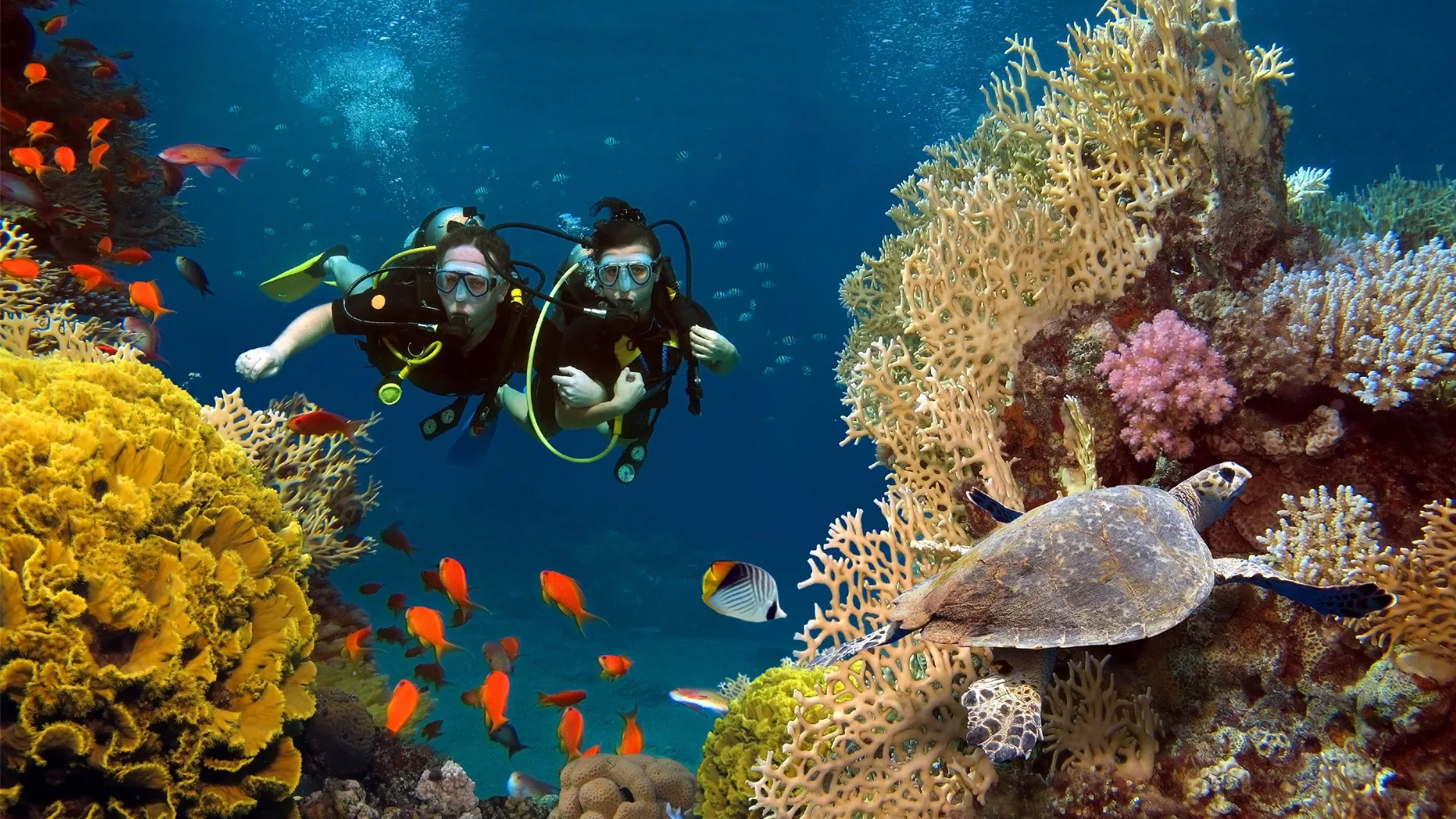
On certification, the brochure line is that you need an Open Water NAUI or PADI qualification and to have dived within the past six months. In practice there is more flexibility than that suggests: a refresher pool session is available at additional cost for guests who hold a qualification but have not been in the water recently, or who have never dived in open ocean. Ask for it when you enquire rather than assuming you are excluded.
If you are not certified at all, the ocean safari does most of the same work. You snorkel rather than dive, and you still see the reef.
The ocean safari and the beach day
The ocean safari goes out on a semi-rigid inflatable with a certified dive master. Launching through surf on a rubber duck is part of the experience and it is bouncier than a lot of guests expect, so it is worth being honest with yourself about that before booking. Once out, you snorkel the reefs and look for dolphin. Between roughly June and November there is a real chance of humpback and southern right whales moving along the coast on migration.
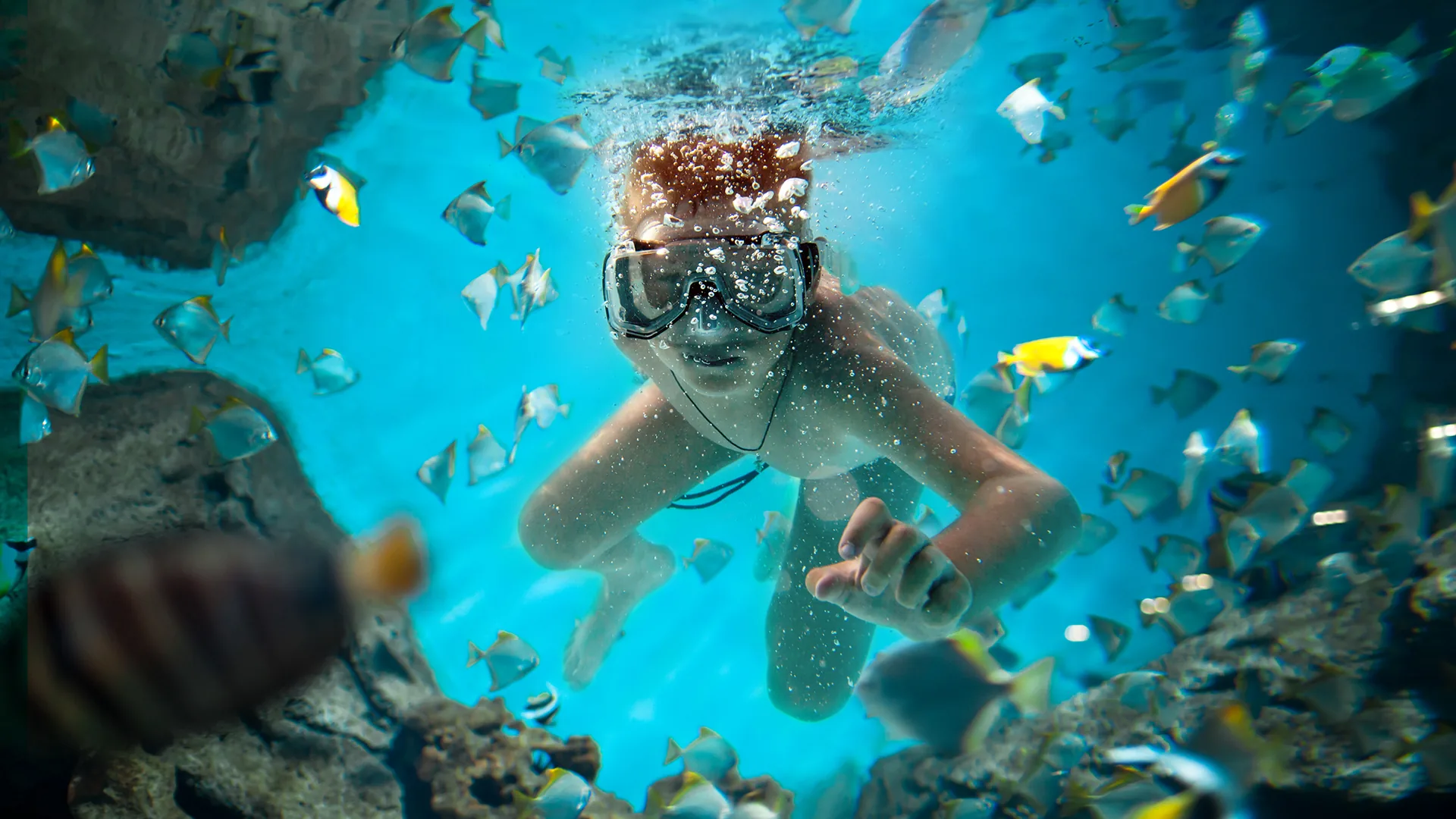
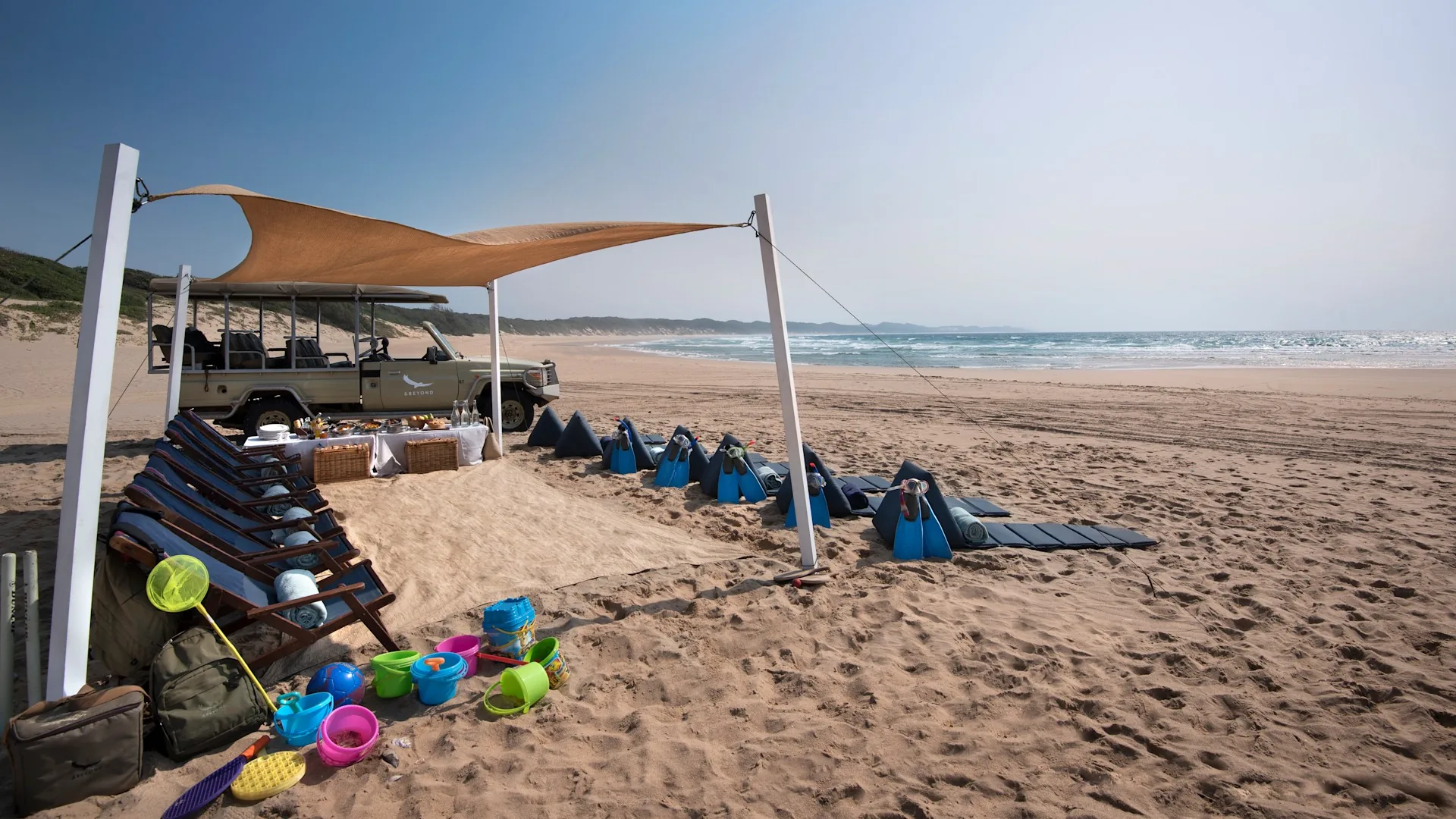
The Maputaland beach adventure is the gentlest of the four and the one that works for almost anybody. It is a half day on a wide, largely empty beach with shade, loungers, swimming, walks and beach games set up for you, and snorkelling alongside Jesser Point at low tide. Jesser Point is a protected marine reserve, so the fish life in the shallows there is better than an ordinary beach would give you.
When to go, and the trade-off nobody mentions
Here is the tension at the centre of planning a Phinda trip with an ocean component. The bush is at its best from May to September, when the grass is short, the leaves are down and animals concentrate on water. The ocean is at its best from November to March, when the water is warmest and clearest, and it is the only time turtles nest and hatch.
| Season | Game viewing | Ocean | Verdict |
|---|---|---|---|
| May to September | At its best; thin bush, easy sightings | Diving and beach still run; cooler water; whales June to November; no turtles | Choose this if the safari is the priority |
| November to February | Harder; thick green bush, but newborns and superb birding | The peak. Nesting to about January, hatchlings January to February, warm clear water | Choose this if turtles are the priority |
| October and March to April | Reasonable in both directions | Good diving, shoulder of the turtle season | The compromise if you want a bit of both |
My honest advice is not to split the difference unless you have to. Decide which half of the trip you would be more disappointed to get wrong, and book for that. If it is turtles, go in December or January and accept that the leopard sightings will be harder earned. Our month-by-month guide to safari timing sets out the wider seasonal picture across Southern Africa.
The practical things to know before you book
- All four cost extra. None of the ocean activities are in the lodge rate, which covers game drives, walks, meals and standard drinks. Budget for them separately.
- They cost you a drive. The coast is far enough from the reserve that any of these takes out a morning or an afternoon, and the turtle drives run late into the night. On a three-night stay, one ocean outing is realistic; two is greedy.
- Weather decides. Sea conditions cancel boat activities with no notice and no argument. If the ocean is the whole point of your trip, build in more than one opportunity.
- Book at enquiry stage. Turtle drives in peak season and dive slots both fill. Requesting them on arrival is how people end up disappointed.
- Think about who is coming. The beach day suits everyone. The ocean safari involves a surf launch. Turtle drives are late nights on a dark beach, better suited to older children and adults. Lodge choice interacts with this: Phinda Mountain Lodge runs the reserve’s children’s programme and has the family rooms, while the smaller couples lodges set a minimum age.
Who this suits
The bush-and-beach combination is the strongest argument for choosing Phinda over a Lowveld reserve like the Sabi Sand. You cannot do this from Kruger. If you want the Big Five in the morning and a coral reef in the afternoon, there are very few places in Africa where the two sit this close together, and fewer still where the coastline is a World Heritage Site.
It works particularly well for families with teenagers, who tend to tire of game drives faster than their parents expect, and for couples building a longer Southern Africa itinerary who want the pace to change halfway through. It also pairs naturally with the reserve’s conservation work, since the turtle programme is a research operation you are joining rather than a show being put on for you. We wrote about the wider record in our piece on what 35 years of conservation at Phinda actually produced.
If you want a trip built around the turtle season, tell us early. The window is narrow, the drives book out, and lodge availability in December and January goes first. Send us your dates and we will tell you honestly whether they work.
Frequently asked questions
When is turtle season at Phinda and Sodwana Bay?
Nesting runs through the southern summer, typically November and December, when female loggerhead and leatherback turtles come ashore to lay. Hatchlings typically emerge in January and February. The wider iSimangaliso monitoring season runs from October to April. Turtle drives from Phinda generally operate from November to February.
Can you dive at Phinda?
Not on the reserve itself, but Phinda runs guided dives at Sodwana Bay on the Indian Ocean coast. You need an Open Water NAUI or PADI qualification. If you have not dived in the last six months, or have never dived in open ocean, a refresher pool session is available at an additional cost rather than being turned away.
How far is Sodwana Bay from Phinda?
Roughly an hour and a half by road each way. That makes every ocean activity a half-day commitment at minimum, and turtle drives run late into the night, so plan on giving up a game drive for each one.
Are the ocean activities included in the Phinda rate?
No. Twice-daily game drives and a guided nature walk are included. The turtle nesting adventure, Indian Ocean scuba safari, ocean safari and Maputaland beach adventure all carry an additional cost, and all are weather dependent.
Can you see whales from Phinda?
Not from the reserve, but the ocean safari from Sodwana Bay offers a seasonal chance of humpback and southern right whales, roughly between June and November, as they migrate along the KwaZulu-Natal coast. Dolphin are possible year-round.
Is Sodwana Bay good for diving?
It is regularly ranked among the world’s better dive destinations. The reefs are the southernmost coral reefs in Africa, warmed by the Agulhas Current, and hold more than 1,200 fish species alongside green turtles, rays, dolphin and seasonal ragged-tooth sharks. Sites are named by distance from the Jesser Point launch: Two Mile, Five Mile, Seven Mile and Nine Mile.
Can children do the ocean activities at Phinda?
The Maputaland beach adventure suits all ages. The ocean safari involves launching a boat through surf, so it suits confident older children and adults. Turtle drives are late nights on a dark beach and are better for older children upwards. Lodge choice matters too: Phinda Mountain Lodge runs the reserve’s children’s programme and has the family rooms, while the smaller couples lodges on the reserve set a minimum age.