
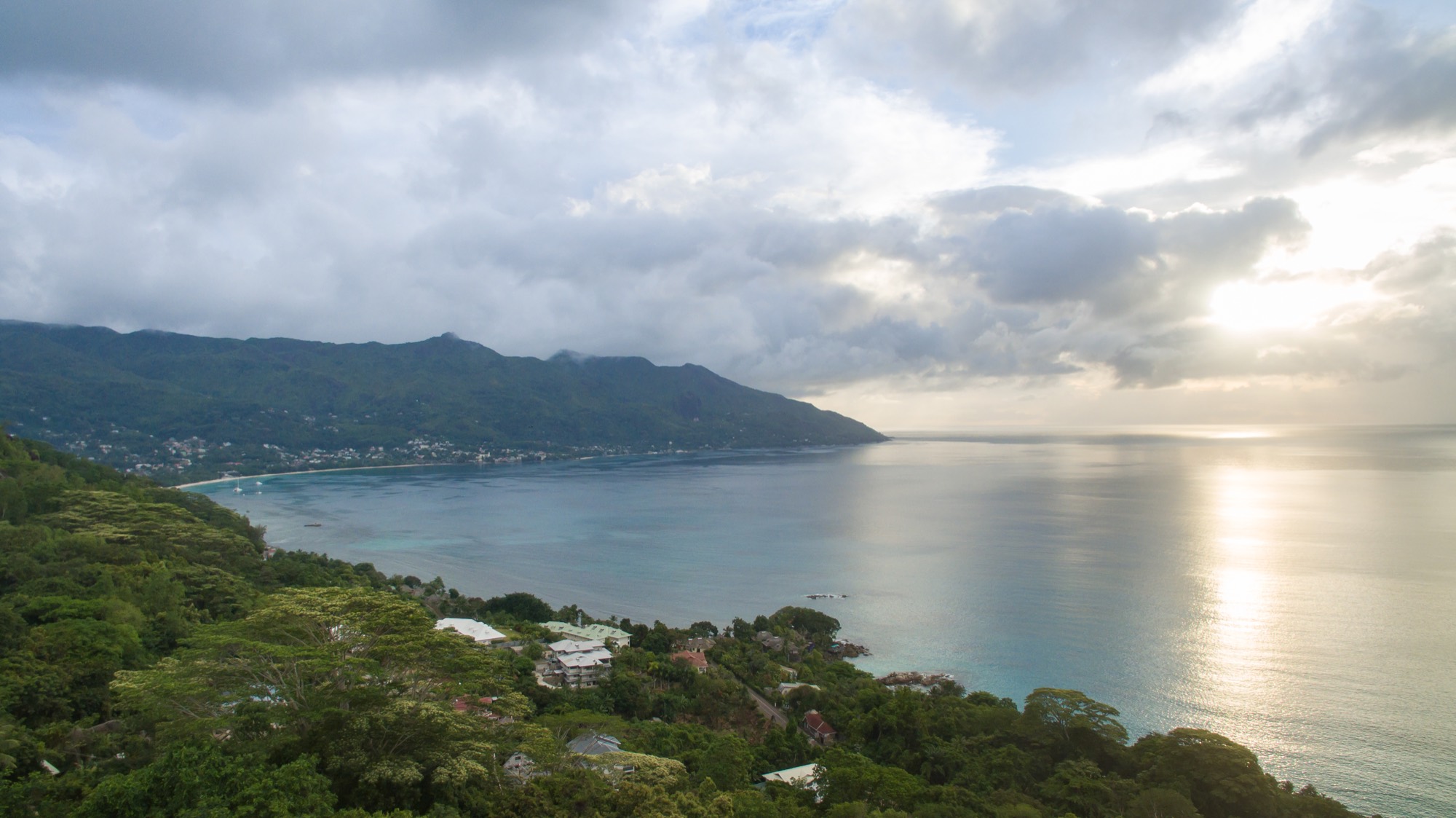
Mahé
Main island, international gatewayEvery flight into the Seychelles lands here. Forested granite peaks, Beau Vallon's beach strip, and the country's widest range of resorts and prices.
Explore Mahé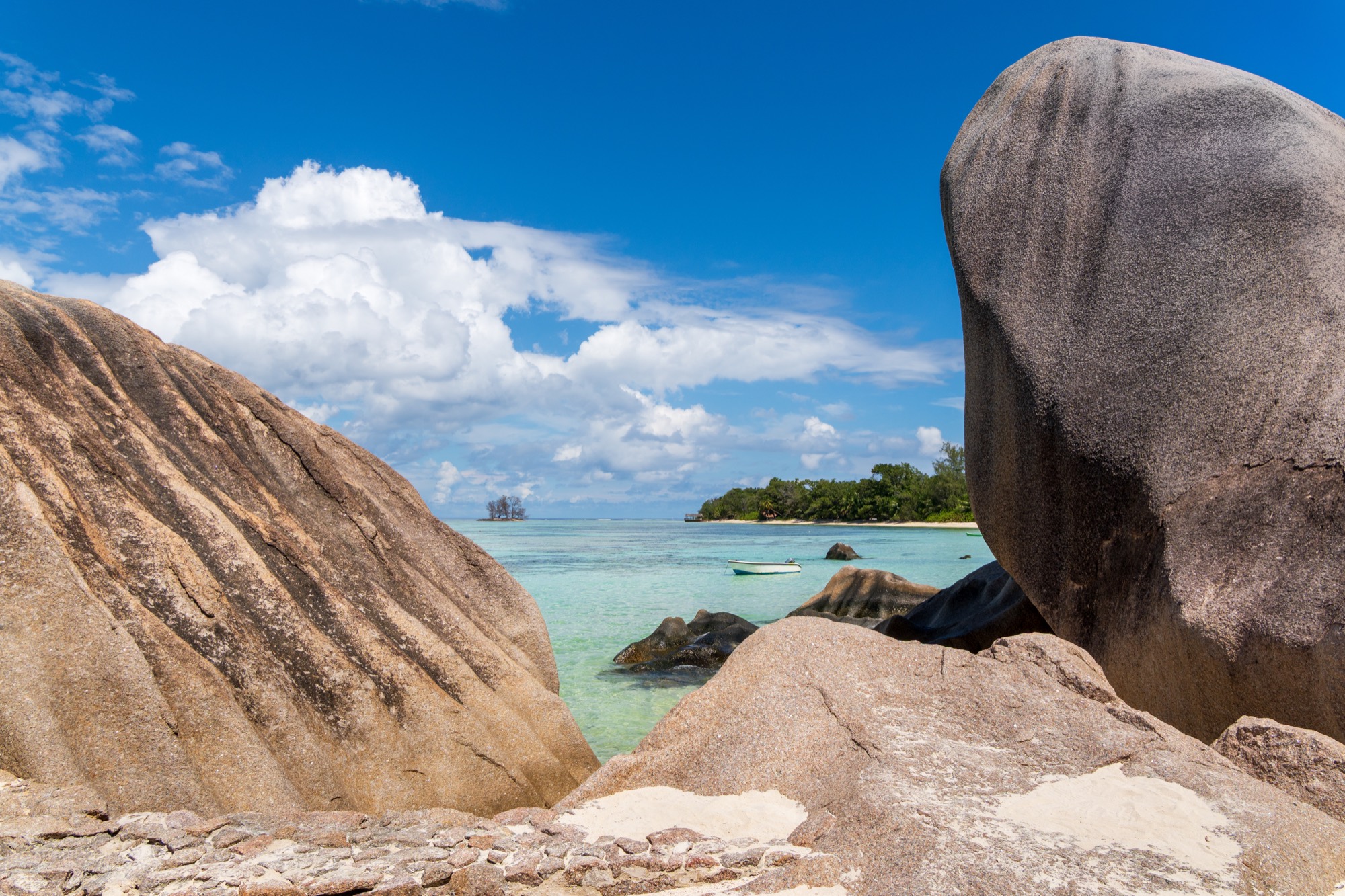
Granite boulders, coco de mer forest and some of the most private islands anywhere, outside the main Indian Ocean cyclone belt.
Plan My SafariThe Seychelles sits around four and a half hours from Johannesburg by direct flight, which puts the most exclusive end of Indian Ocean travel within easy reach of a South Africa or Southern Africa safari. Unlike Mauritius and Madagascar further south, the islands lie close enough to the equator that they are rarely troubled by the Indian Ocean cyclone belt, which gives the weather a steadier, if wetter, rhythm across the year.
This is 115 islands spread across open ocean, not one landmass, and the choice of island matters more here than almost anywhere else in the region. Granite islands like Mahé and Praslin carry the famous sculpted boulder beaches and coco de mer forest; the coral outer islands, reached only by light aircraft, are where the single-lodge, barefoot-luxury private island sits.
Because so many of the outer islands carry one lodge each, the Seychelles suits a couple or small family who want genuine privacy at the end of a safari honeymoon, more than it suits a large group chasing nightlife or a packed activity schedule. It is the quieter, more expensive counterpart to Mauritius.
The islands sit close enough to the equator to be rarely affected by the cyclones that periodically threaten Mauritius and Madagascar, so storm disruption is a smaller planning concern here.
Several outer islands, among them North Island and Desroches, carry a single lodge and nothing else, a level of exclusivity few beach destinations anywhere can match.
Mahé, Praslin and La Digue carry the giant weathered granite boulders that make Seychelles beaches instantly recognisable, a geology found almost nowhere else in the tropics.
The Vallée de Mai on Praslin protects the coco de mer, the plant with the largest seed in the world, in forest largely unchanged since prehistoric times.
Like Mauritius, the Seychelles is malaria-free, so precautions taken for a bush stay can stop the moment the flight lands.
Several islands, including Cousin and Aride, are run as nature reserves with seabird colonies and turtle nesting guests can visit directly, not just read about. See our conservation safaris.
Free-roaming giant tortoise populations live on Curieuse Island near Praslin and on several private islands, descendants of the same species protected on remote Aldabra Atoll far to the south-west.
Cousin and Aride islands hold some of the Indian Ocean's densest seabird colonies, including sooty terns, noddies and tropicbirds, with Aride holding the world's largest population of lesser noddy.
Praslin's Vallée de Mai is the last natural stronghold of the Seychelles black parrot, one of the rarest parrots in the world and found nowhere else.
The waters off Mahé see seasonal whale shark sightings, broadly from August to November, when plankton blooms draw them close to shore.
Hawksbill turtles nest on beaches across the islands through the southern hemisphere summer, with several outer island lodges running monitoring programmes guests can join.
Clear water and granite boulder reefs make for distinctive diving and snorkelling, with visibility generally best during the calmer transition months. See our photographic safaris.
Seychelles splits into three practical choices: Mahé, the international gateway with the widest range of resorts; Praslin and La Digue, the granite-boulder islands of the postcards; and the outer coral islands, reached by light aircraft, where true single-lodge privacy lives.
Every flight into the Seychelles lands here. Forested granite peaks, Beau Vallon's beach strip, and the country's widest range of resorts and prices.
Explore Mahé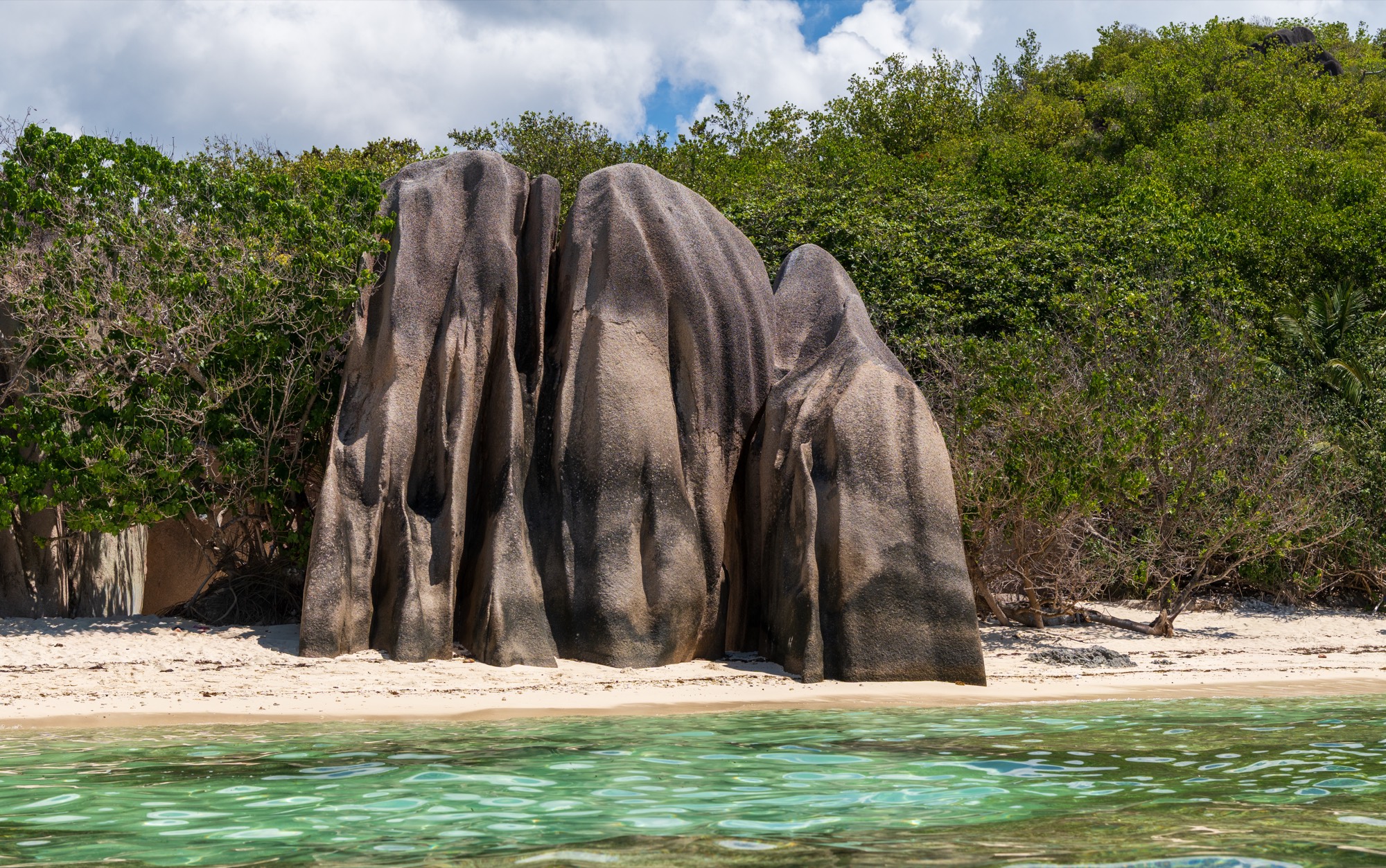
Anse Lazio and Anse Georgette on Praslin, Anse Source d'Argent on La Digue, the most photographed beaches in the Indian Ocean, reached by a short flight or ferry from Mahé.
Explore Praslin & La Digue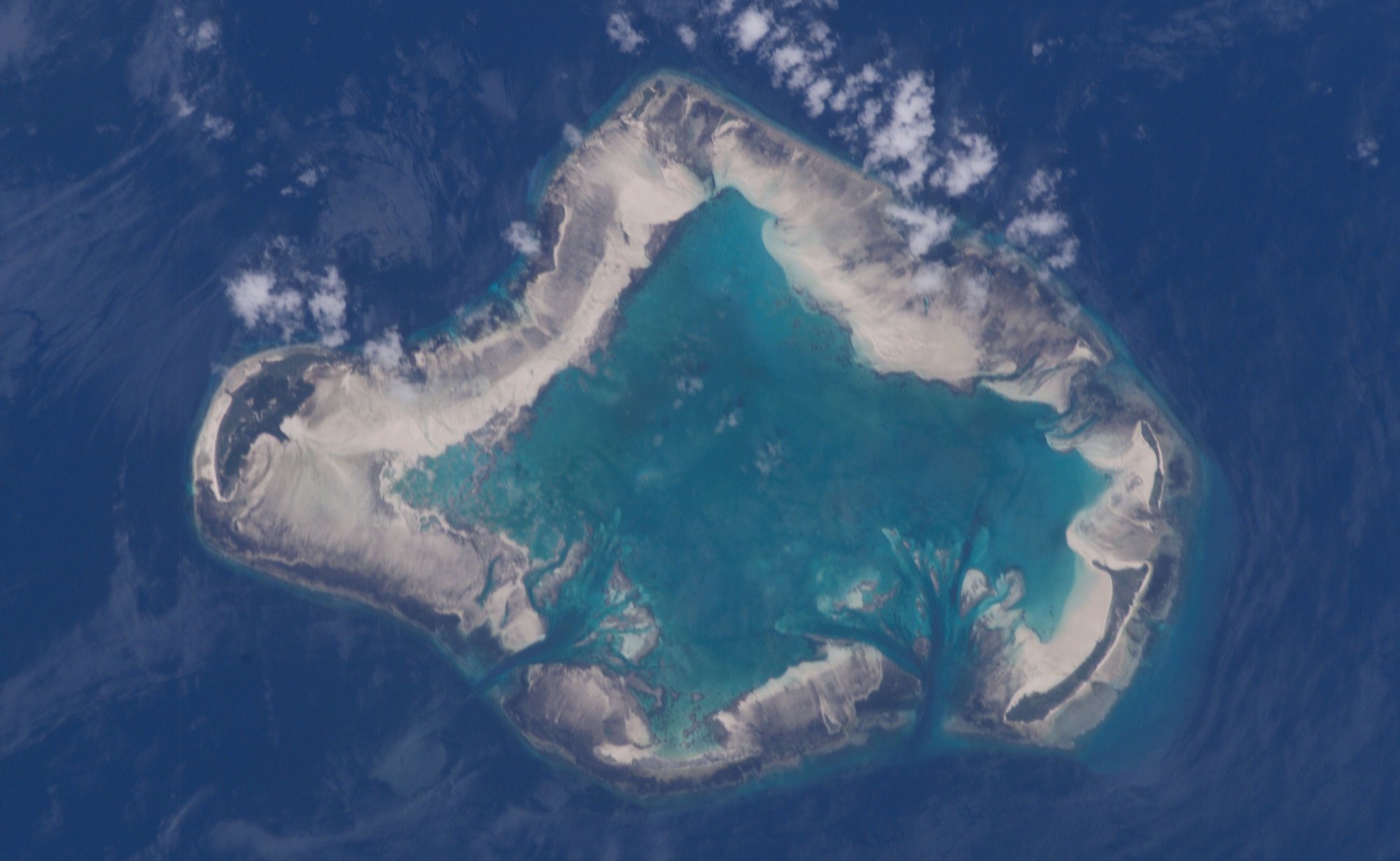
North Island, Desroches, Silhouette and Félicité: coral islands where one lodge has the entire island, the most private end of the Indian Ocean.
Explore Outer Islands| Island | Best for | Best time | Suggested stay | Style |
|---|---|---|---|---|
| Mahé | Easy access, variety, families | Apr, May, Oct, Nov | 3 to 5 nights | Mid-range to ultra-luxury |
| Praslin & La Digue | Classic beaches, honeymoons, slower pace | Apr, May, Oct, Nov | 3 to 5 nights | Mid-range to ultra-luxury |
| Outer Islands | Total privacy, honeymoons, conservation | Apr, May, Oct, Nov | 3 to 4 nights | Ultra-luxury |
Seychelles has no sharp wet or dry season, only a shift in trade winds. The south-east trades (May to October) bring cooler, breezier, drier weather; the north-west monsoon (December to March) brings warmer, wetter, calmer seas. April and November, the transition months, are generally the most settled.
| Month | Weather | Sea & Beach Conditions | Season |
|---|---|---|---|
| January | Hot, wet, NW monsoon | Calm seas; seaweed on north beaches | Green |
| February | Hot, wet | Warm water; occasional heavy showers | Green |
| March | Hot, humid, easing rain | Calm seas continue; good diving visibility | Shoulder |
| April | Warm, calm, transitional | Among the calmest, most settled months | Peak |
| May | Mild, SE trades begin | Breezier; seaweed shifts to south beaches | Peak |
| June | Cooler, windy, dry | Good diving; choppier south-west coasts | Peak |
| July | Coolest, windiest, dry | Best sailing and surfing; some swell | Peak |
| August | Cool, windy, dry | Whale shark season begins off Mahé | Peak |
| September | Mild, dry, easing wind | Whale sharks continue; good visibility | Peak |
| October | Warm, calm, transitional | Last of whale shark season; settled seas | Peak |
| November | Warm, calm, transitional | Among the calmest, most settled months | Peak |
| December | Hot, wet, NW monsoon begins | Calm seas; festive season, book ahead | Green |
A Seychelles stay has genuine conservation and heritage sites built in, not just beach time. These are the ones guests add on most often.
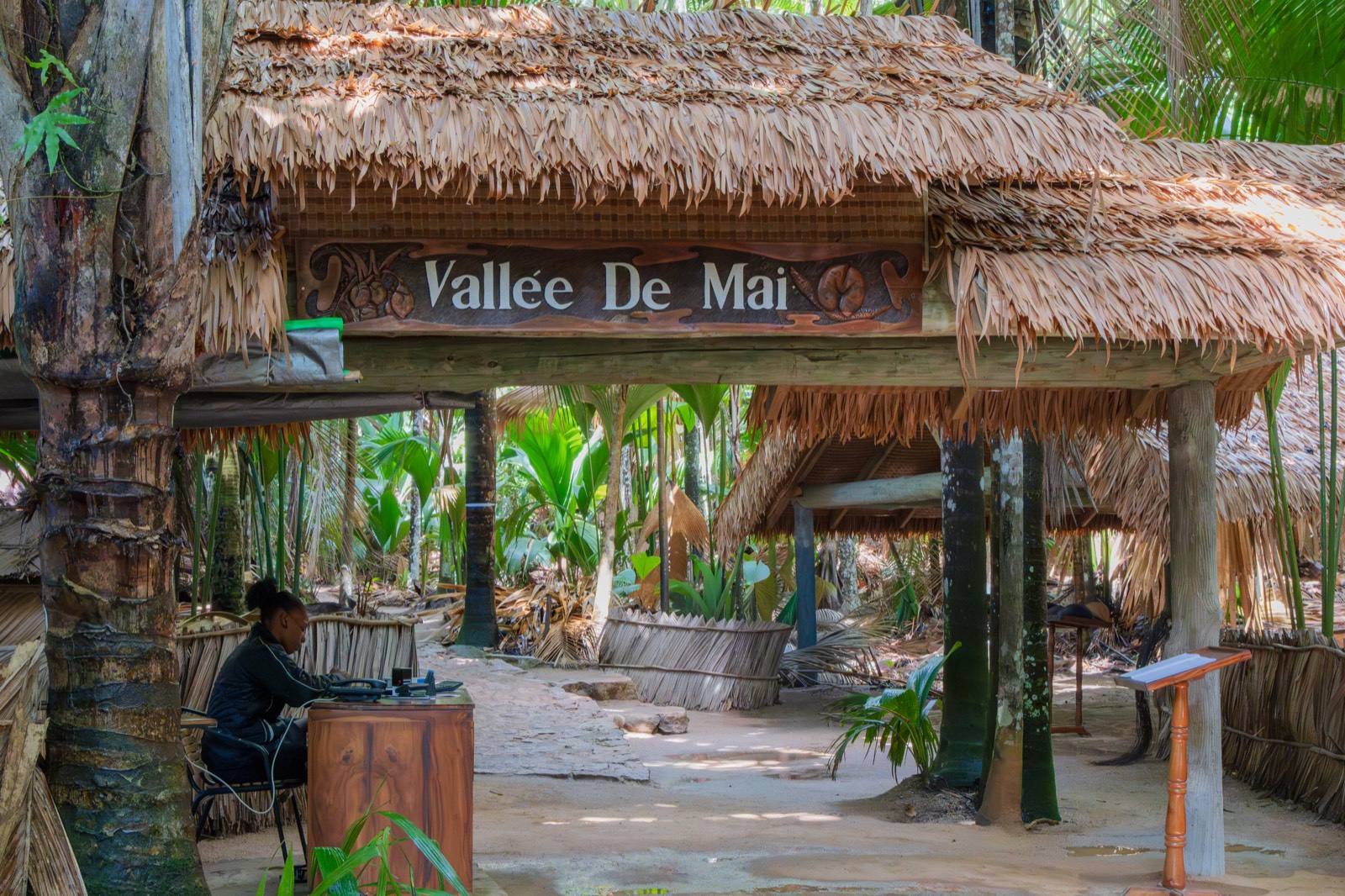
A UNESCO World Heritage forest protecting the coco de mer, the plant with the largest seed in the world, alongside the endangered Seychelles black parrot. A half-day walk from any Praslin resort.
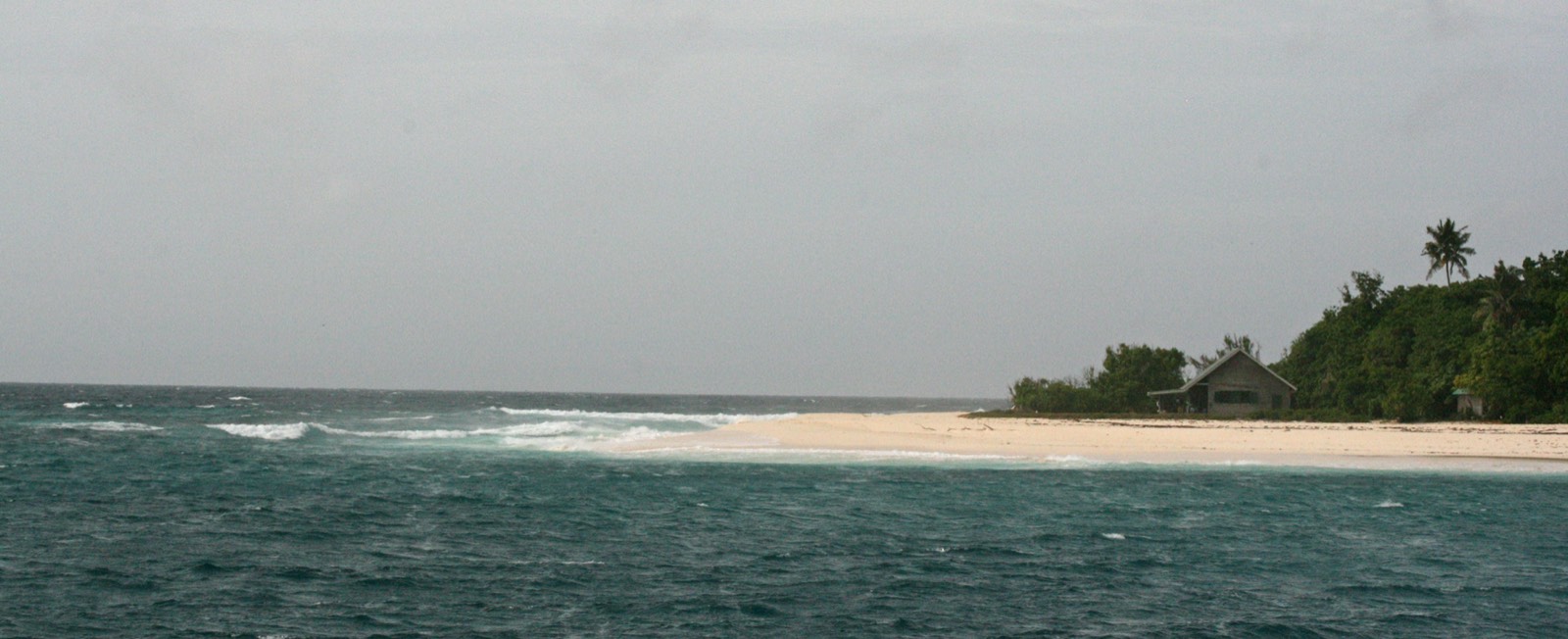
A fully protected nature reserve a short boat ride from Praslin, with dense seabird colonies and nesting hawksbill turtles, run by a conservation trust that allows guided day visits.
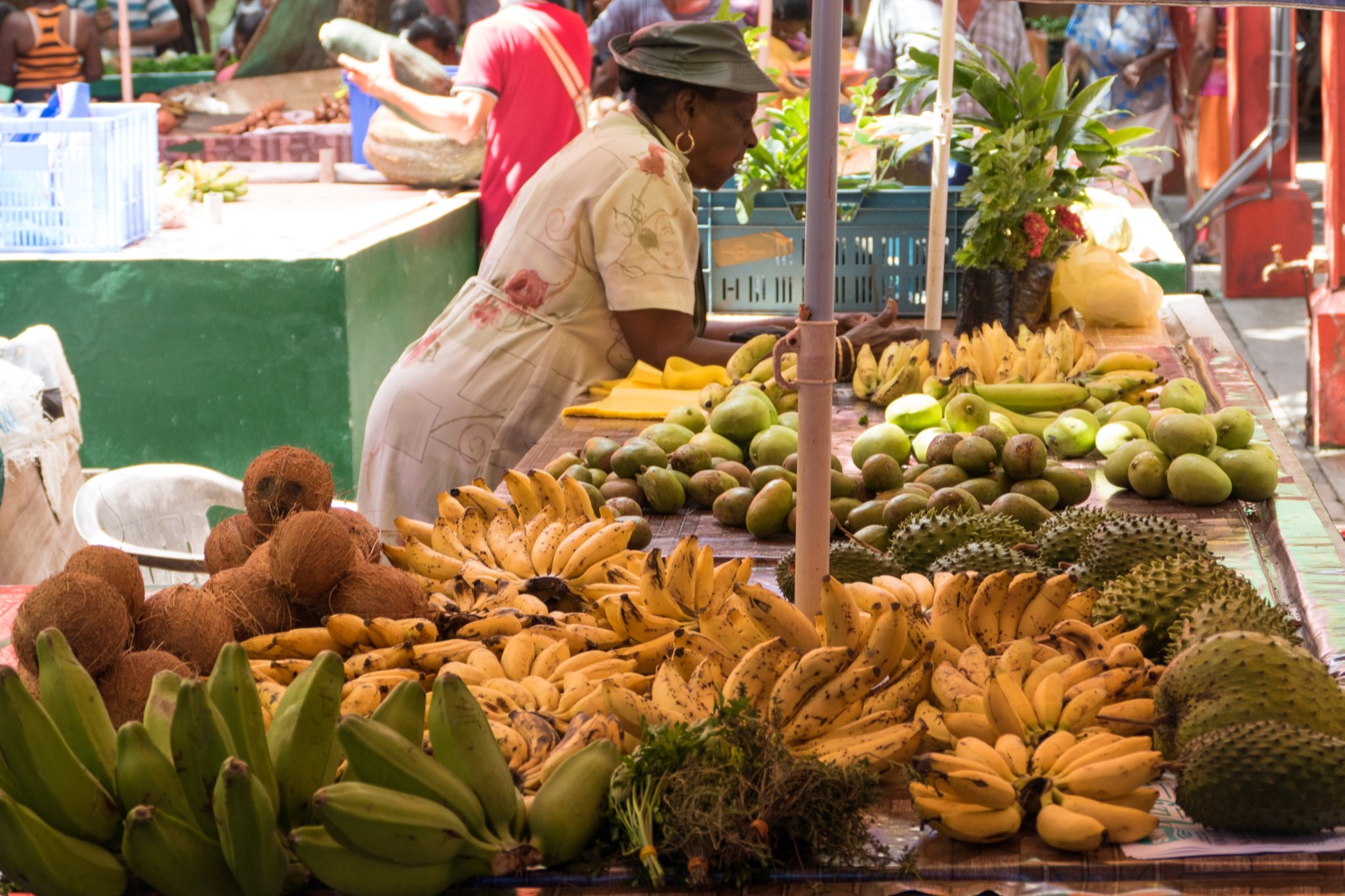
One of the smallest capitals in the world, worth half a day for the Sir Selwyn Selwyn-Clarke Market, the Botanical Gardens' own coco de mer palms, and the clock tower modelled on London's Vauxhall.
Tell us whether you want Mahé's range, Praslin and La Digue's classic beaches, or a private outer island, and we will fit it around your safari dates and flights.
Plan My Safari WhatsApp UsYes, particularly for a couple or small family wanting real privacy. Direct flights from Johannesburg take around four and a half hours, there is no malaria risk, and several outer islands offer a single lodge to the entire island.
April and November, the transition months between the two monsoon seasons, are generally the calmest and most settled. May to October is cooler and breezier; December to March is hotter, wetter and calmer at sea.
Generally yes, particularly the outer islands. Mahé and Praslin have a wider range of prices, but the single-lodge private islands sit at the very top of the Indian Ocean luxury market.
Mahé for the widest choice of resorts and easiest access, Praslin and La Digue for the classic granite-boulder beaches and a quieter pace, or an outer island such as North Island or Desroches for complete privacy.
Rarely. The islands sit close enough to the equator to be largely outside the main Indian Ocean cyclone belt that affects Mauritius and Madagascar, though the climate is wetter in the December to March monsoon.
Yes, and many itineraries combine two, typically Mahé plus Praslin, connected by a short domestic flight or a roughly one-hour ferry. La Digue is then an easy ferry transfer from Praslin.
Mahé and some Praslin resorts suit families well, with kids' clubs and shallower beaches. Many of the outer island lodges are positioned more for couples and are less geared toward young children.
Fly back to Johannesburg and connect on a direct flight of around four and a half hours to Mahé, then on to Praslin or an outer island by light aircraft or ferry as needed.
Tell us roughly when you would like to travel and what you most want to see. Every enquiry is answered personally, usually within 24 hours. No set packages, no booking fees.