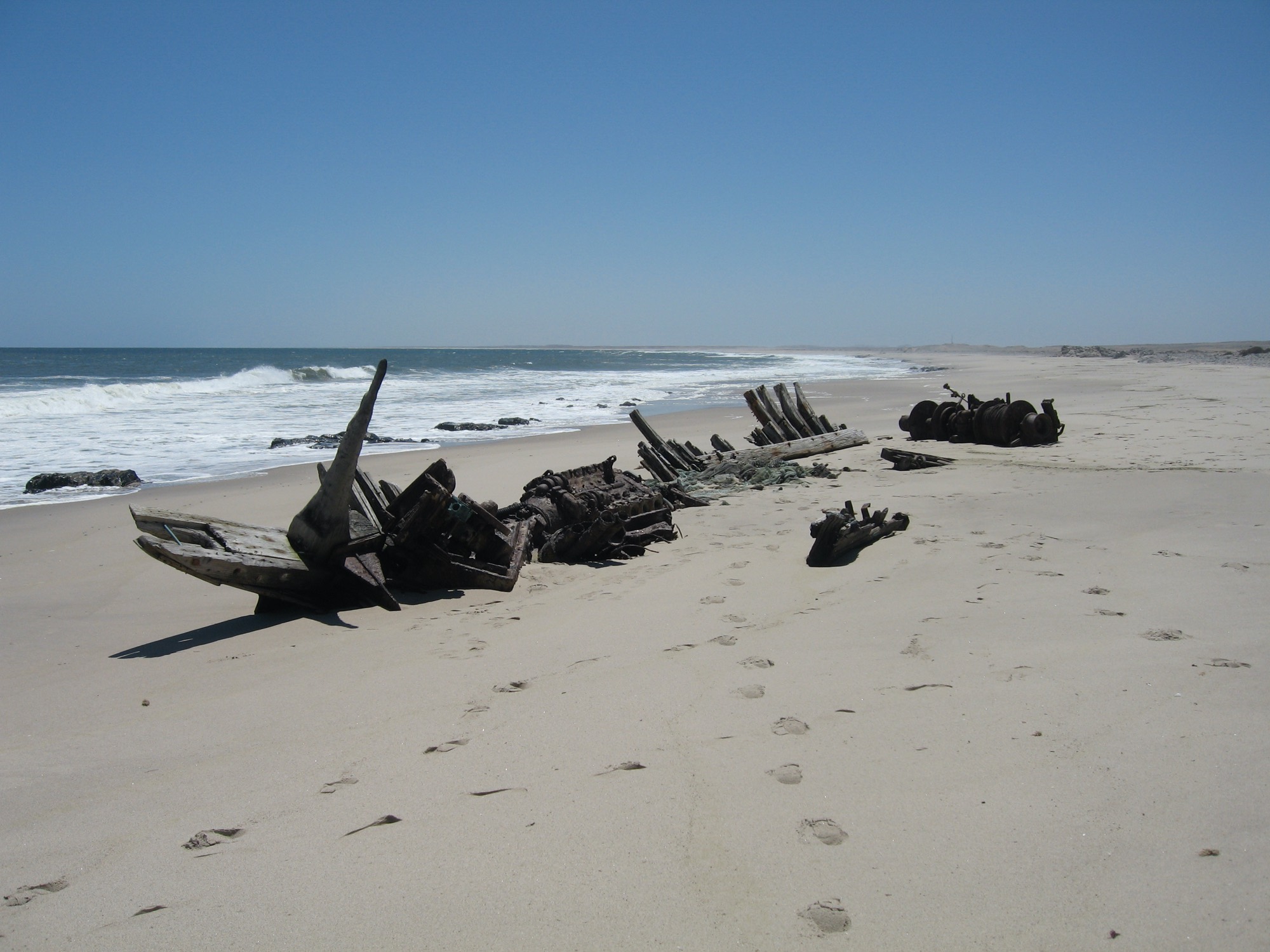
Shipwrecks, seal colonies and desert elephant on one of the most hostile, beautiful coastlines in Africa.
Enquire About Skeleton CoastThe Skeleton Coast takes its name from the whale and seal bones that once littered its beaches, and later from the rusting shipwrecks driven onto shore by the cold Benguela current and some of the densest coastal fog in the world. It is one of the most hostile and least visited stretches of coastline on the continent, and that isolation is exactly its appeal.
Inland from the fog belt, the coast gives way to gravel plains and dry riverbeds where desert-adapted elephant, and occasionally lion, move between widely spaced water sources, covering distances unmatched by the species anywhere else in Africa. Large Cape fur seal colonies, notably at Cape Cross, number in the tens of thousands and are a reliable, dramatic sighting.
Access is deliberately limited. Much of the northern Skeleton Coast National Park is a concession accessible only by fly-in safari with a handful of operators, which keeps visitor numbers low and the sense of genuine remoteness intact. The southern section, nearer Swakopmund, is more accessible by road for a shorter, lower-cost taste of the coast.
Desert-adapted elephant are the headline species, found in the Hoanib and Hoarusib riverbeds, walking far greater distances between water than elephant anywhere else on the continent.
Cape fur seal colonies, especially at Cape Cross, number up to 100,000 animals at peak season and are one of the most reliable wildlife spectacles in Namibia.
Brown hyaena, black-backed jackal and, occasionally, desert-adapted lion move through the dune belt and dry riverbeds, hunting along the margins between desert and coast.
The coast is visitable year-round, with coastal fog a near-daily feature regardless of season, usually burning off by late morning. Game viewing along the dry riverbeds is most productive in the cooler months, May to October.
Access is largely fixed by concession and flight schedules rather than season, so timing a Skeleton Coast visit depends more on fitting it into a wider Namibia itinerary than chasing a particular month.
A small, fly-in-only camp deep in the Hoanib riverbed concession, the standard-setting way to see desert elephant and genuine coastal wilderness.
Dune-shaped chalets styled after the coast's wrecks, on the northern Skeleton Coast concession, reached by light aircraft.
The southern section of the coast, including Cape Cross's seal colony, is reachable by road from Swakopmund for travellers without the budget for a fly-in camp.
The Skeleton Coast rewards atmosphere over wildlife density: shipwreck silhouettes in fog, seal colonies at Cape Cross, and the graphic contrast of dune meeting ocean. Overcast, fog-softened light suits the mood here better than the harsh sun elsewhere in Namibia.
The fly-in camps suit travellers with a generous budget and a taste for genuine remoteness; the Cape Cross day-trip option from Swakopmund suits a shorter, lower-cost visit for anyone road-tripping the coast.
The northern Skeleton Coast concessions are reached by light aircraft from Windhoek or Swakopmund. The southern coast near Cape Cross is accessible by road from Swakopmund, roughly two hours north.
We arrange every detail, from the right camp to flights and transfers. Tell us your dates and we will do the rest.
Plan My Safari WhatsApp UsAfter the whale and seal bones once scattered along its beaches, and later the many shipwrecks driven ashore by the Benguela current and thick coastal fog.
The northern concessions are accessible only by light aircraft from Windhoek or Swakopmund. The southern coast near Cape Cross can be reached by road from Swakopmund.
They have adapted to near-waterless conditions, walking far greater distances between water sources than elephant anywhere else in Africa, found mainly in the Hoanib and Hoarusib riverbeds.
Coastal fog is a near-daily feature regardless of season, usually clearing by late morning, caused by the cold Benguela current meeting the hot desert air.
Tell us roughly when you would like to travel and what you most want to see. Every enquiry is answered personally, usually within 24 hours. No set packages, no booking fees.